 Watch Replay2:35
Optimizely project scripts carried a wallet clipper
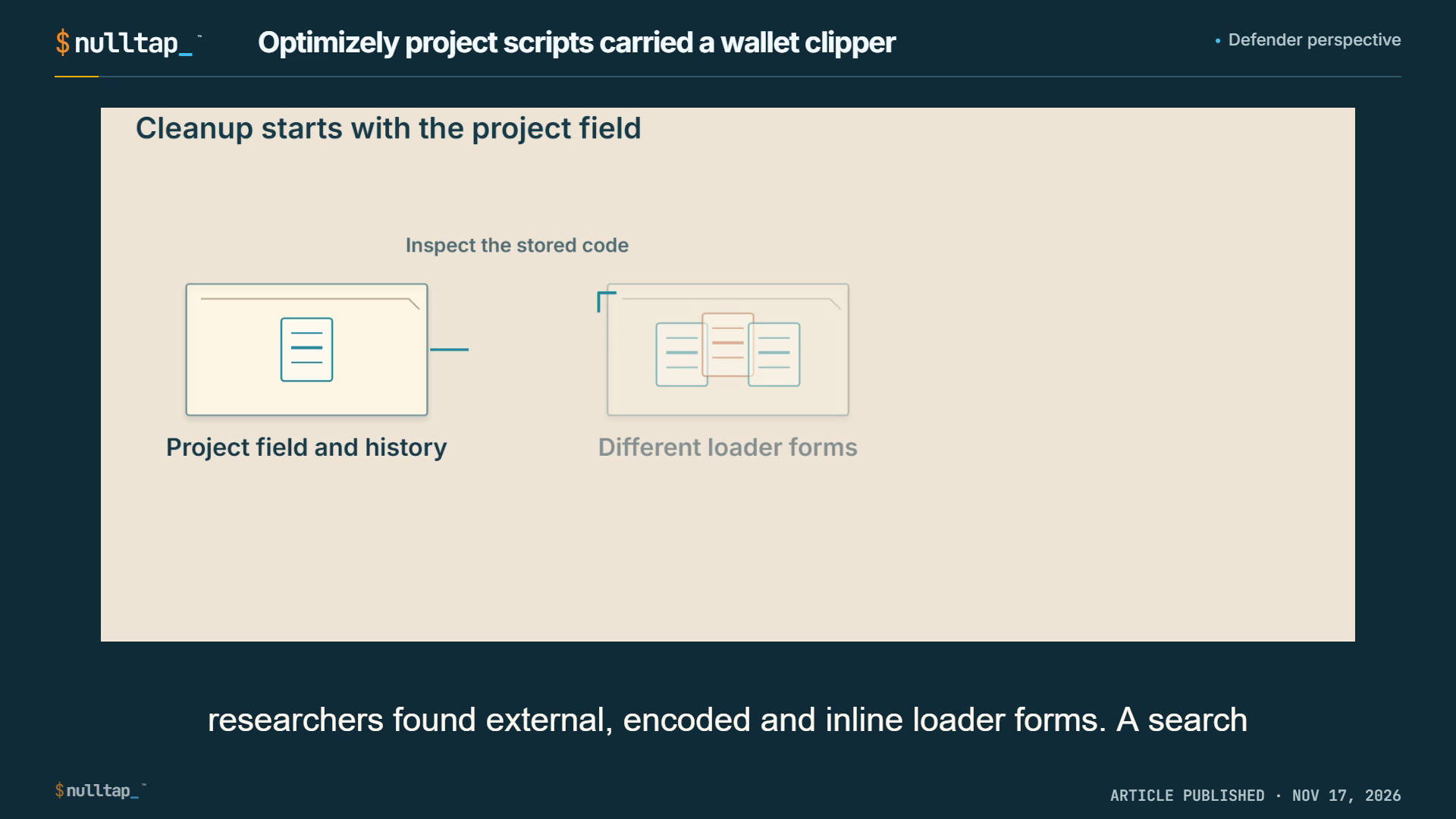
Compare stored project code, distributed copies and browser activity to scope an injected script.
Because reading an article isn't for everyone.
Watch Replay2:35Compare stored project code, distributed copies and browser activity to scope an injected script.
 Watch Replay2:39
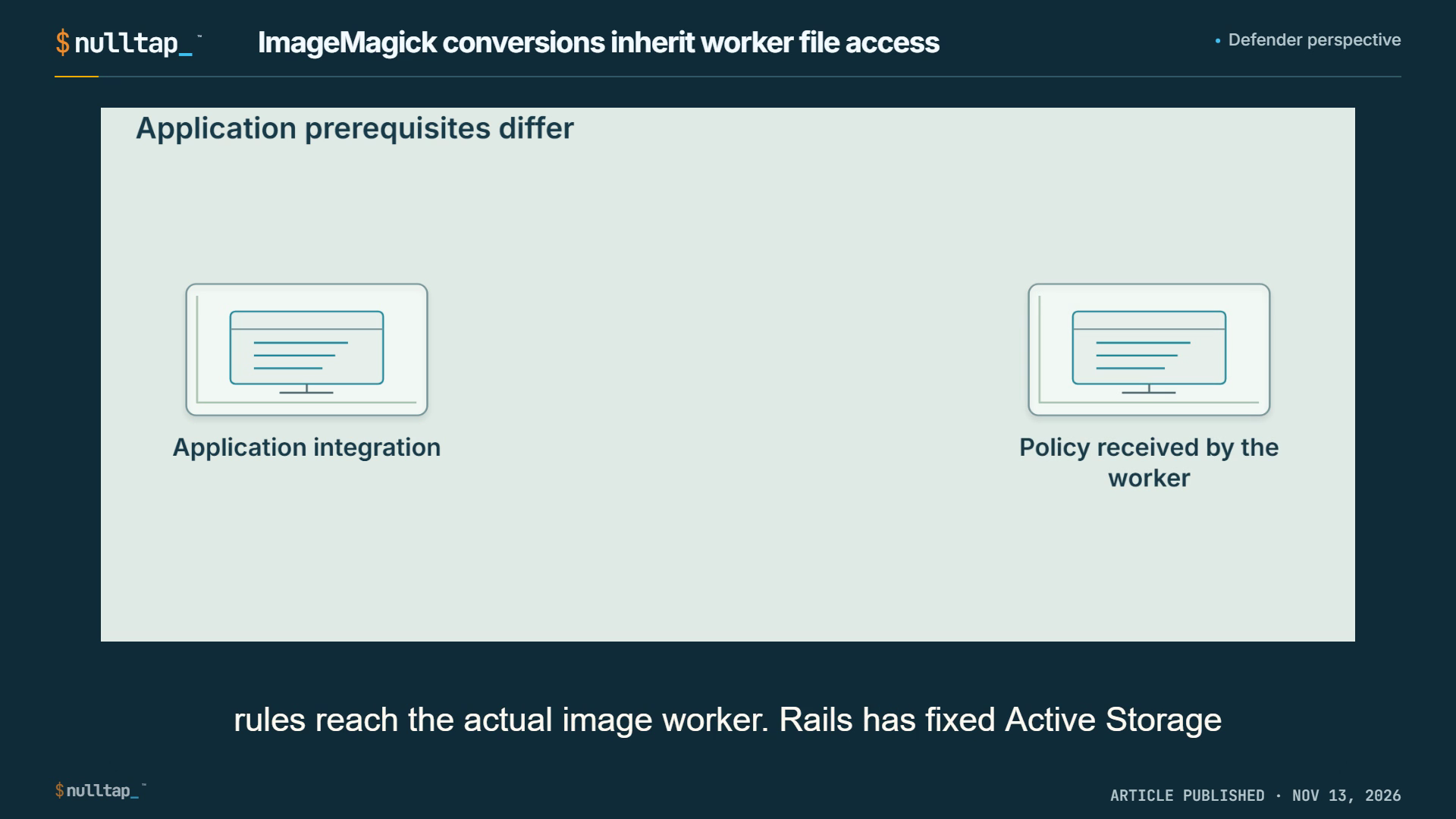
Trace the two processing routes to the worker policy and storage, then verify both rejection and normal conversion.
 Watch Replay2:41
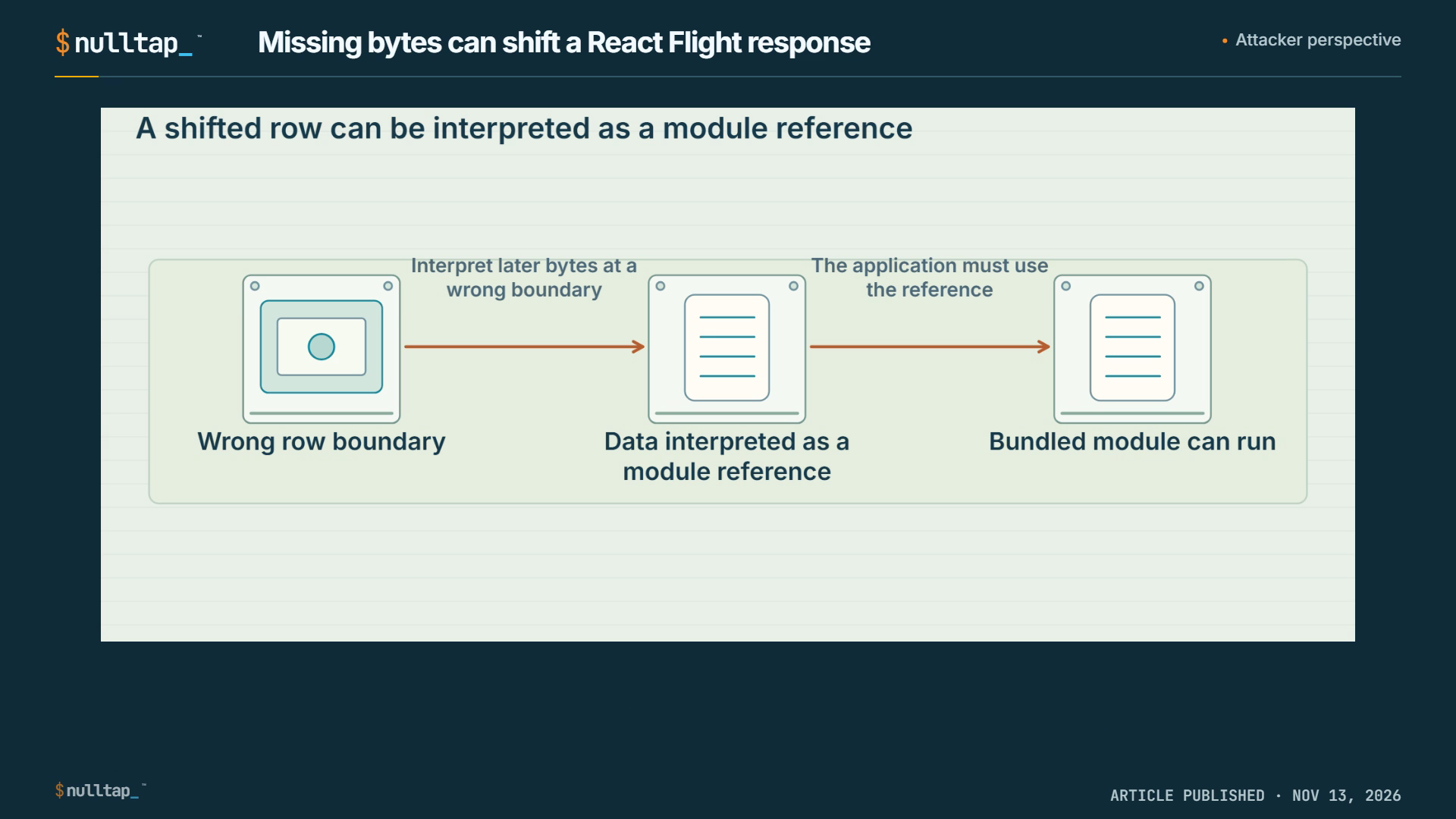
Trace a lost binary payload to the next row boundary, then verify the Flight writer in the deployed bundle.
 Watch Replay2:45
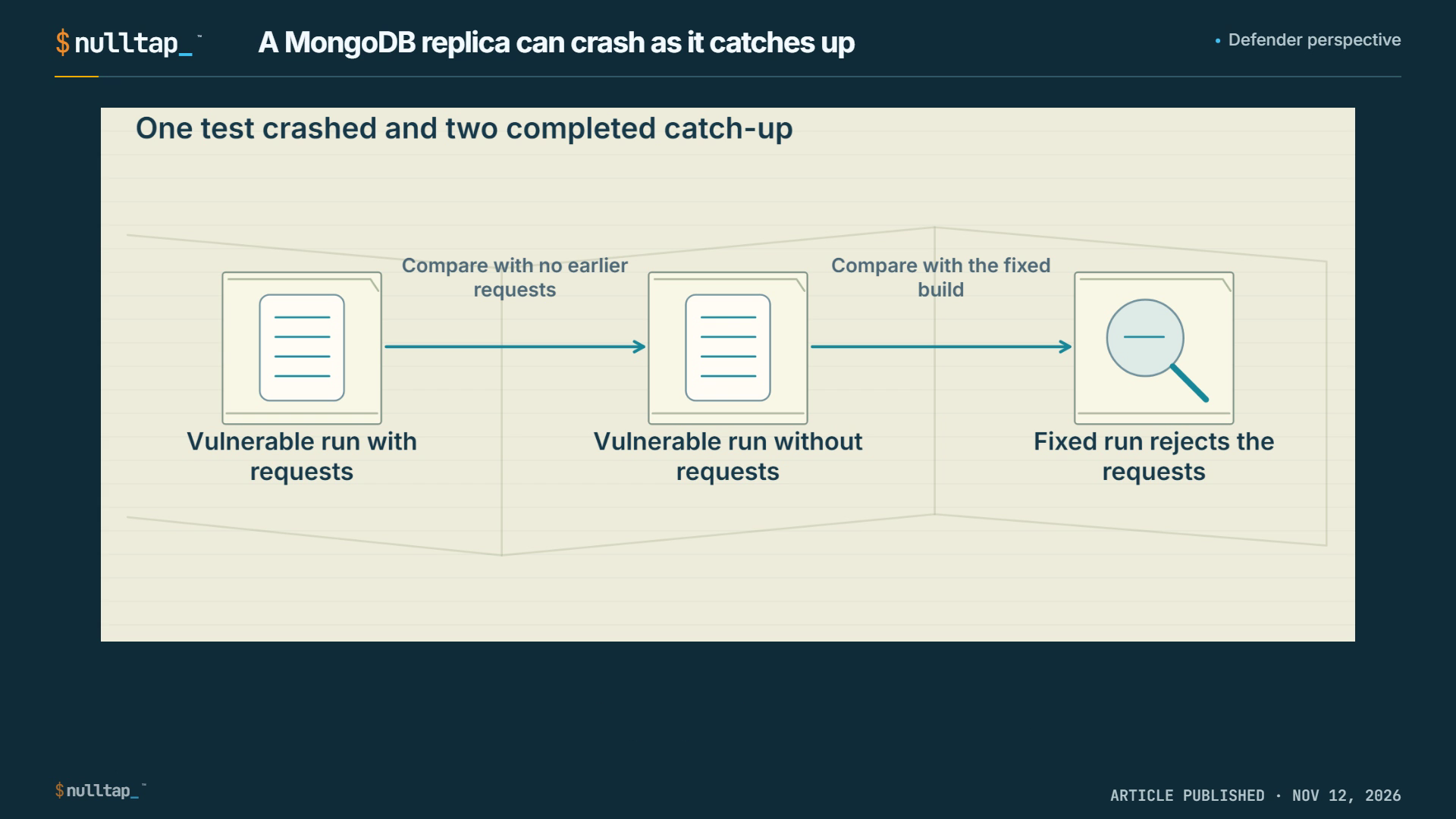
Connect earlier requests to a later failed election on the same member and verify fixed running builds.
 Watch Replay2:43
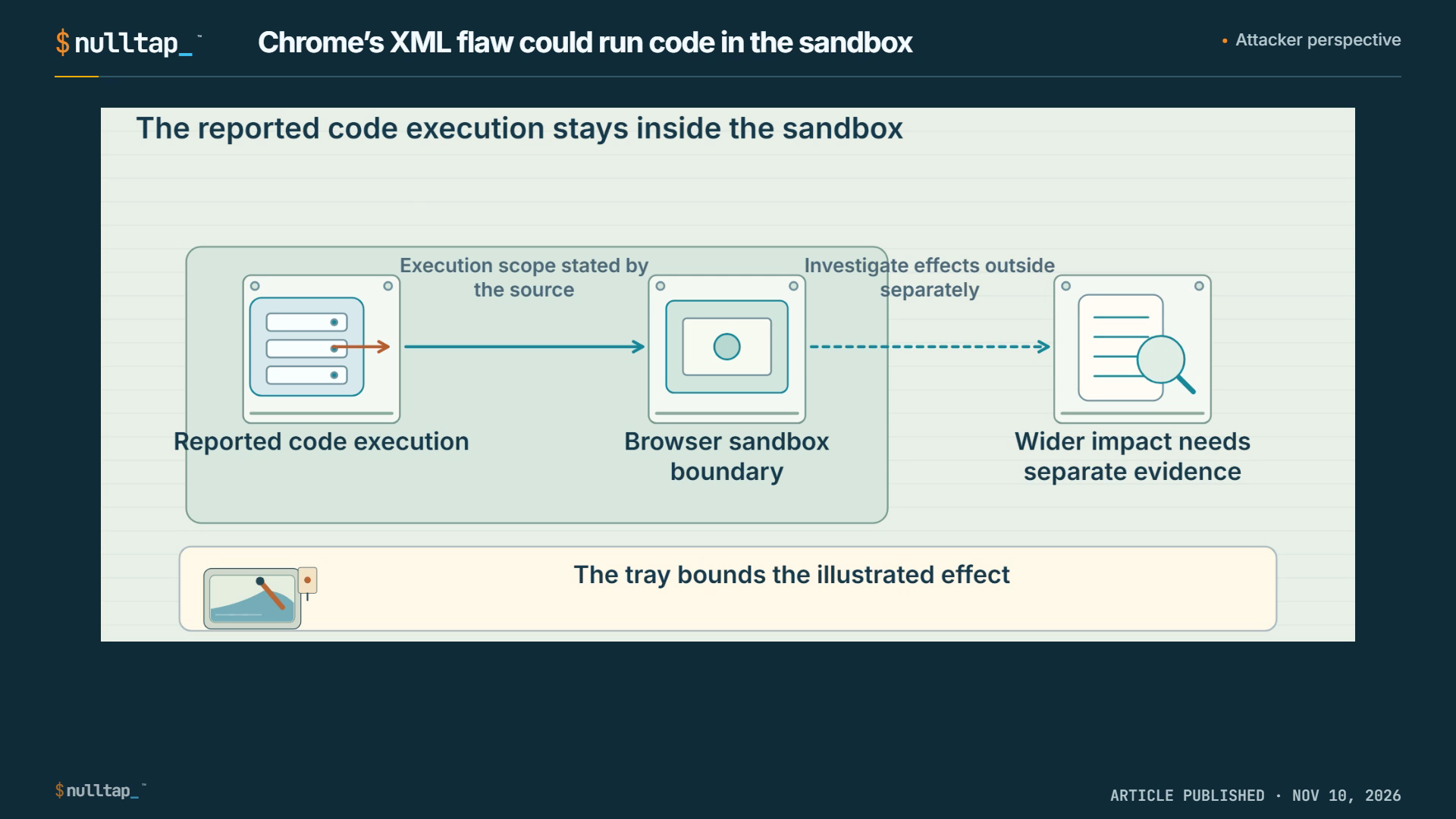
Explain the stale reference and containment boundary, then verify the fixed build each browser is actually running.
 Watch Replay2:56
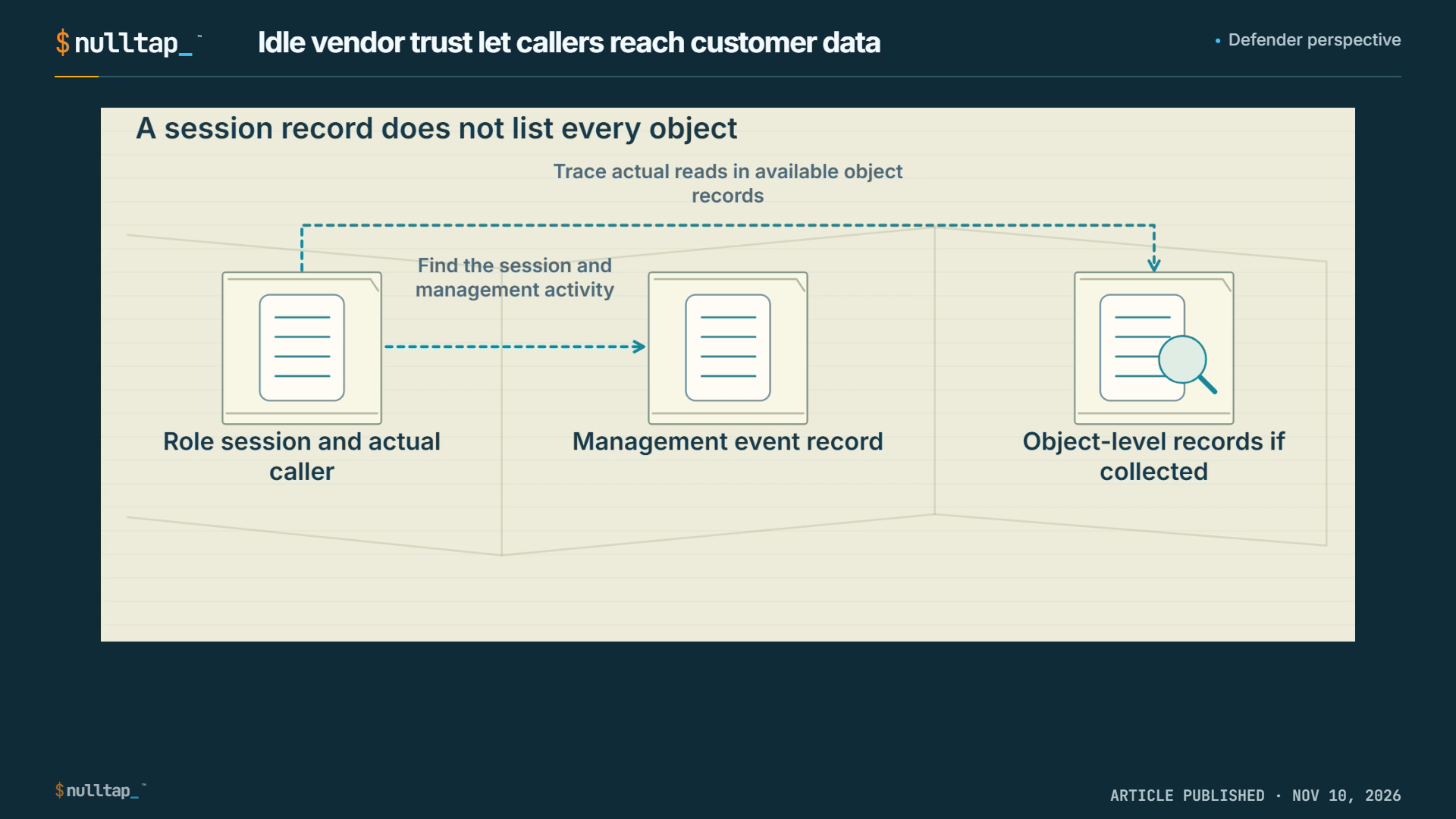
Follow a vendor role session to its evidence, then verify required trust and object logging.
 Watch Replay3:01
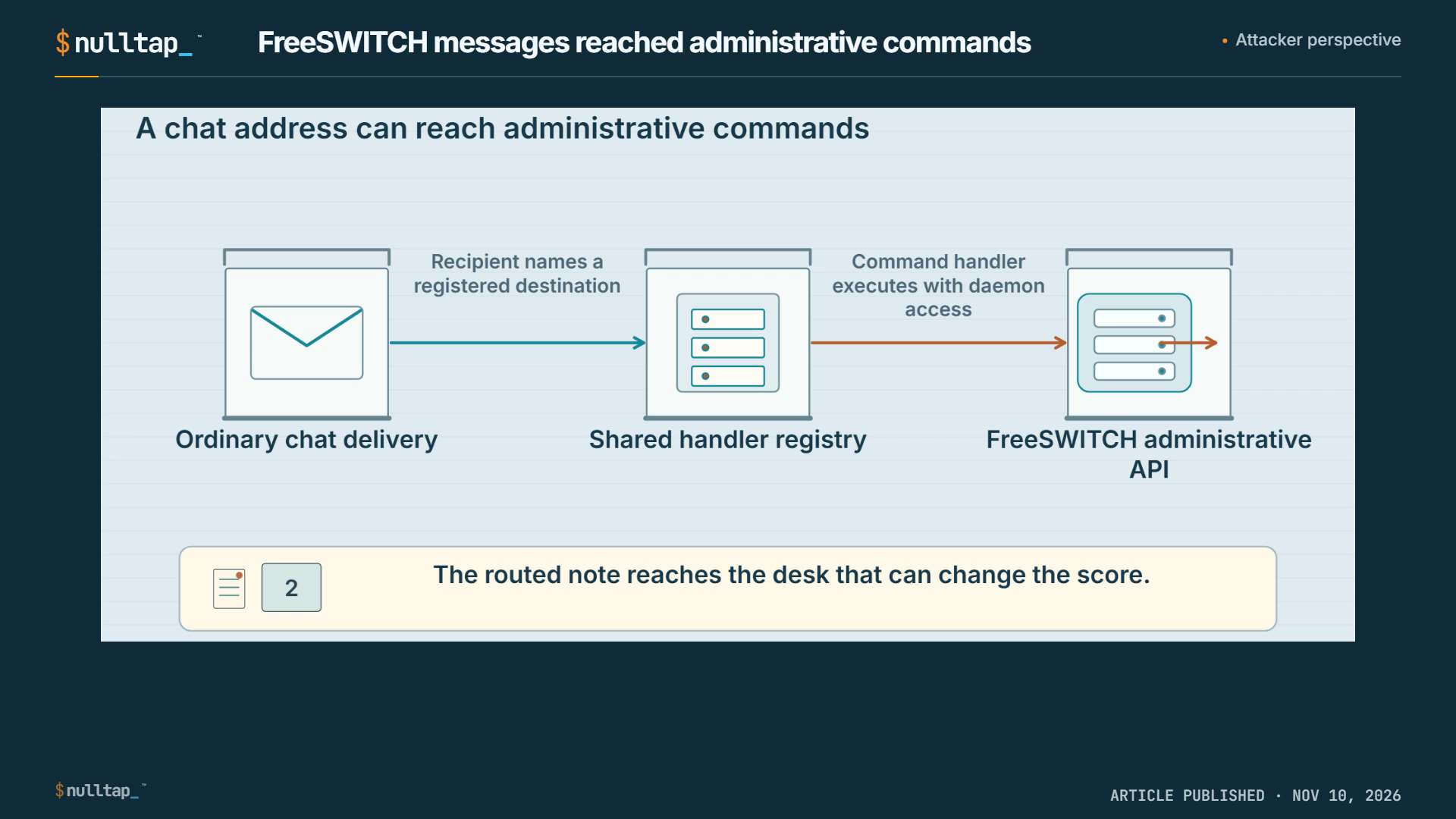
Trace an accepted message through its recipient-selected handler, verify the fixed API-chat boundary and investigate earlier command and call activity.
 Watch Replay3:09
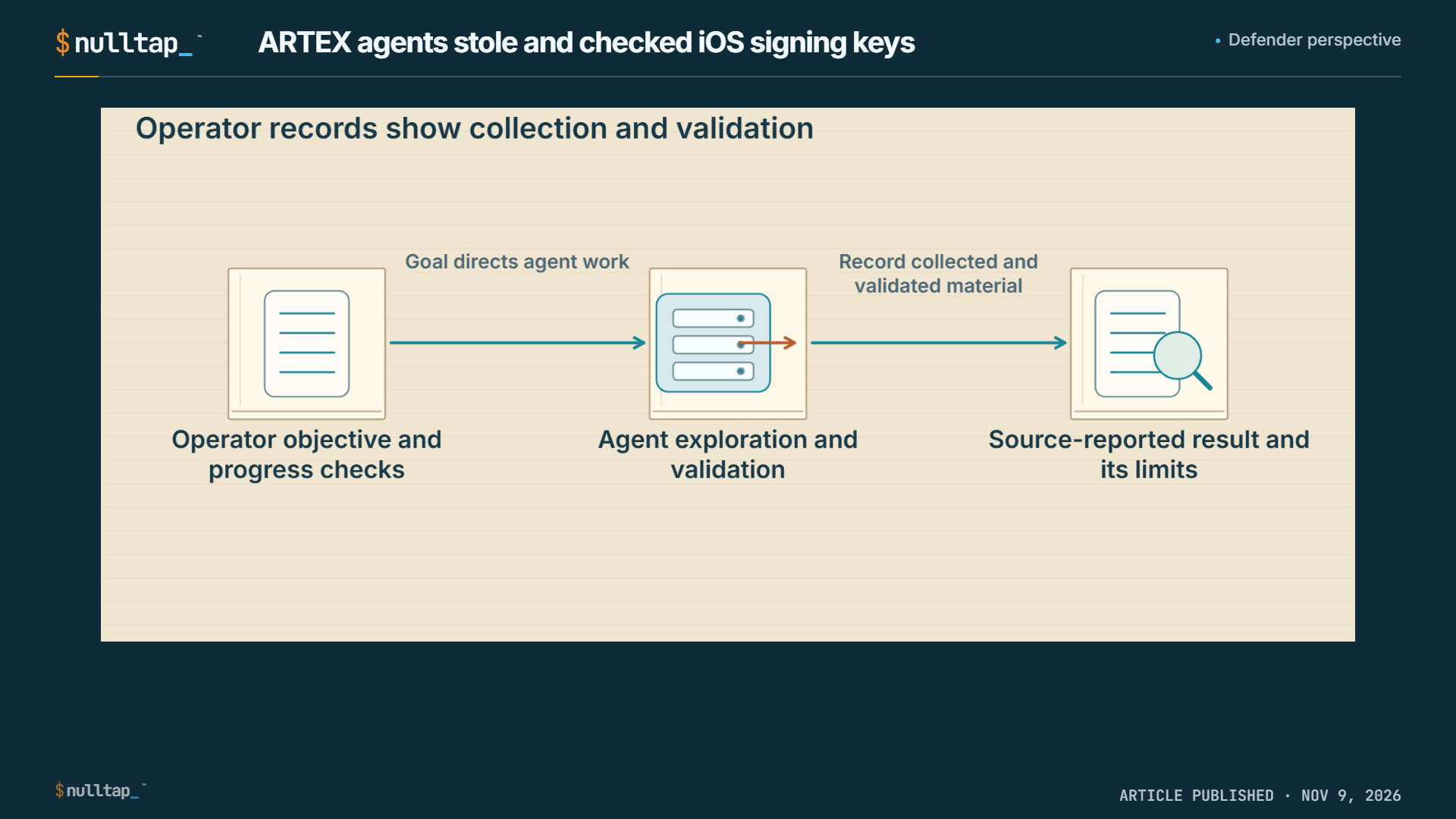
Separate signing-store access, copied key material and usability checks from later app use, then verify owner-led read controls and credential retirement.
 Watch Replay3:13
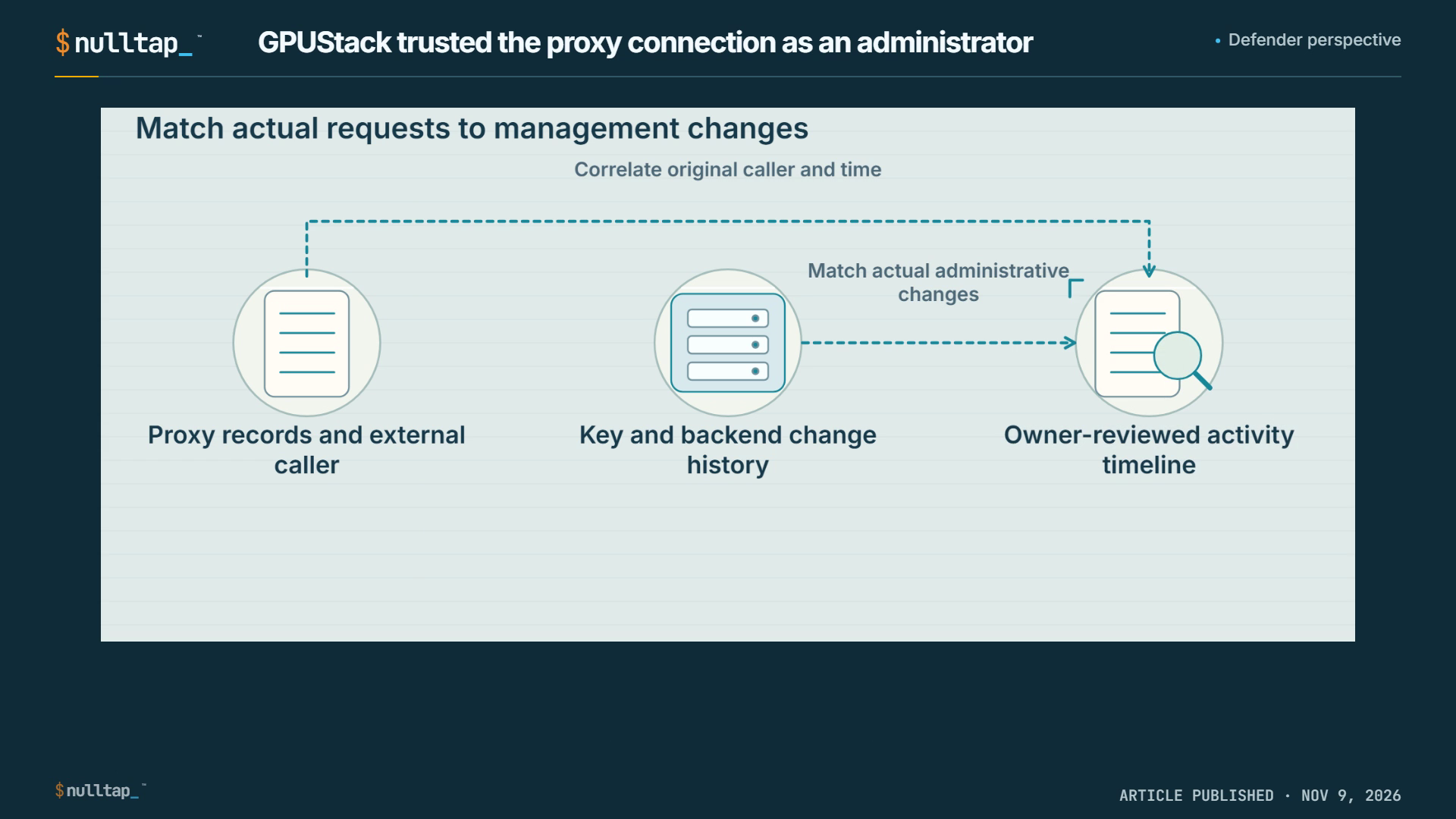
Separate an external caller from a local proxy peer, verify actual authentication after the fix and investigate administrator access issued earlier.
 Watch Replay3:04
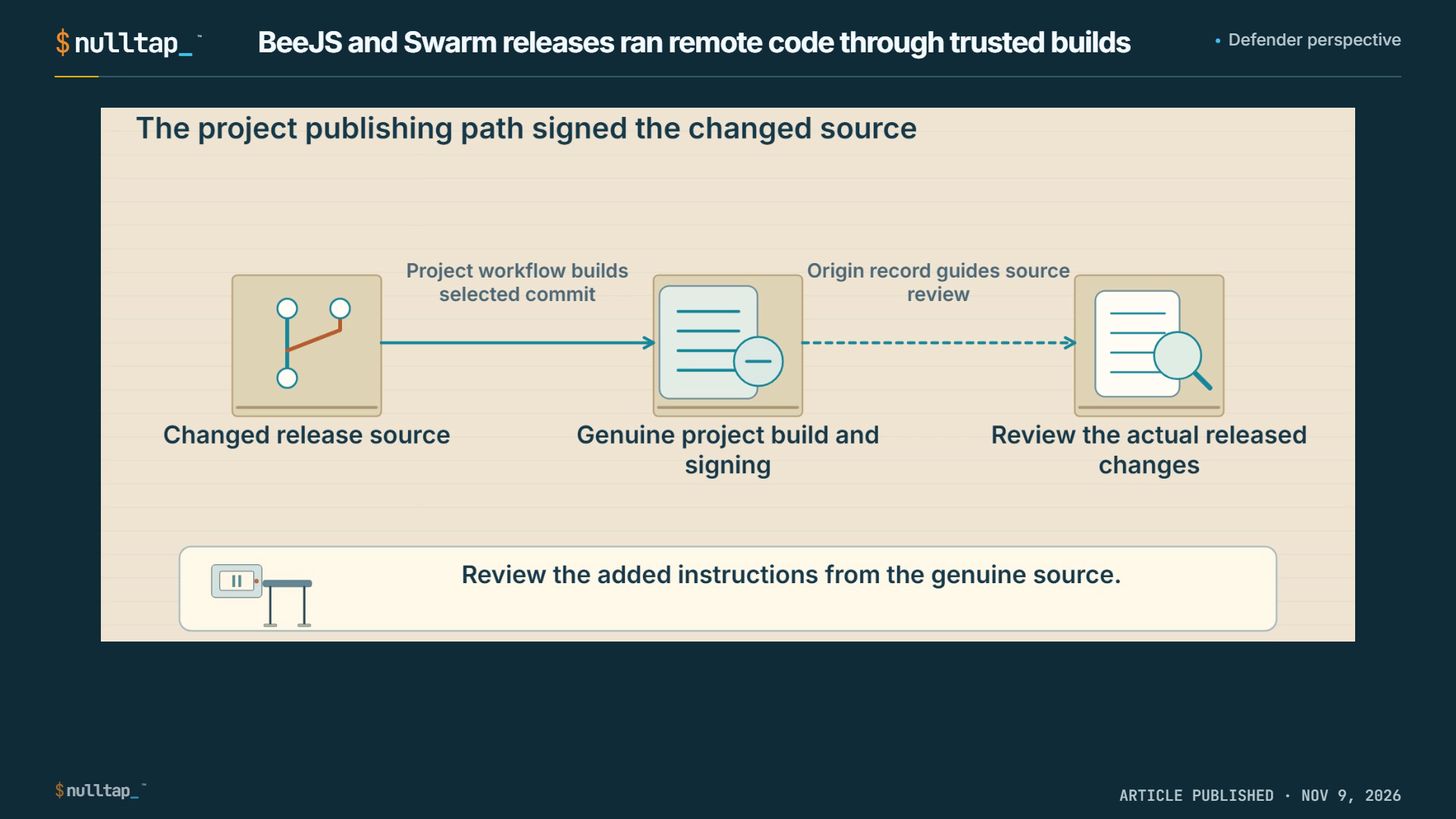
Trace separate install and desktop-launch triggers through a genuine project build, then verify replacements and investigate earlier execution.
 Watch Replay3:05
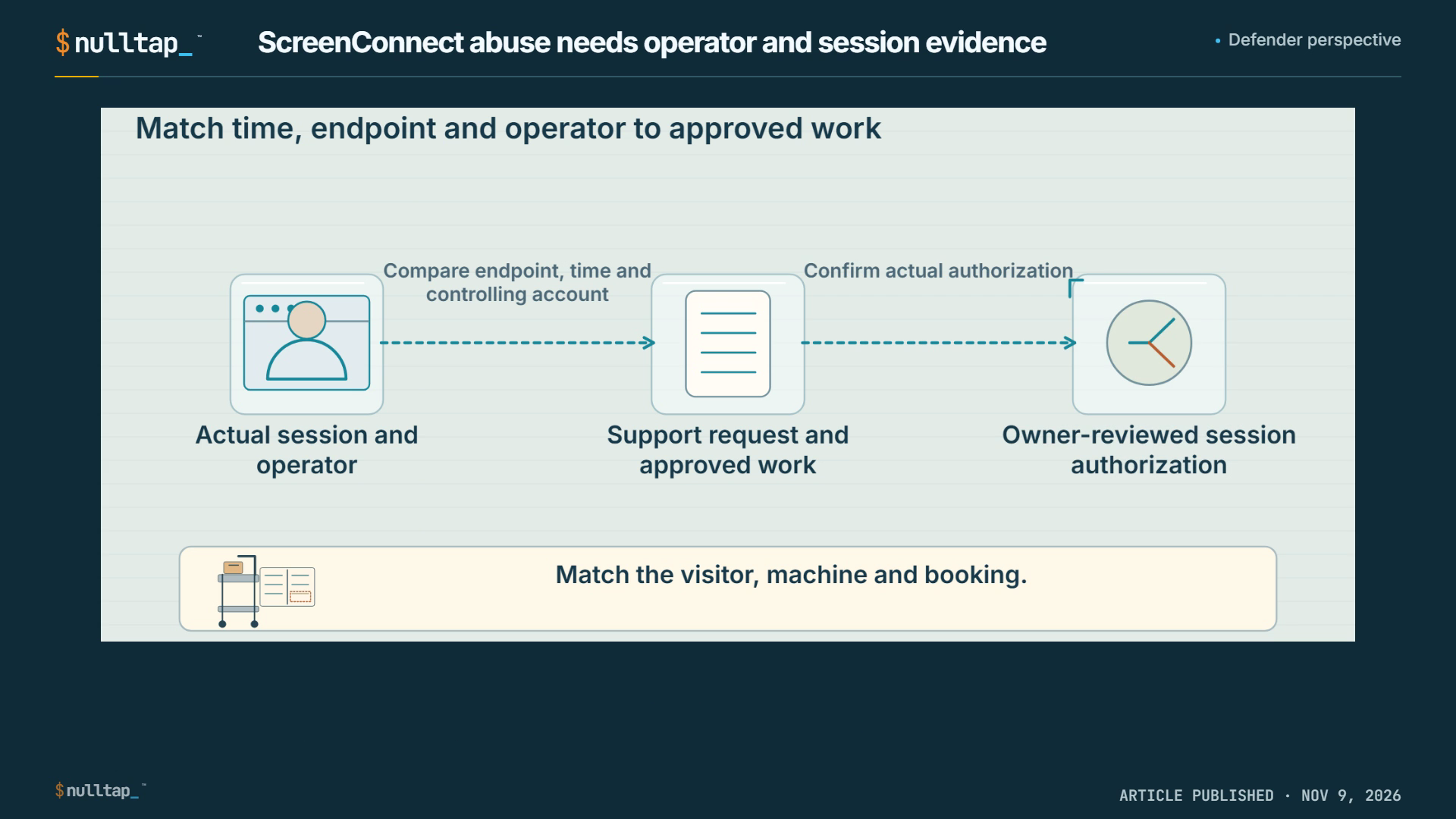
Distinguish a genuine support product from authorization for its actual instance, operator and session, then verify scoped owner-led response while keeping cloud consent separate.
 Watch Replay3:02
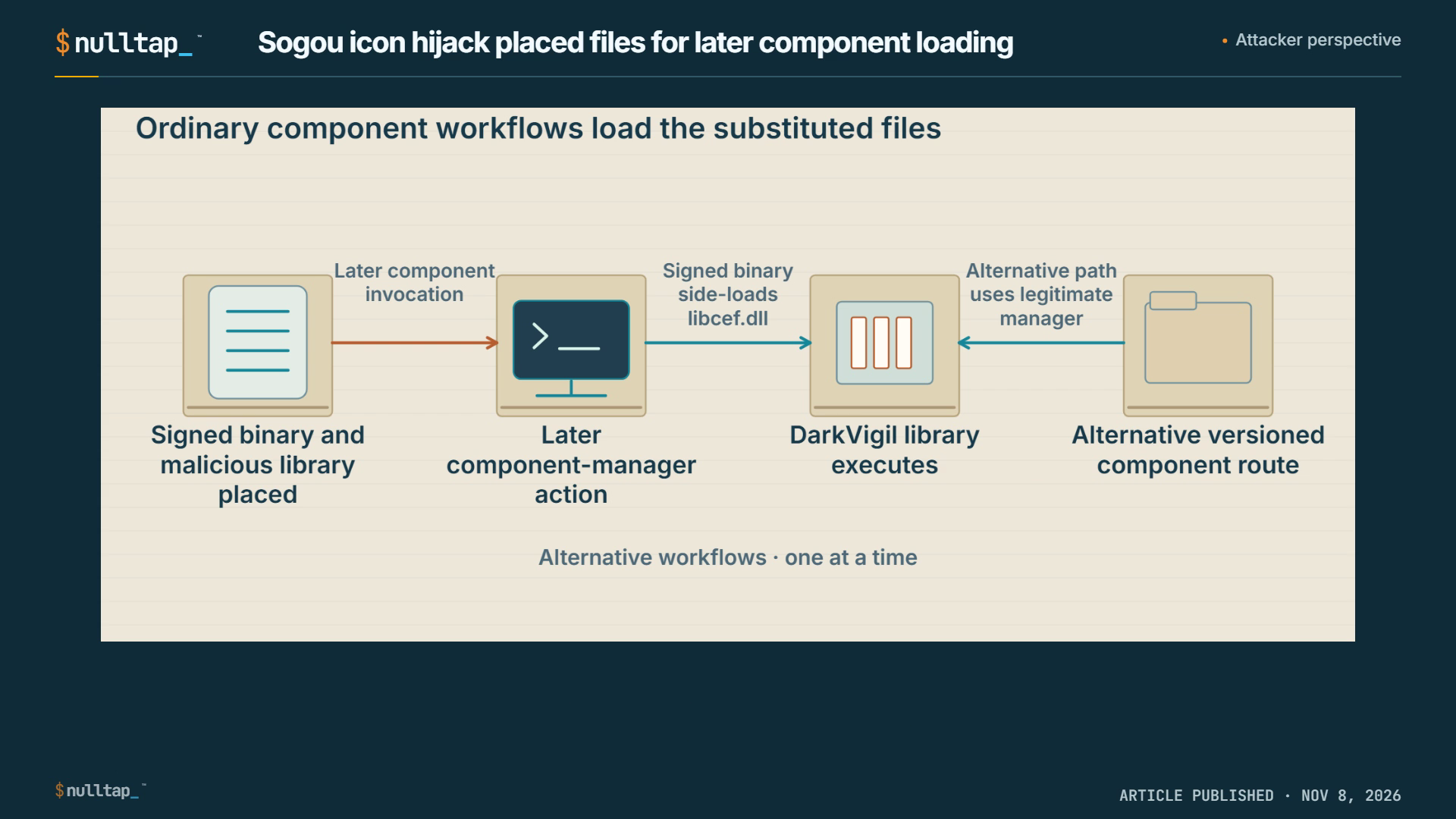
Trace response substitution through file placement and later component loading, then verify the protected request separately from earlier endpoint response.
 Watch Replay3:12
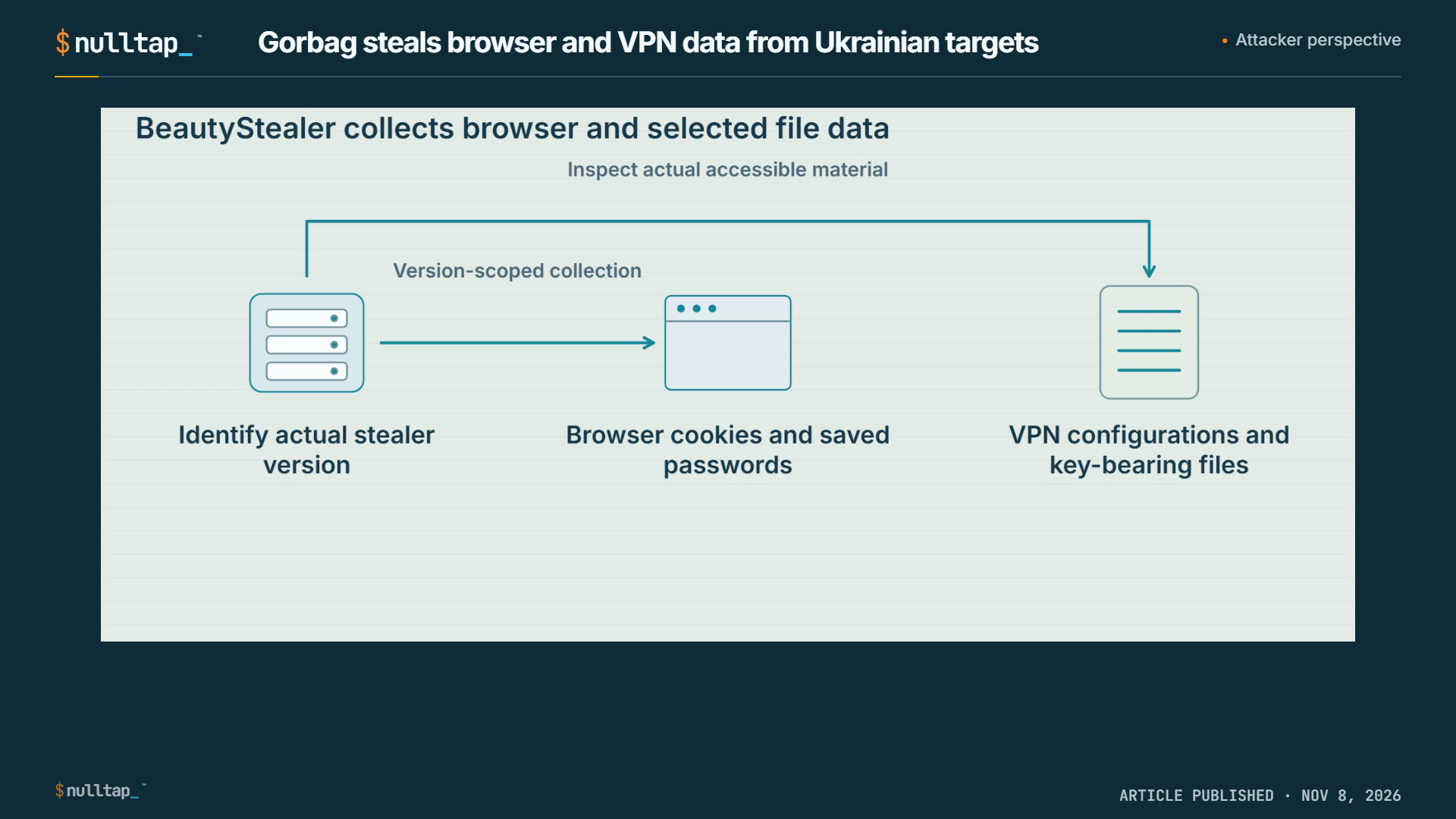
Separate attachment delivery, later Startup execution and version-scoped collection, then verify owner-led recovery of copied access after stealer self-deletion.
 Watch Replay3:00
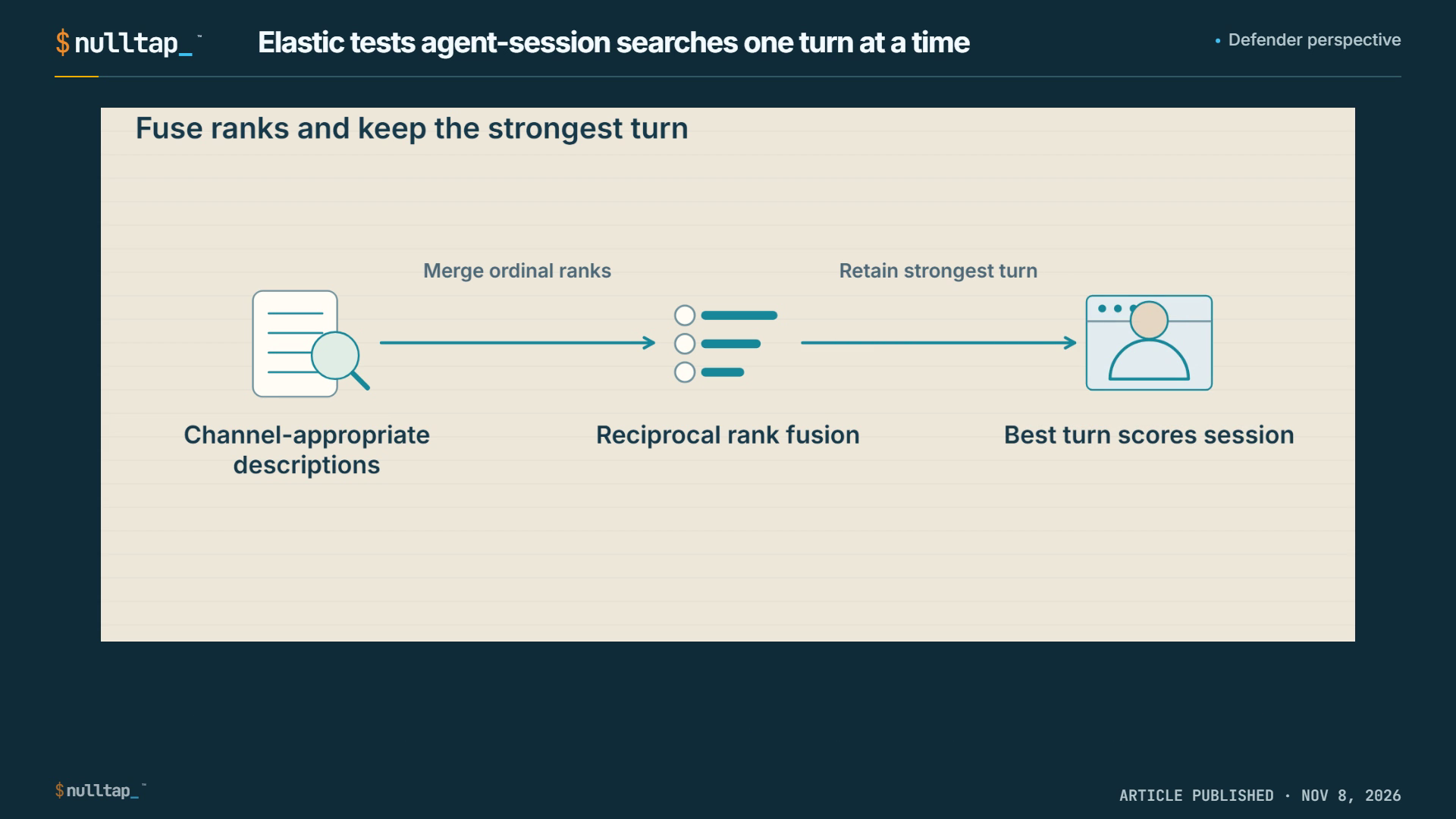
Retrieve a short agent action without losing its session context, verify actual channel coverage and decide from original actions rather than similarity alone.
 Watch Replay3:26
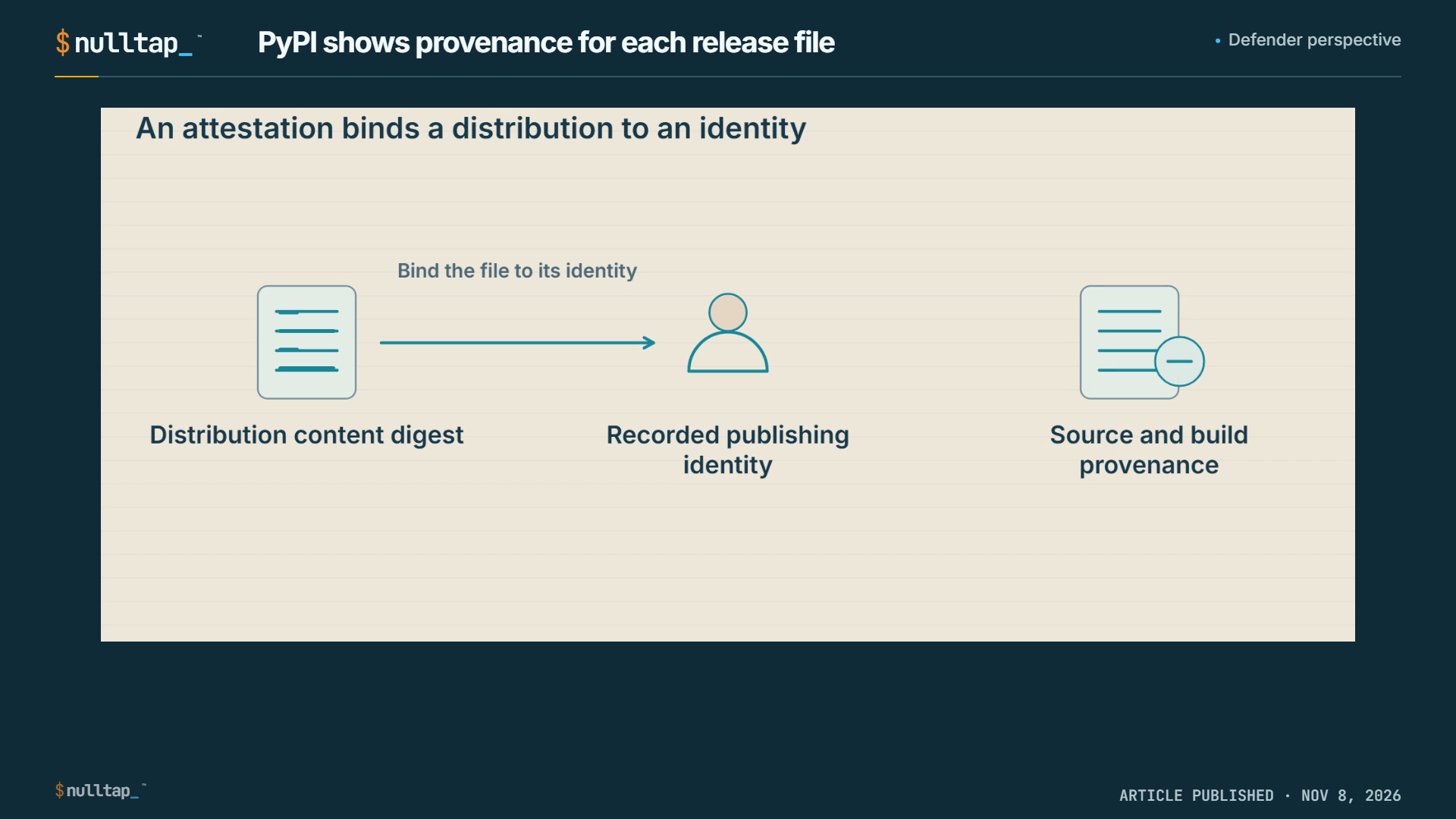
Match an exact selected distribution with its attestation and intended publisher; explain release warnings without treating origin as a content-safety verdict.
 Watch Replay3:21
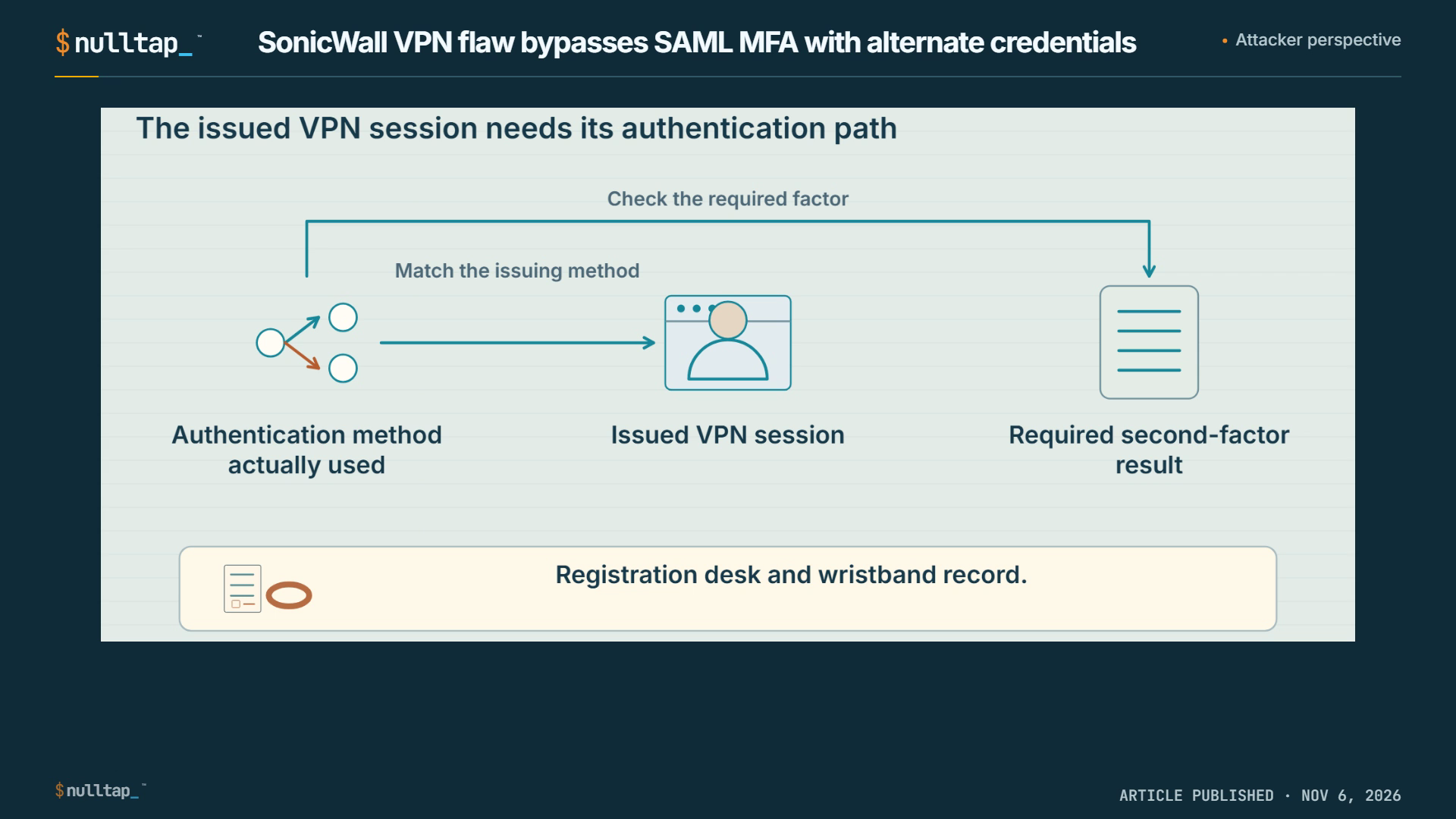
Trace the authentication method that issued a VPN session and verify the required second factor after vendor-directed remediation.
 Watch Replay3:35
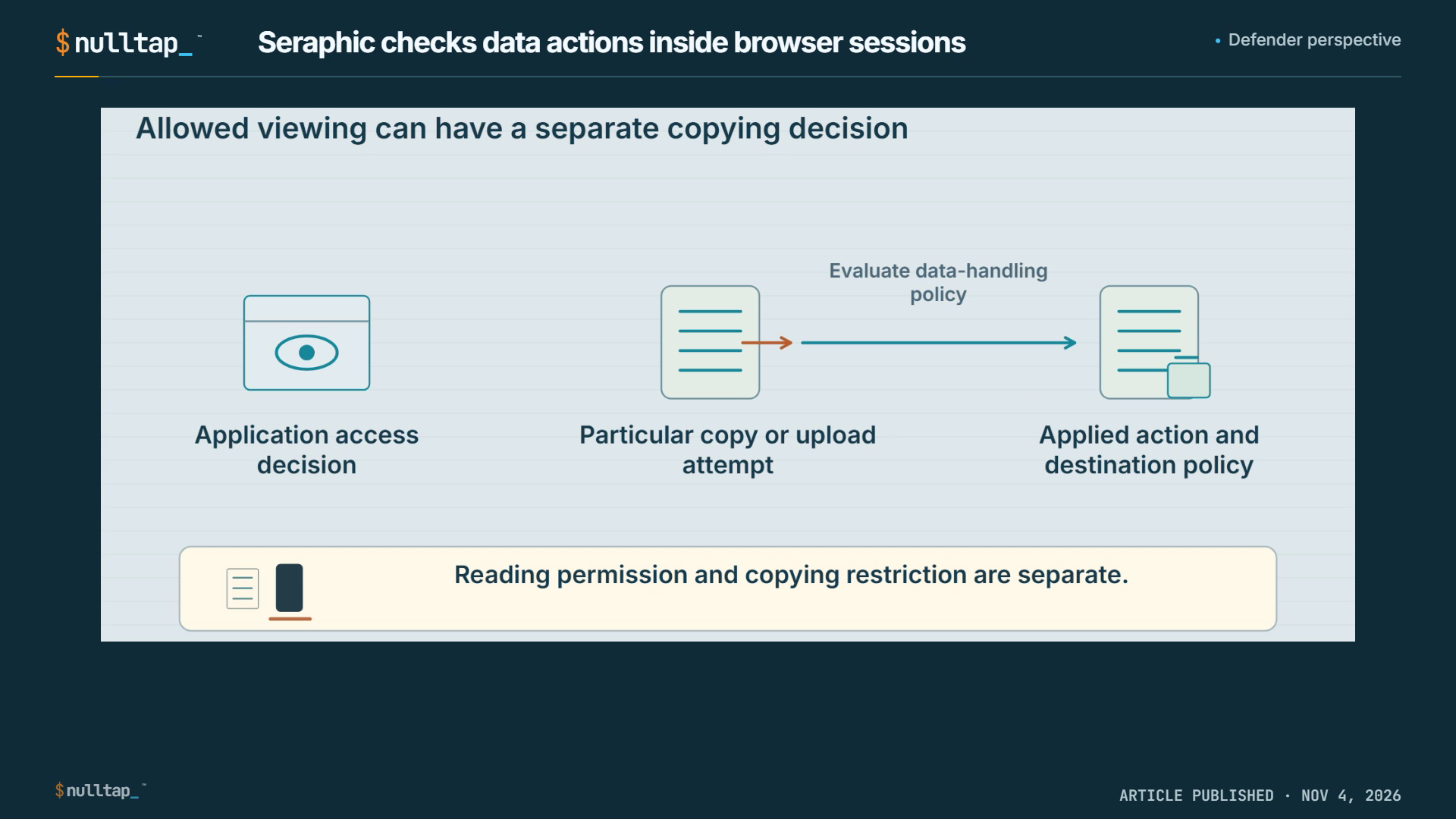
Separate allowed application access from browser data-action policy, then verify actual session deployment, enforcement and matched telemetry.
 Watch Replay3:24
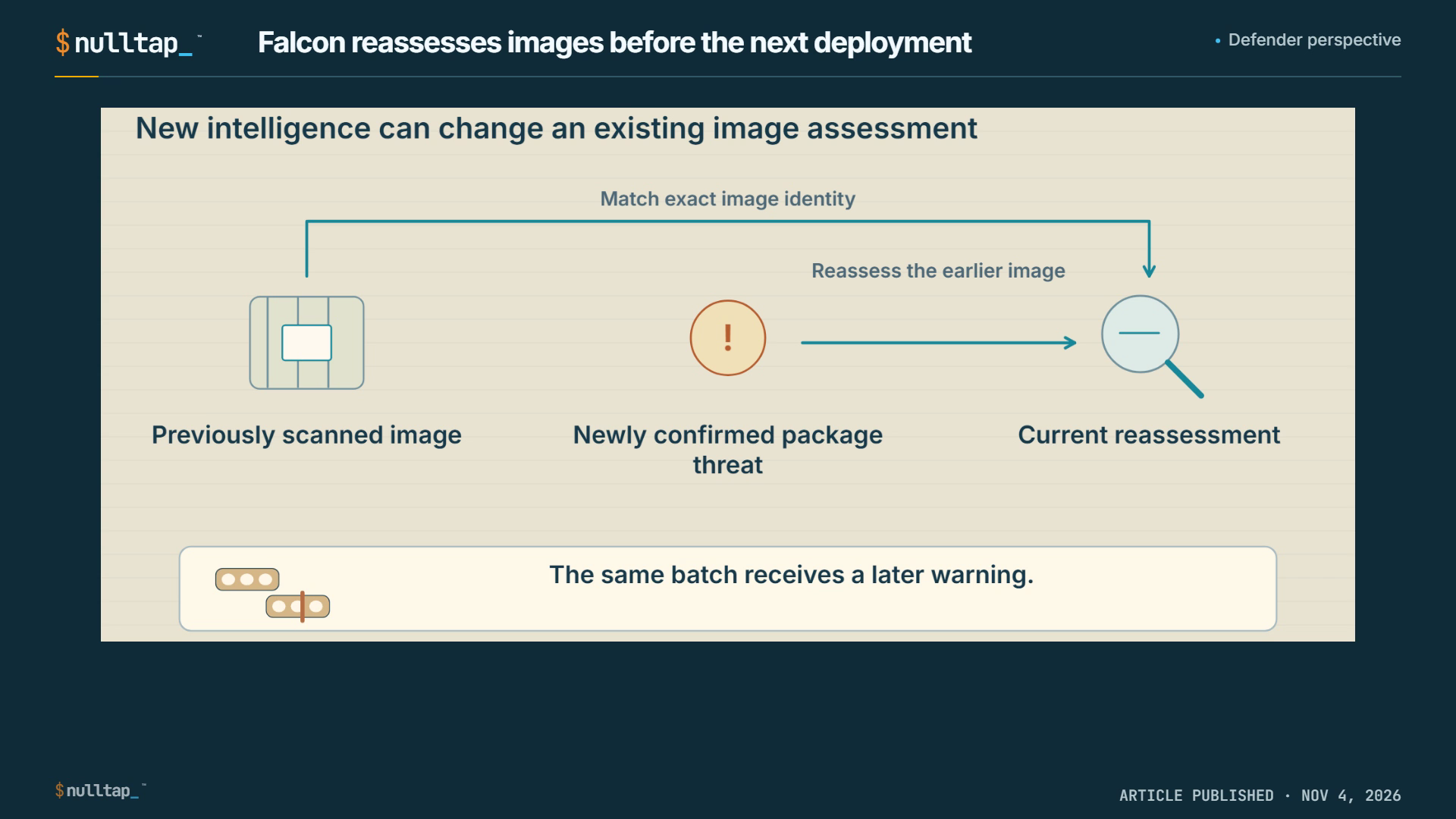
Trace a later package warning into a current image assessment and admission decision, then separately investigate existing workloads.
 Watch Replay3:16
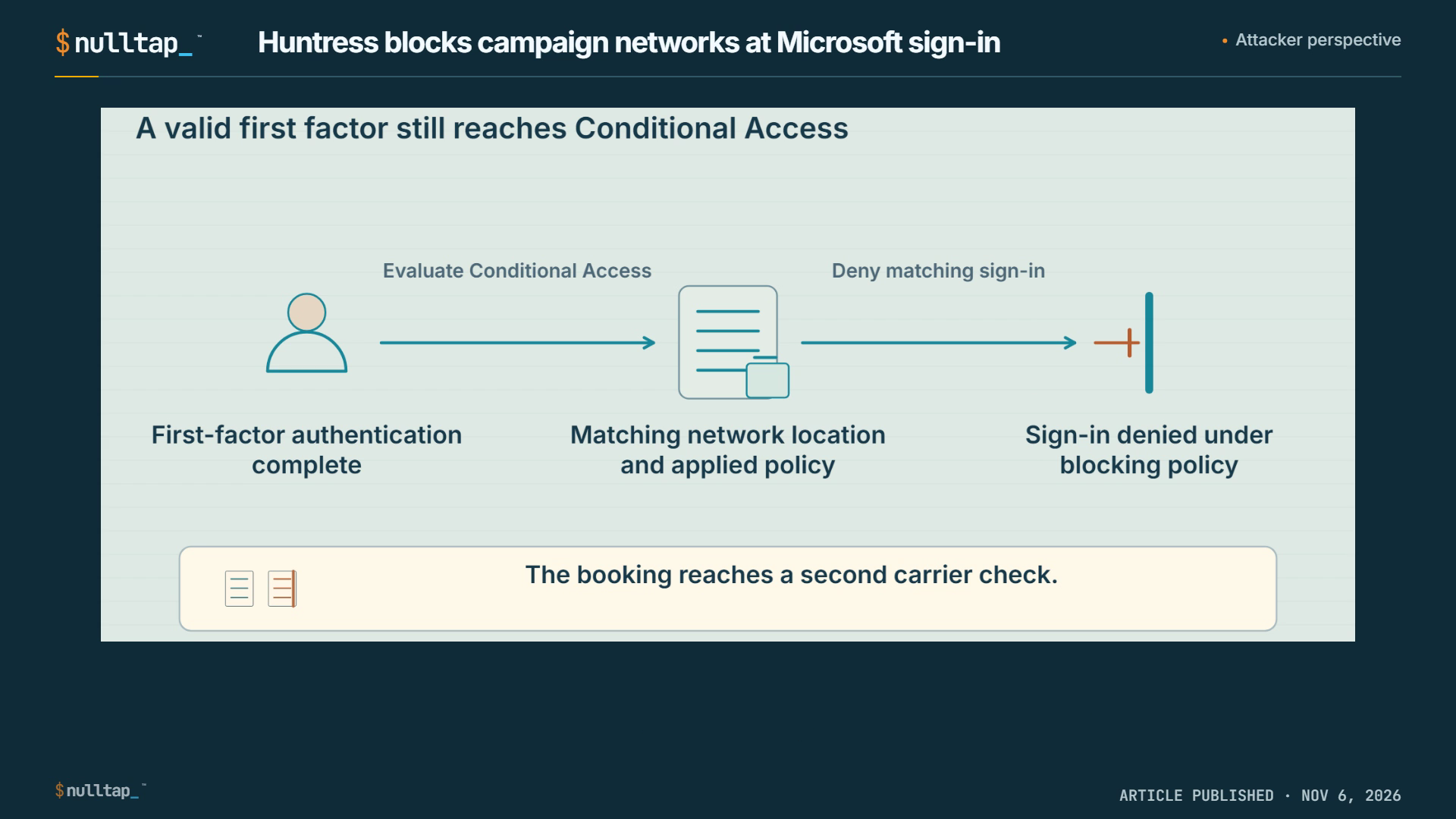
Follow vetted campaign ranges into a tenant Conditional Access decision after first factor, then verify eligibility, applied policy and the actual sign-in outcome.
 Watch Replay3:19
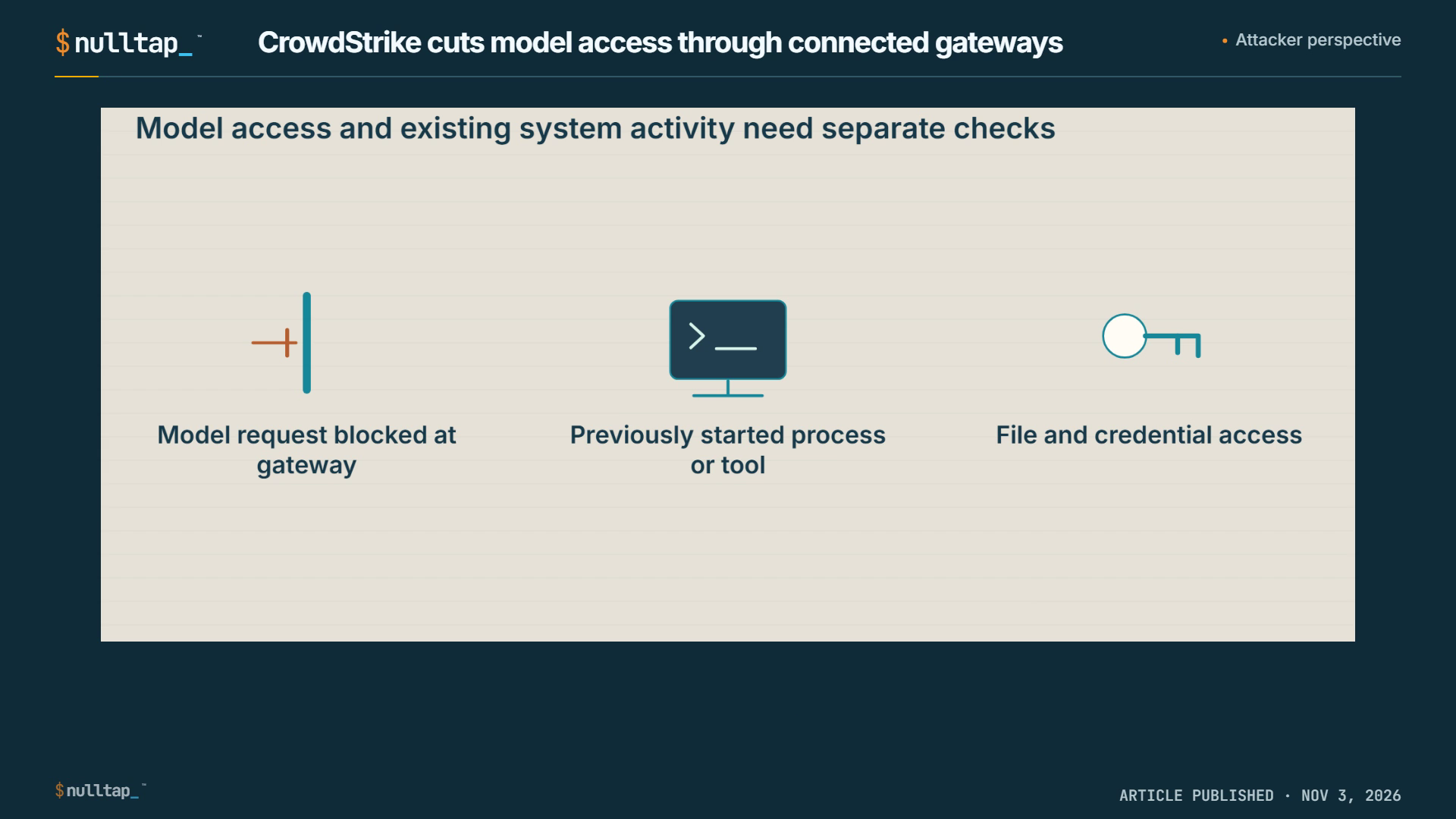
Trace the connected-gateway model cutoff, verify route coverage and separate existing task authority from planned wider containment.
 Watch Replay3:36
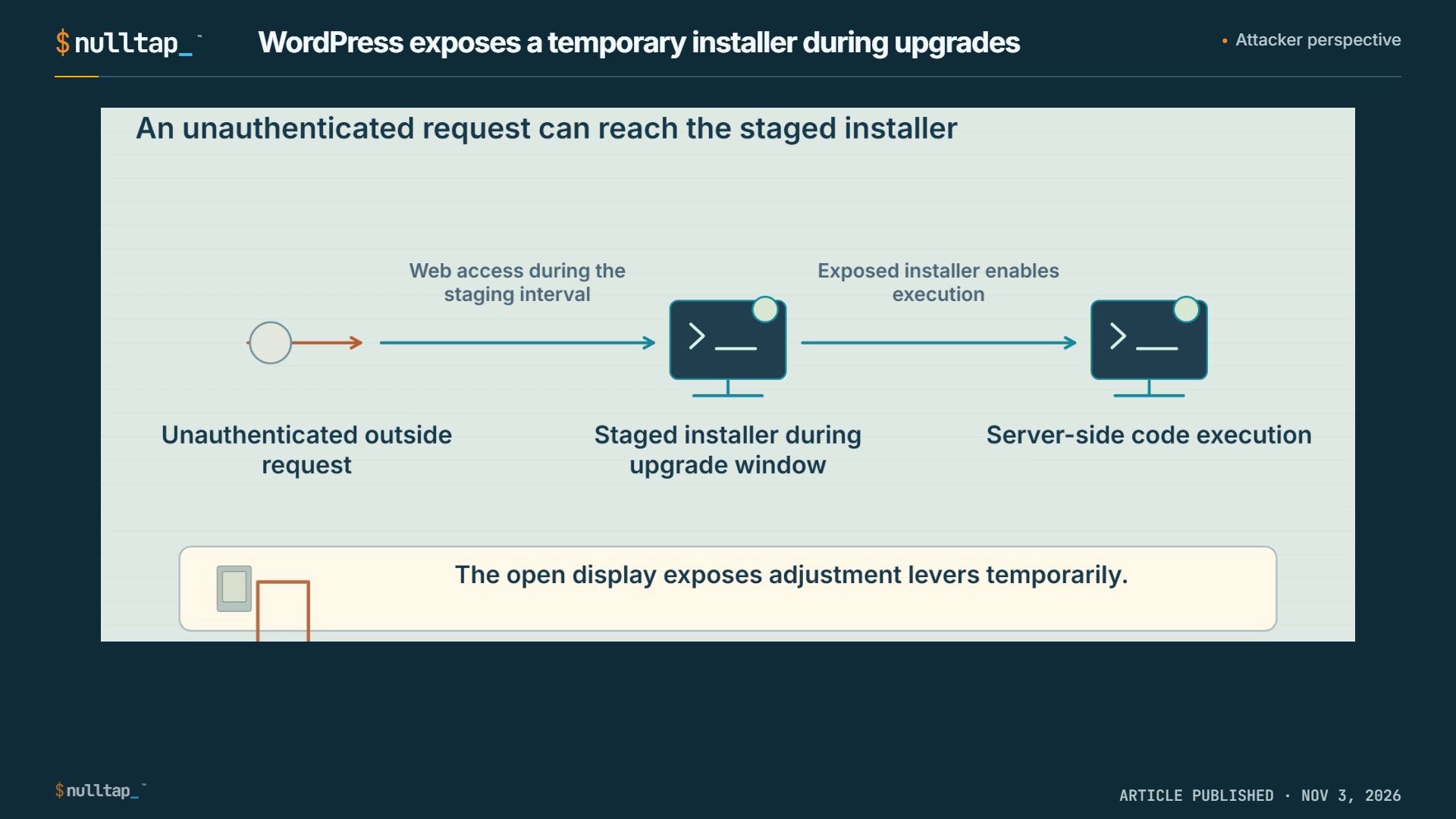
Explain the full-package staging interval, verify branch-specific fixes and public staging restrictions, and investigate prior upgrade windows.
 Watch Replay3:42
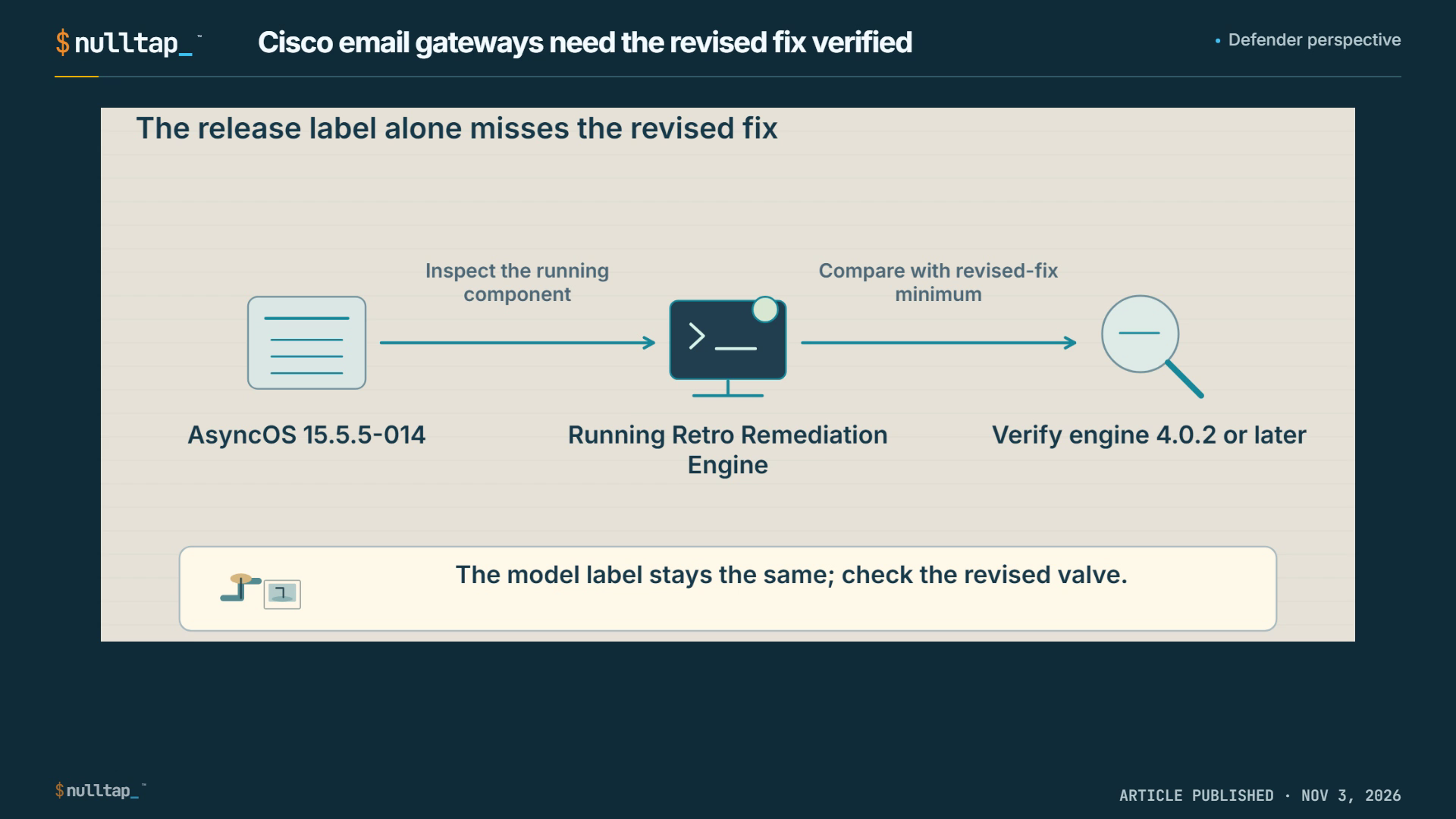
Trace the mail parser exposure, verify the branch-specific running fix and investigate prior root-level access separately.
 Watch Replay3:25
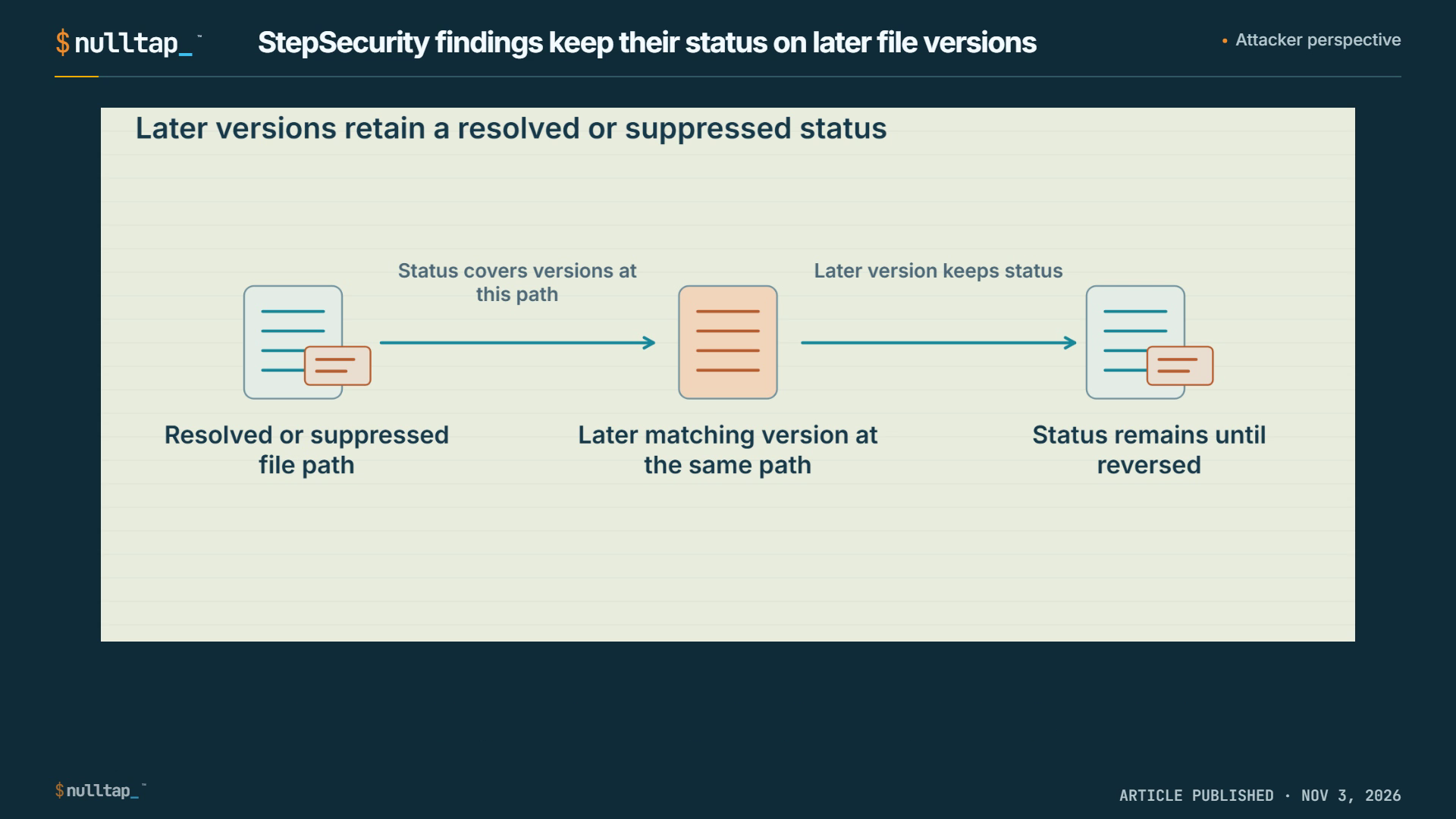
Trace required file checks, affected refs/devices and retained finding status, then verify actual remediation and visibility.
 Watch Replay3:34
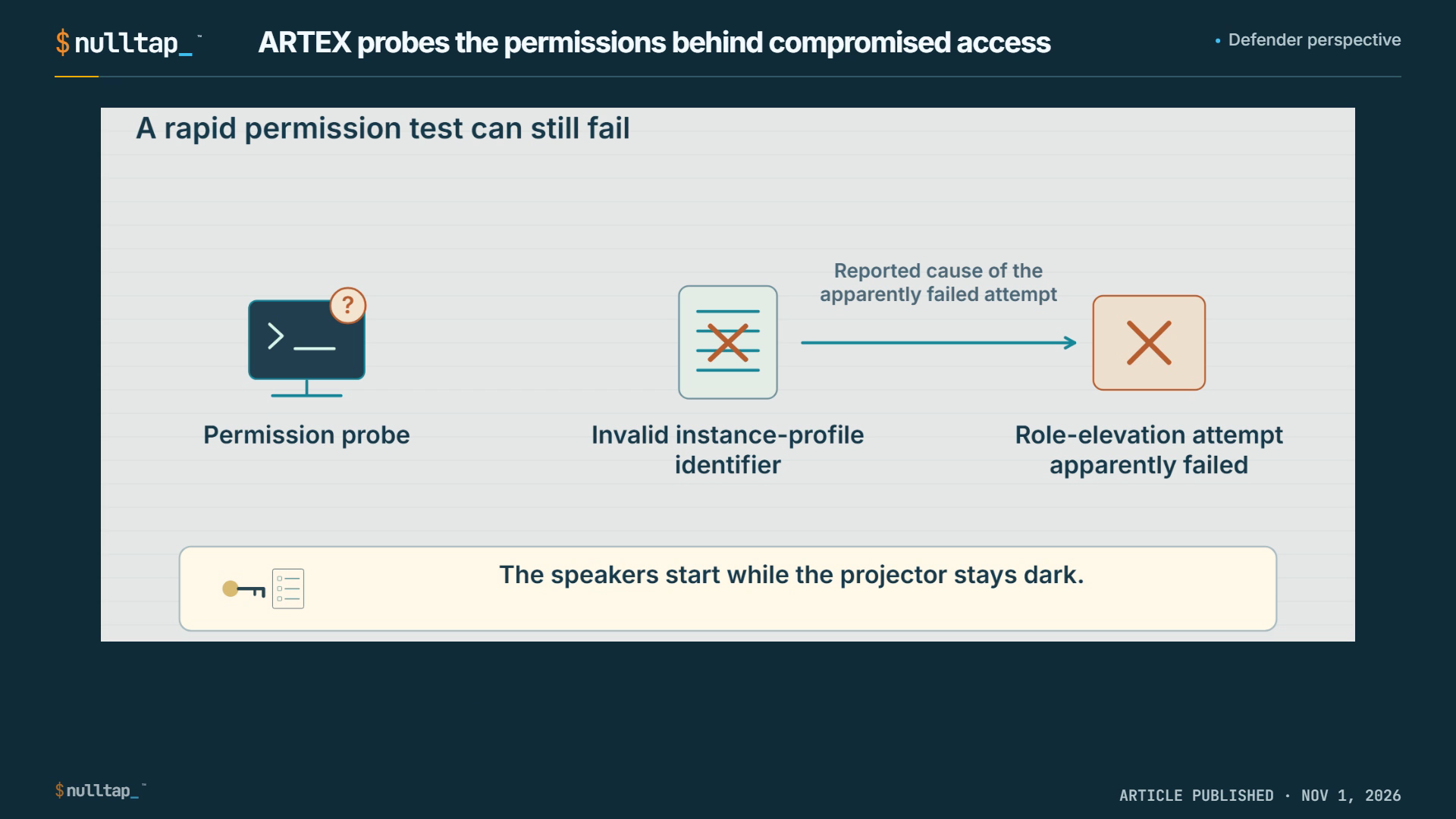
Separate attempted and completed operations, then verify the identity authority and independent management access rules.
 Watch Replay3:34
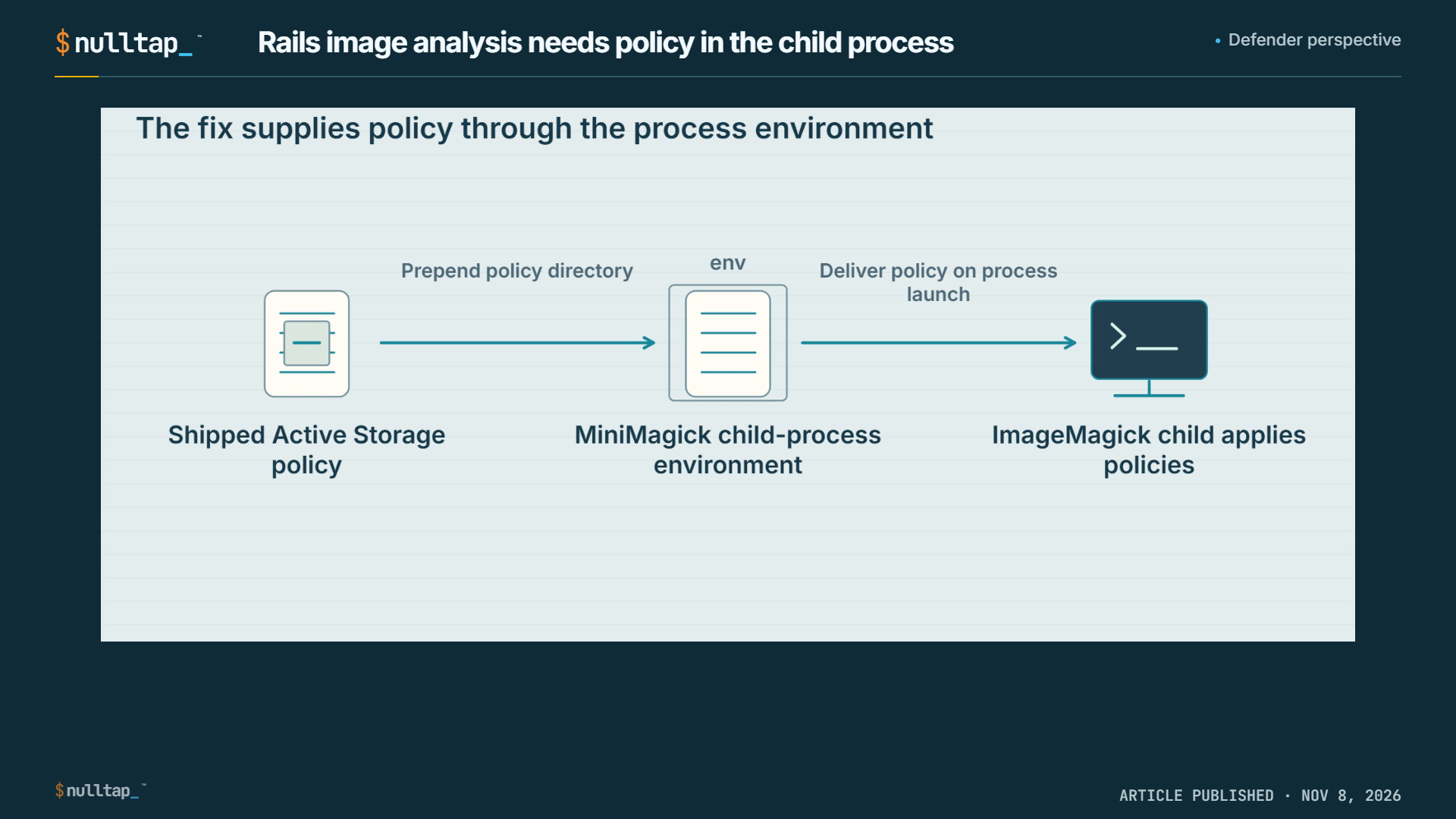
Trace attachment-time coder dispatch, verify policy in the actual processing child and recover all Disk-exposed secrets.
 Watch Replay3:26
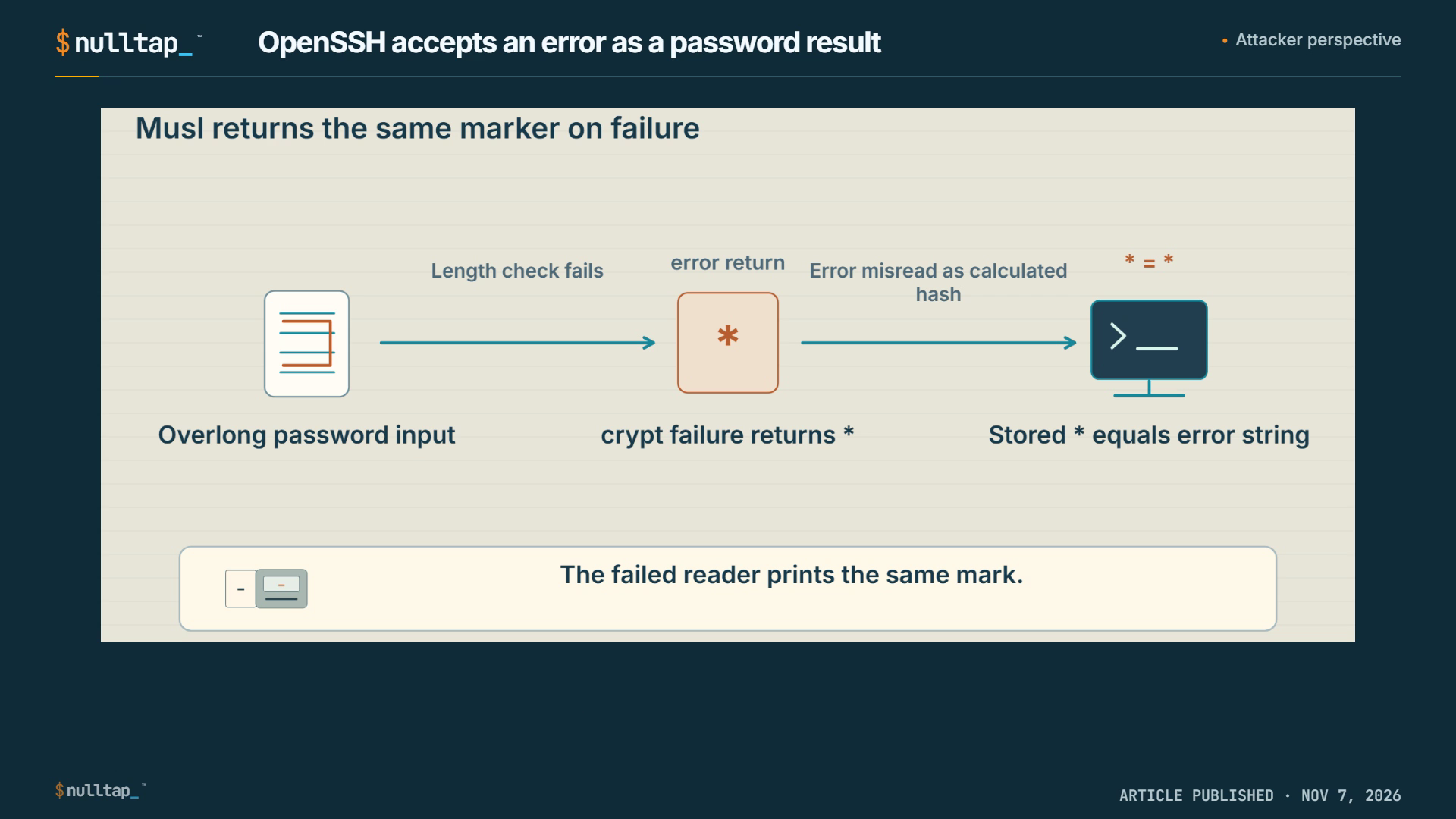
Explain an error-string collision and verify the installed distribution fix, restarted service and effective account policy.
 Watch Replay3:28
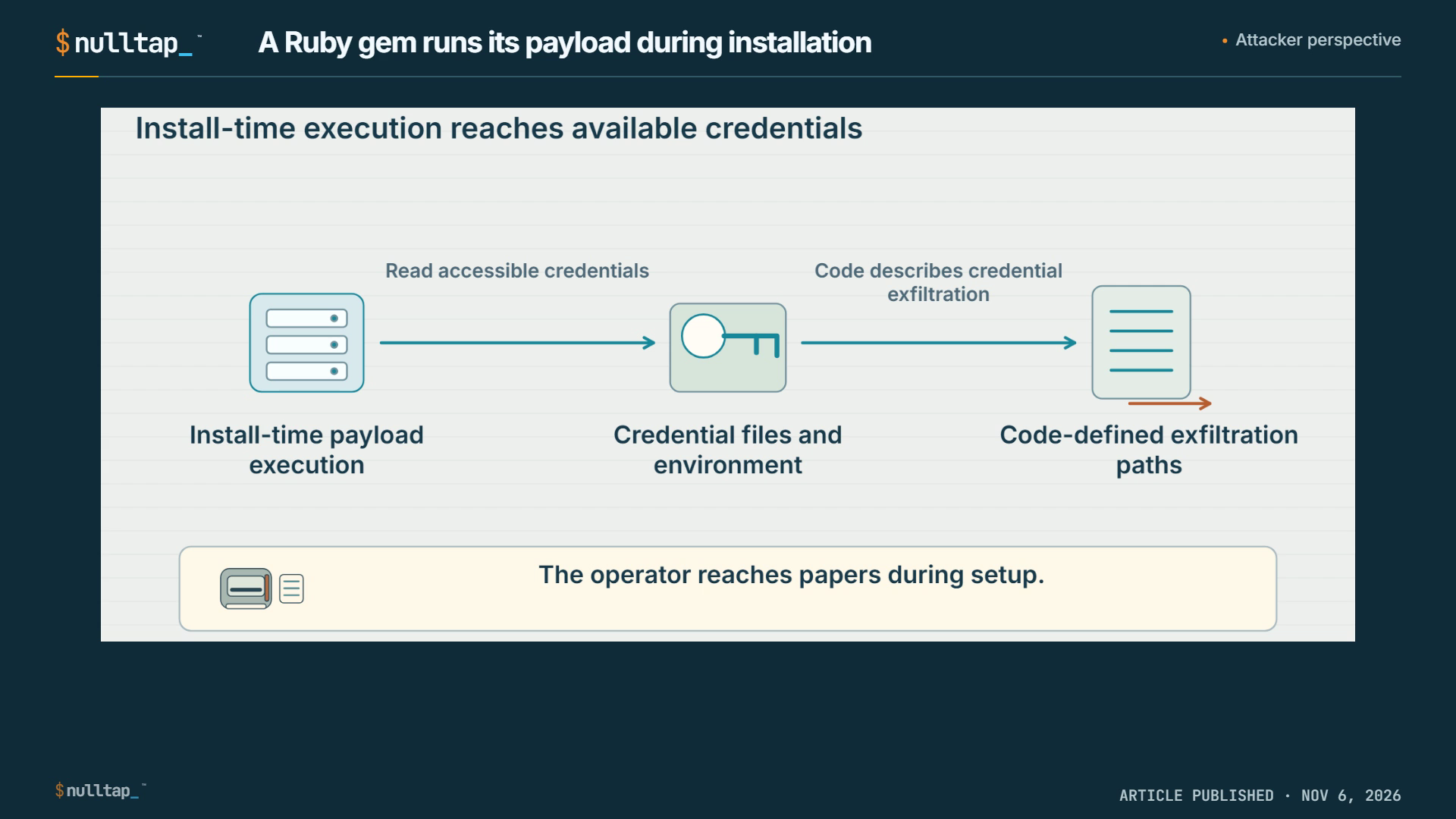
Trace code execution during gem installation, then contain the token monitor before revoking the credential it watches.
 Watch Replay3:13
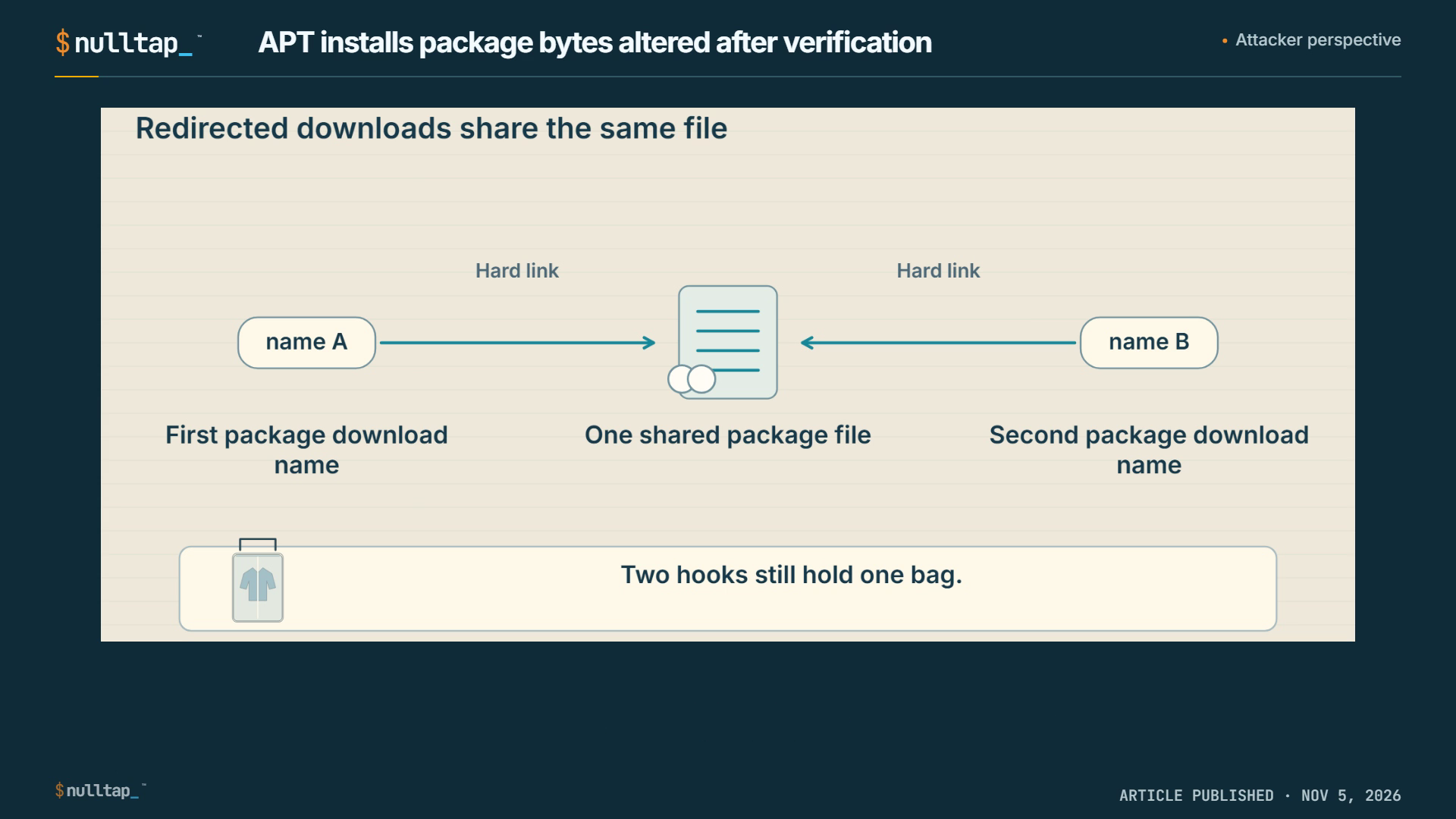
Trace how a retried download changes a checked package, then verify the fixed client in the job or image that installs software.
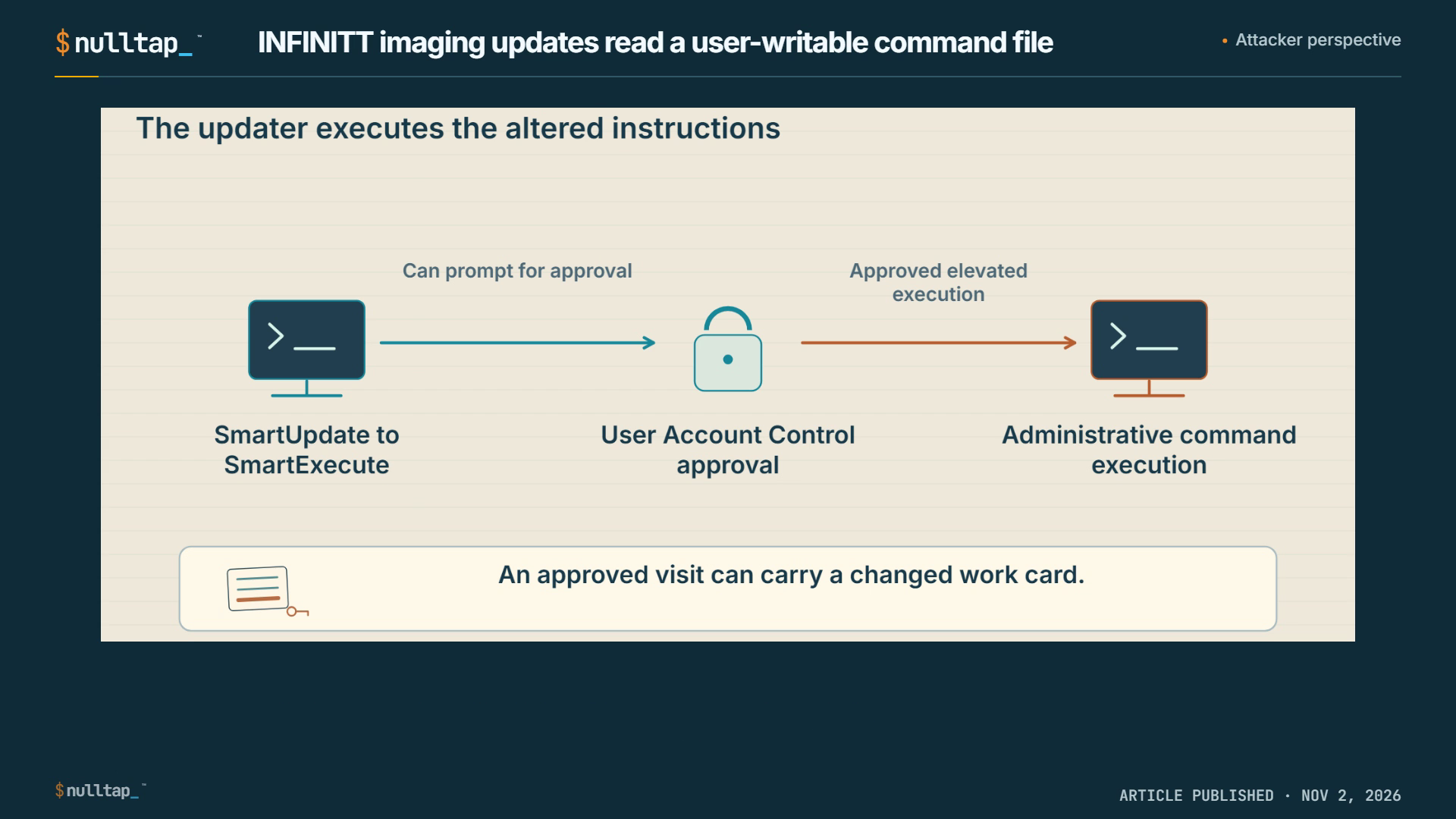 Watch Replay3:32
Separate approval of an elevated update from integrity of its command source, then distinguish a user-opened handler and verify the appropriate fixed build.
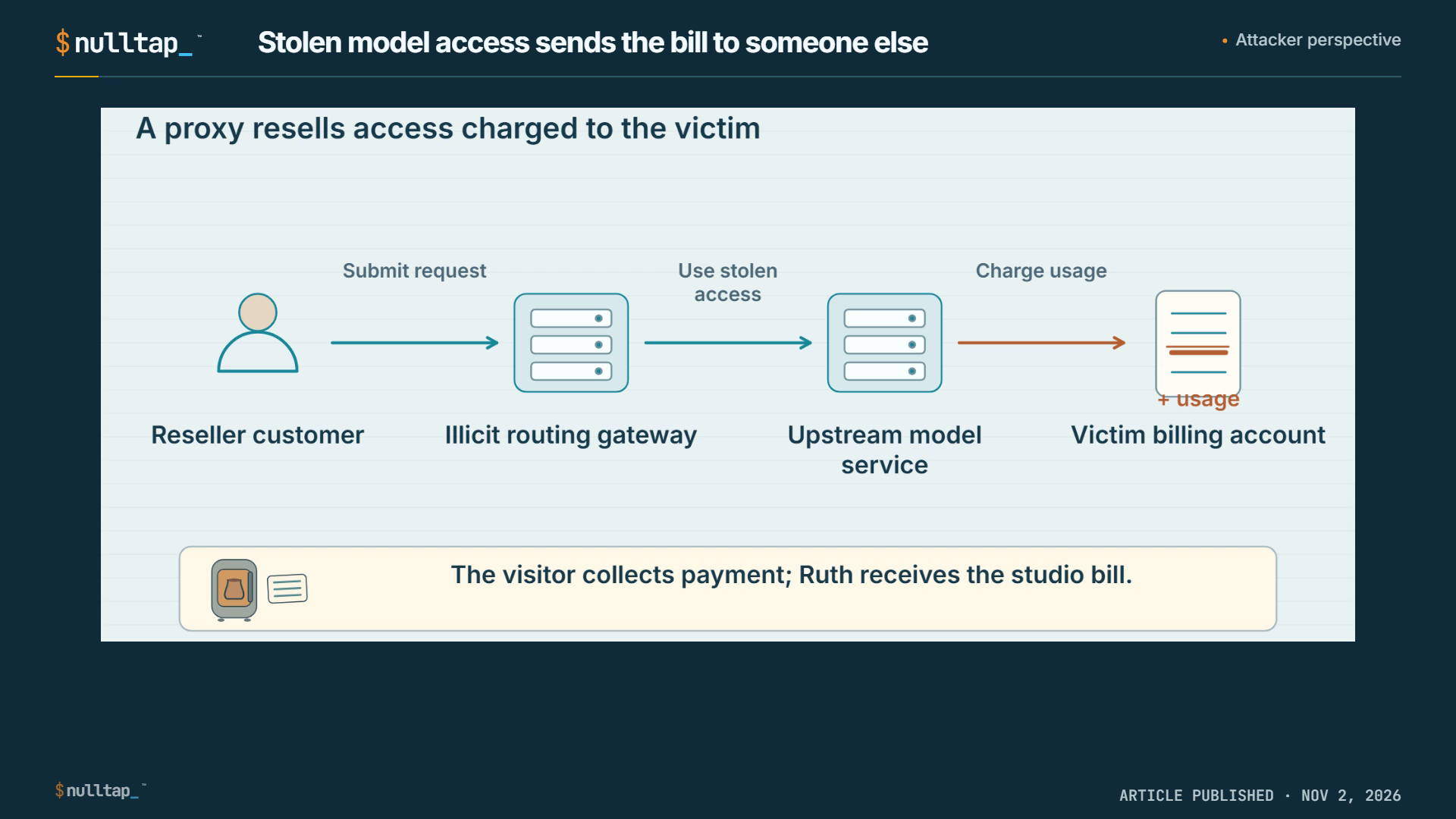 Watch Replay3:32
Trace who authorizes, consumes and pays for model requests, then verify access, request visibility and the actual cost control.
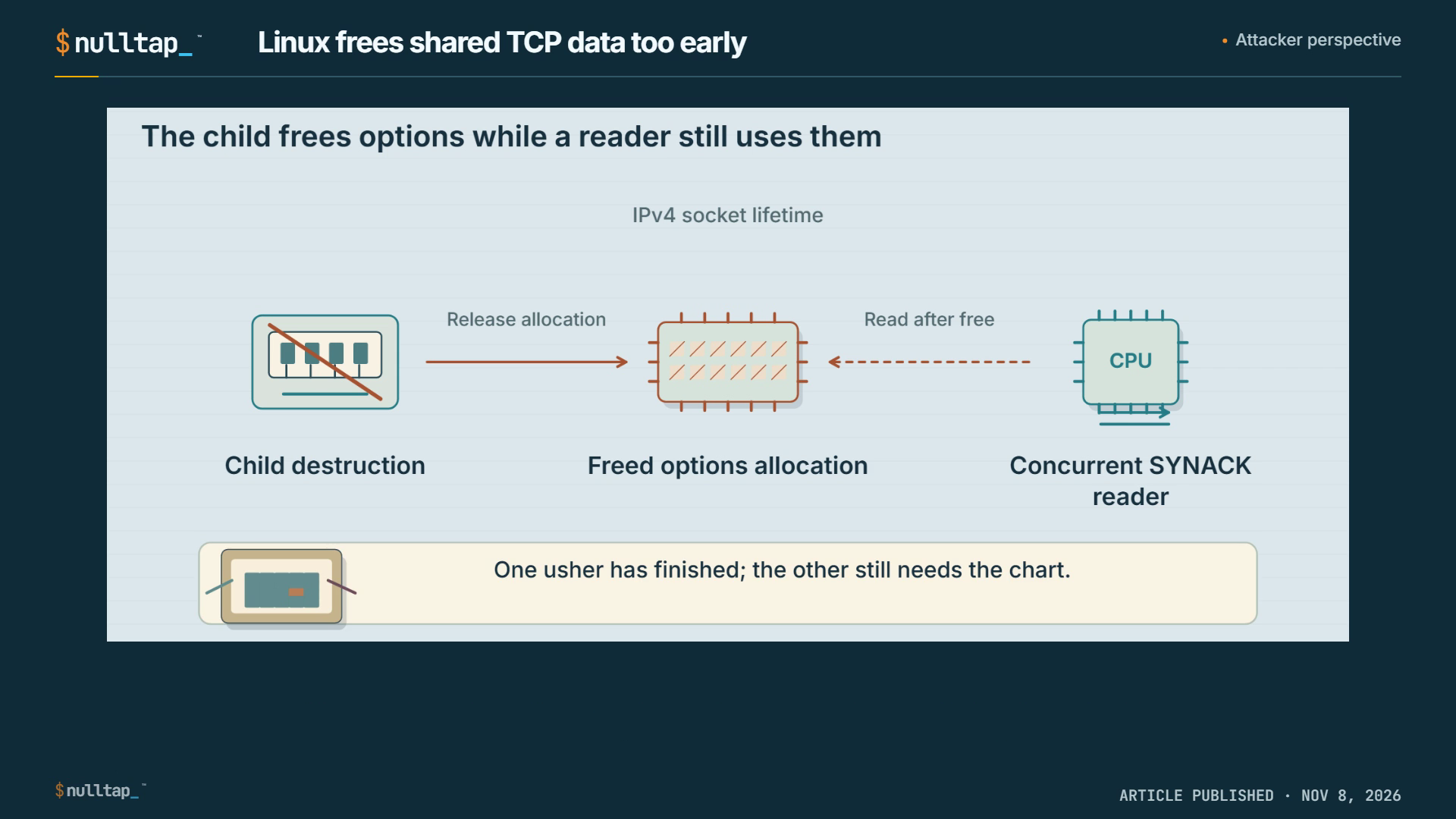 Watch Replay3:35
Explain why shared IPv4 options must survive current readers, then verify the booted vendor fix and review separate migration exposure.
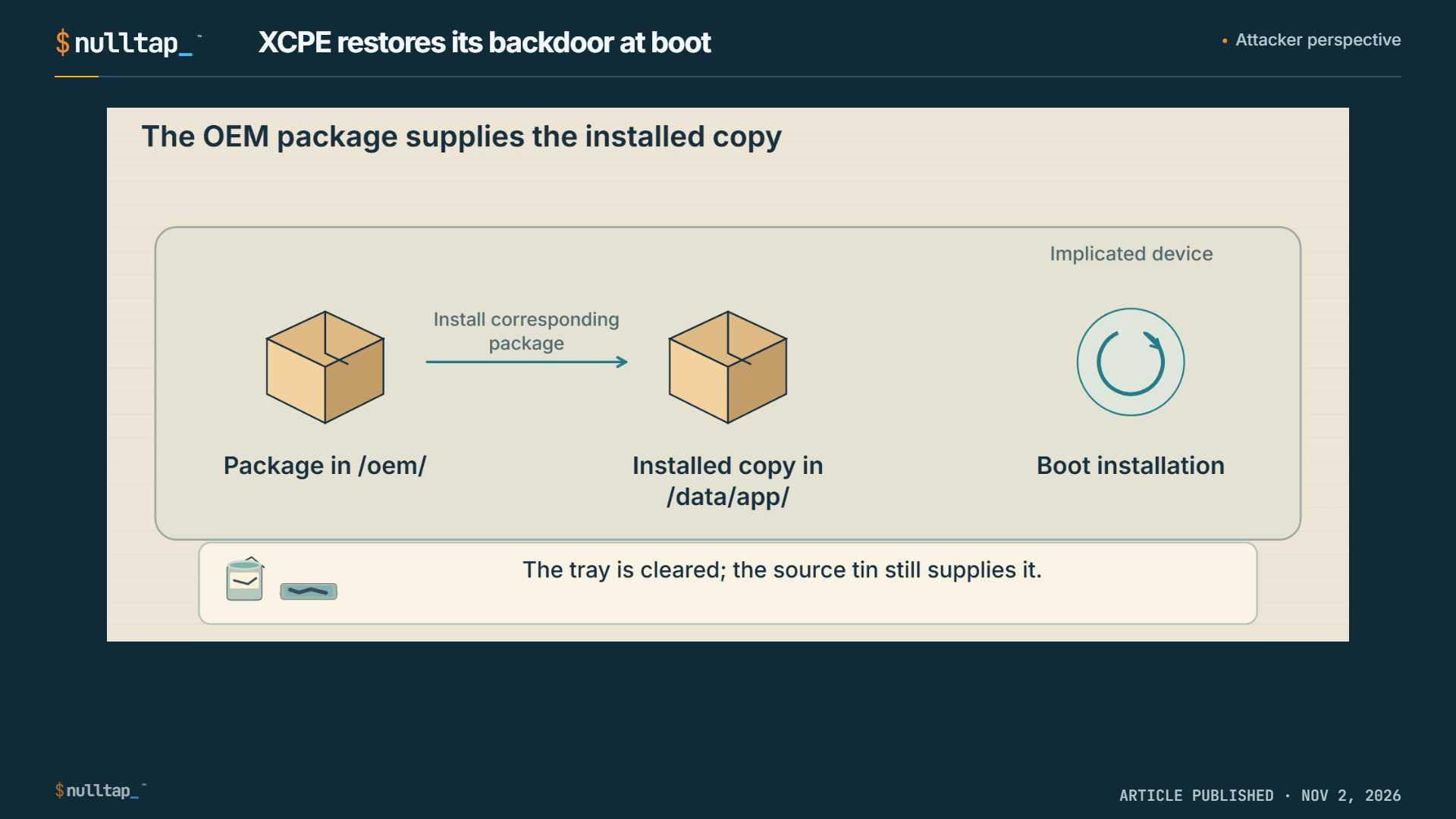 Watch Replay3:13
Identify the source that restores an installed backdoor and distinguish network disruption from verified firmware recovery.
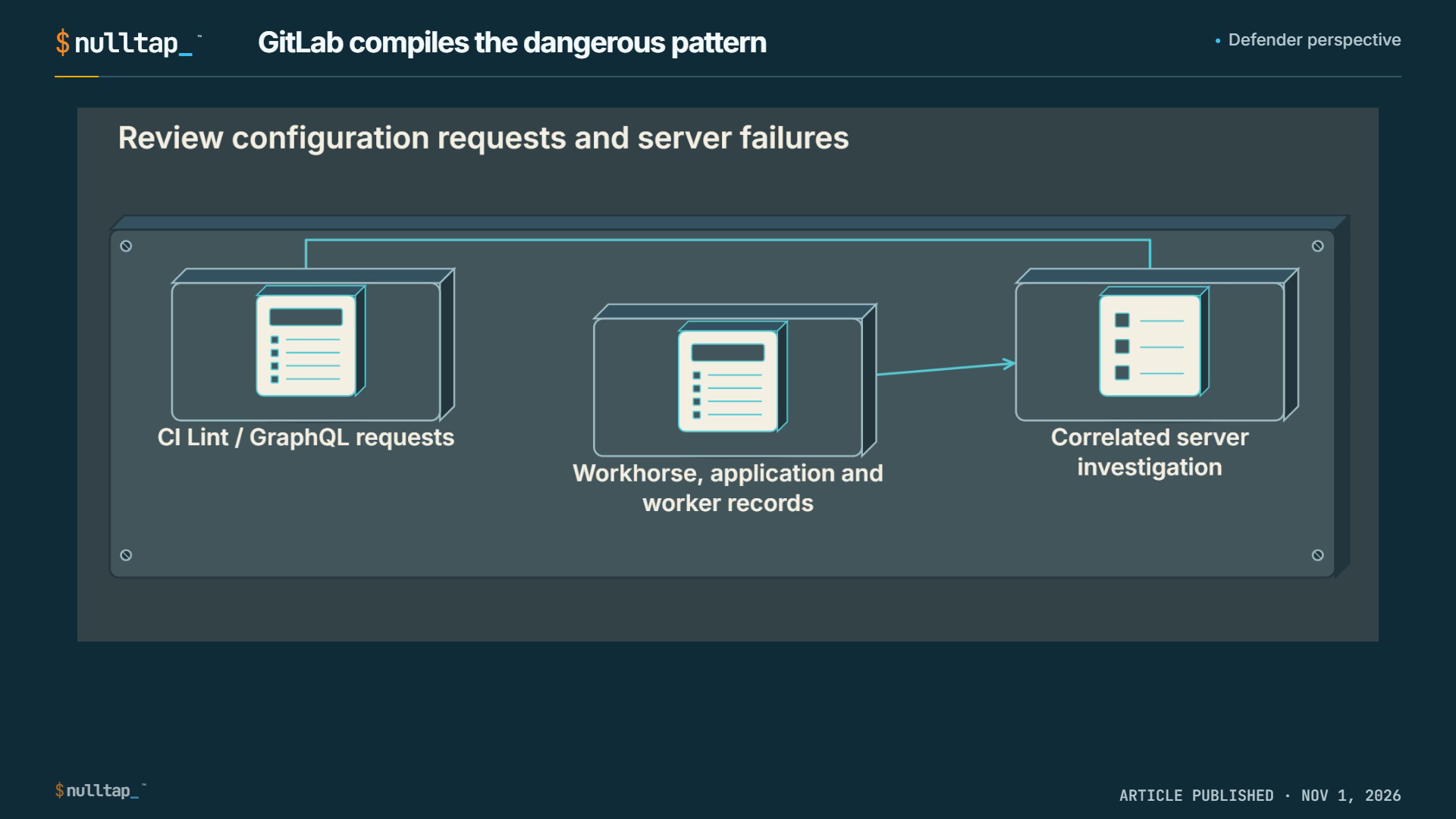 Watch Replay3:49
Locate the untrusted-pattern compilation boundary on the GitLab server and separate fixed-build verification from investigation of prior exposure.
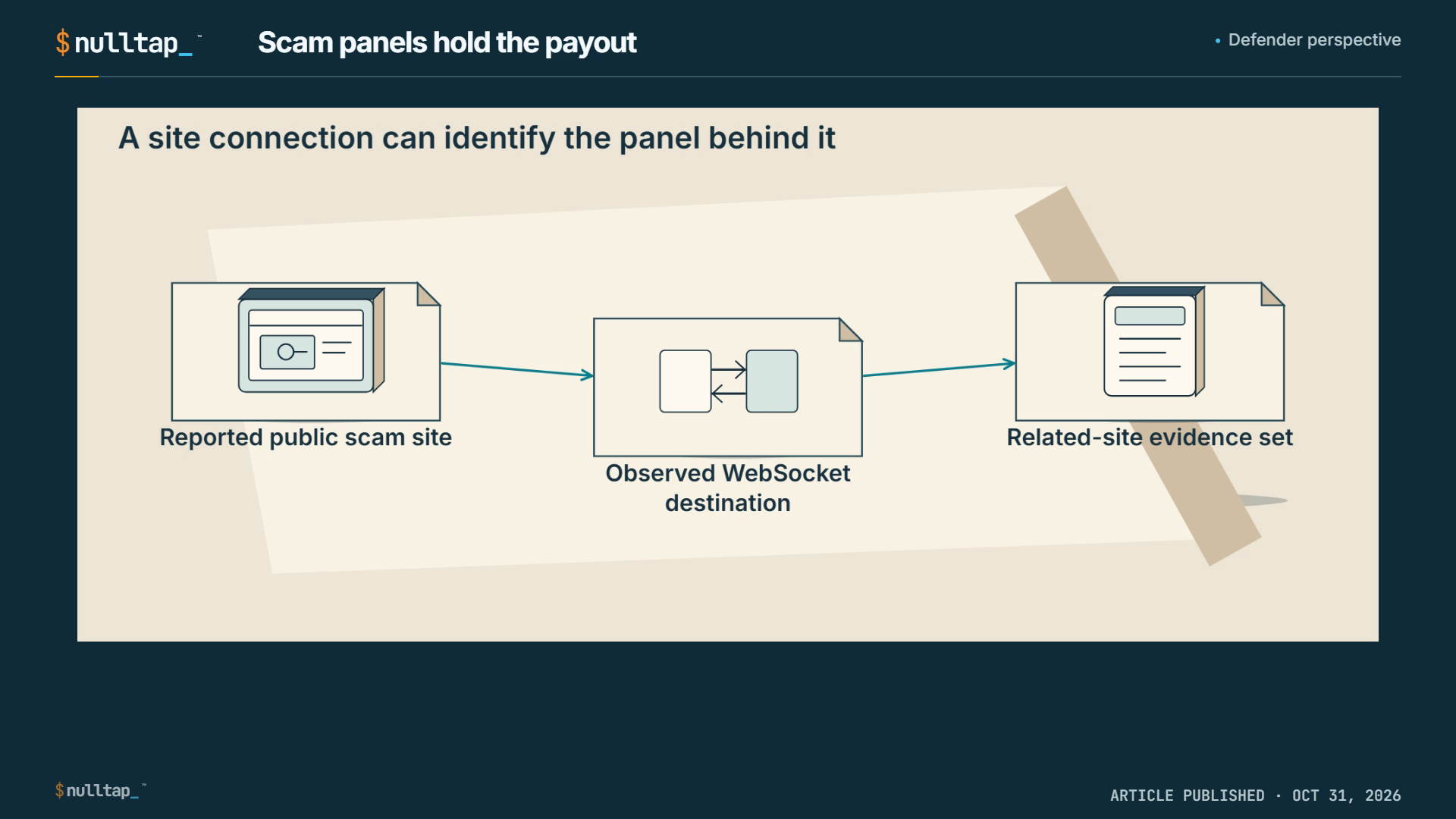 Watch Replay3:26
Separate operator-controlled displayed credit from deposited funds, keep distinct platform findings scoped and join complaint/payment/referral evidence before acting on an authorized surface.
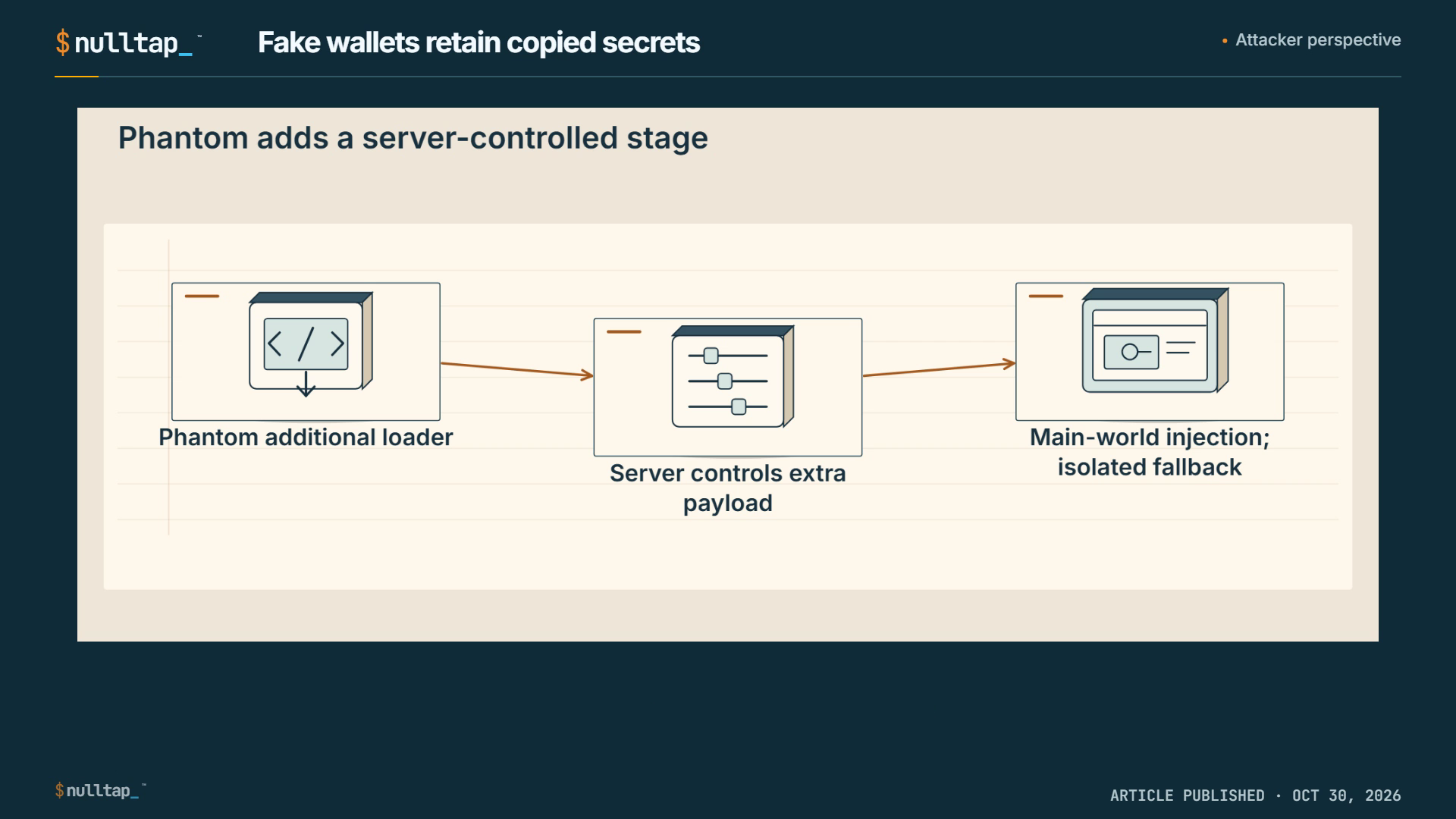 Watch Replay3:35
Recognize the separate bundled and extra runtime theft paths, preserve matched-profile evidence and separate add-on removal from recovery of an exposed wallet secret.
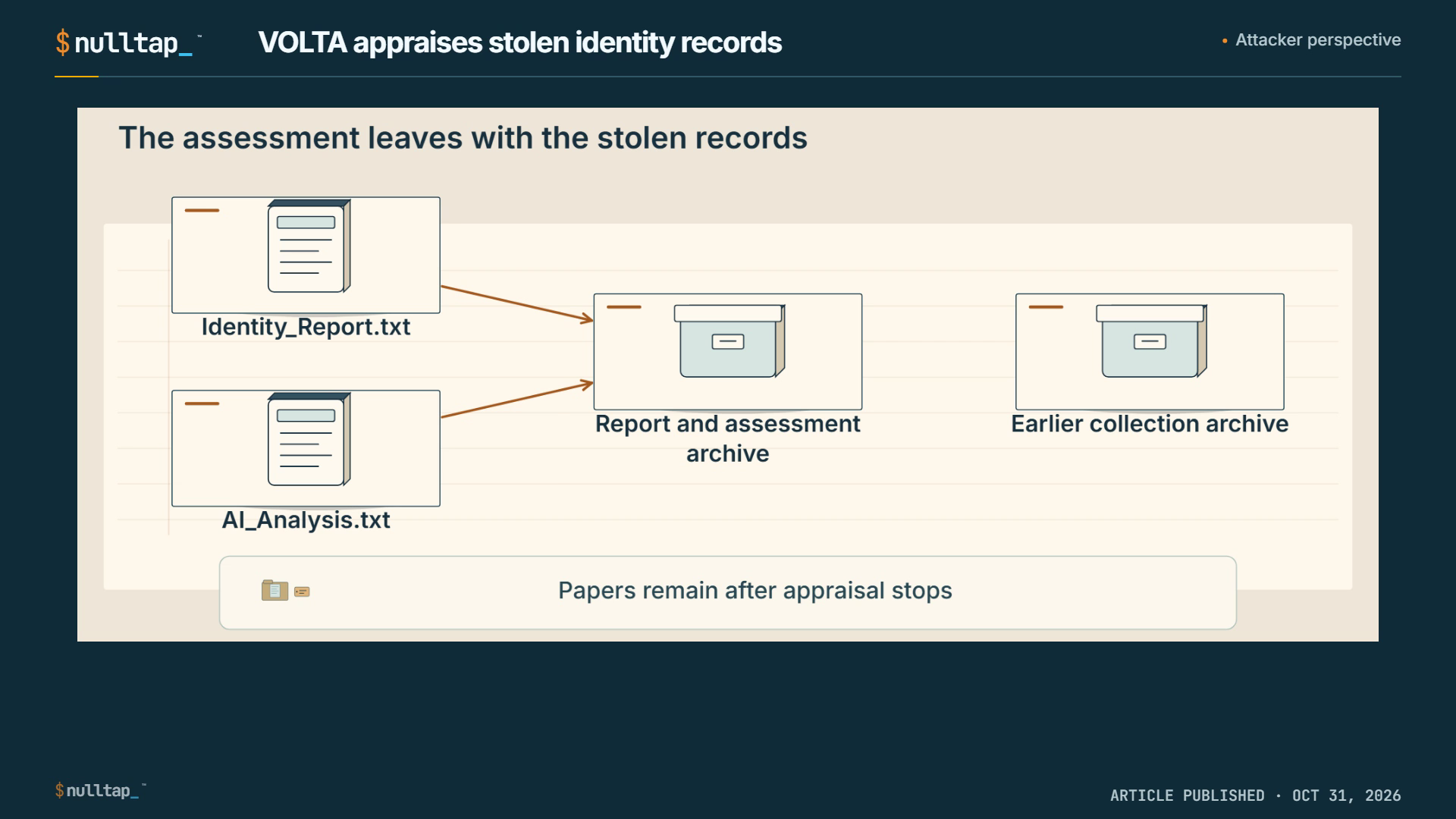 Watch Replay3:26
Distinguish credential collection, session-based enrichment and optional model appraisal, then contain exposed host and account access.
 Watch Replay3:02
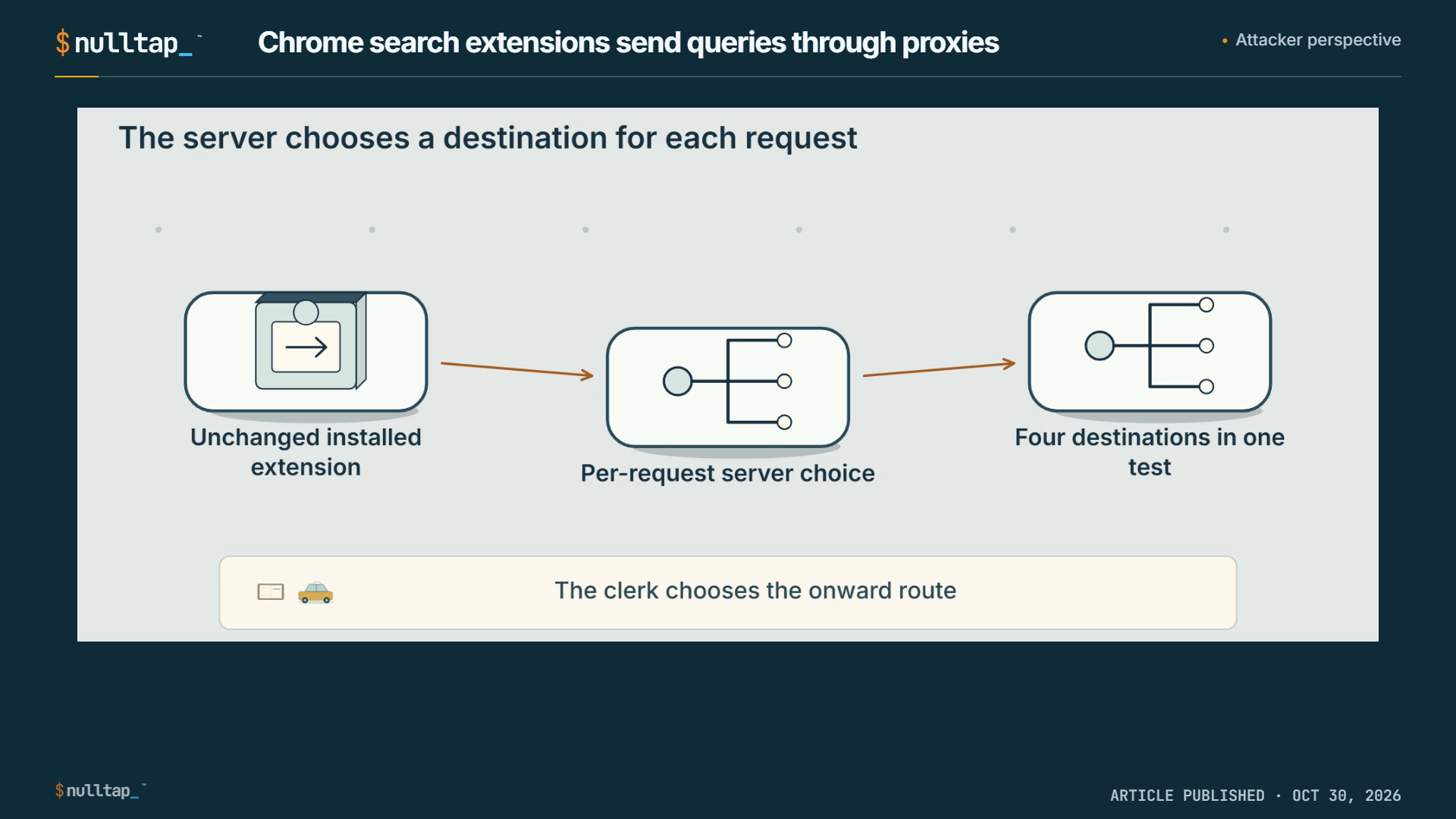
Recognize default-provider query exposure despite a familiar final results page, and verify profile repair at the first request.
 Watch Replay3:55
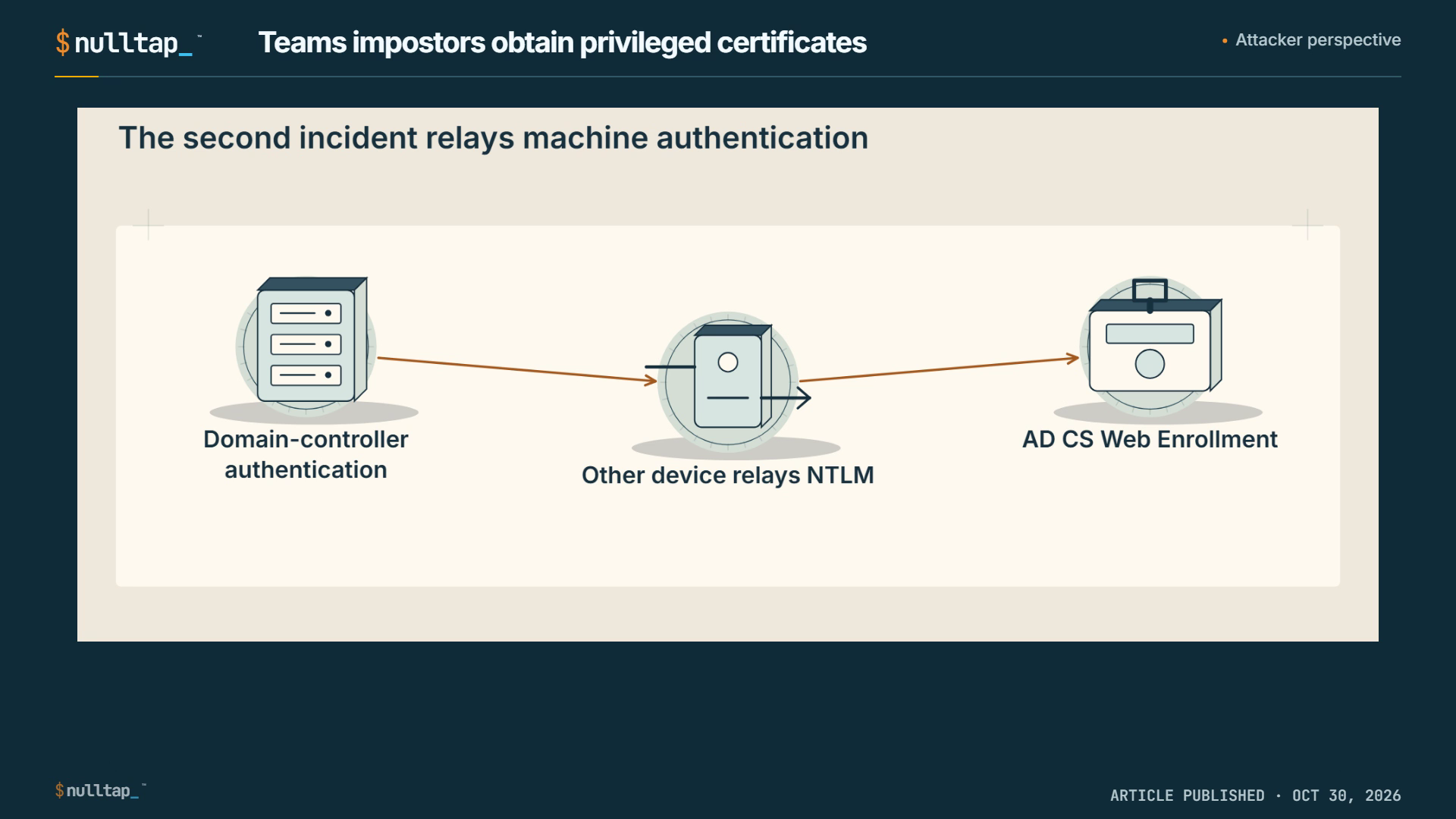
Distinguish two separately observed certificate-abuse routes, then contain unauthorized certificates, existing tickets and excluded identities with evidence from the issuing service.
 Watch Replay2:56
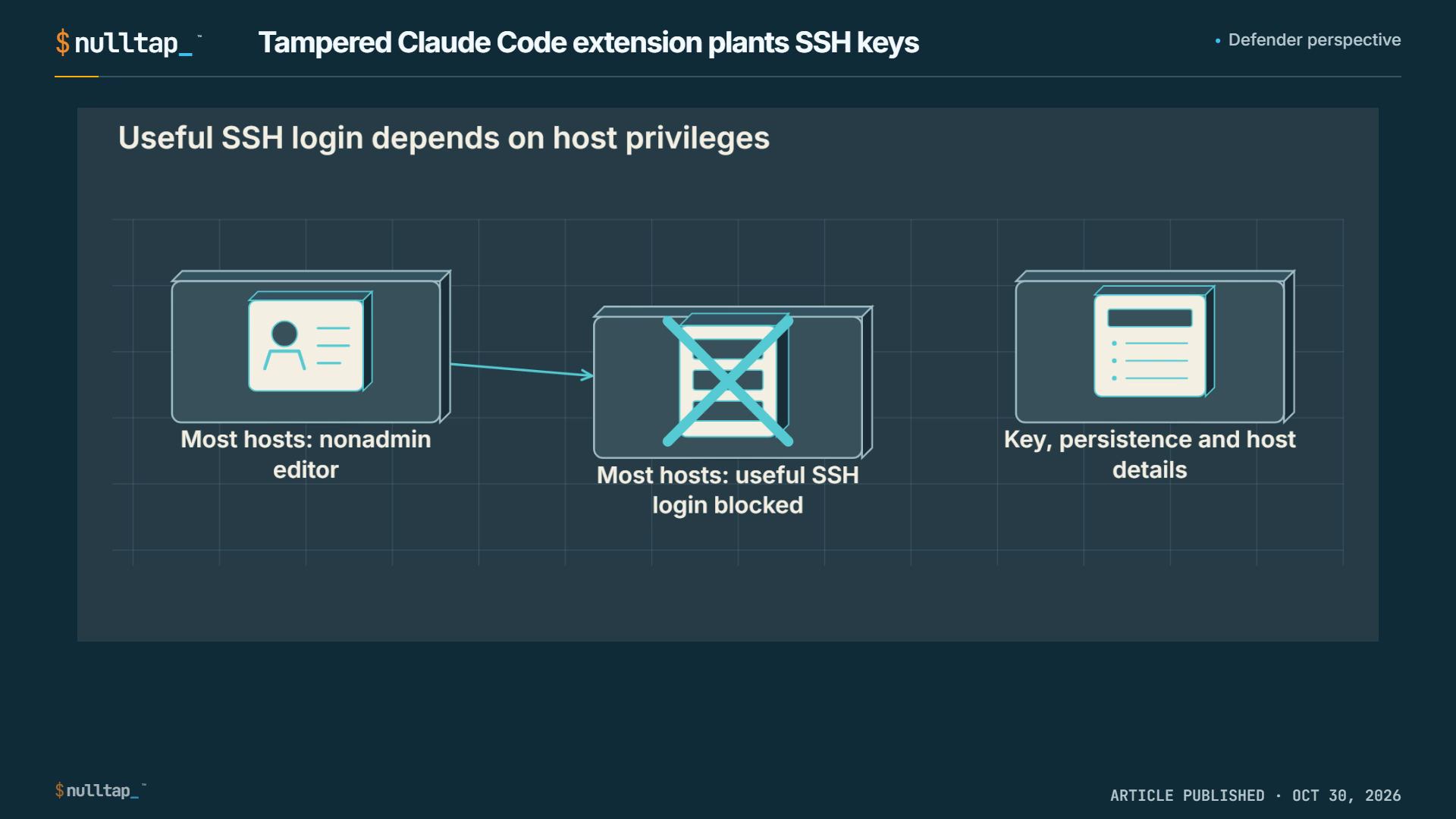
Identify affected Cursor packages by channel and bytes, then distinguish attempted SSH access from the independent host changes that remain after extension removal.
 Watch Replay3:16
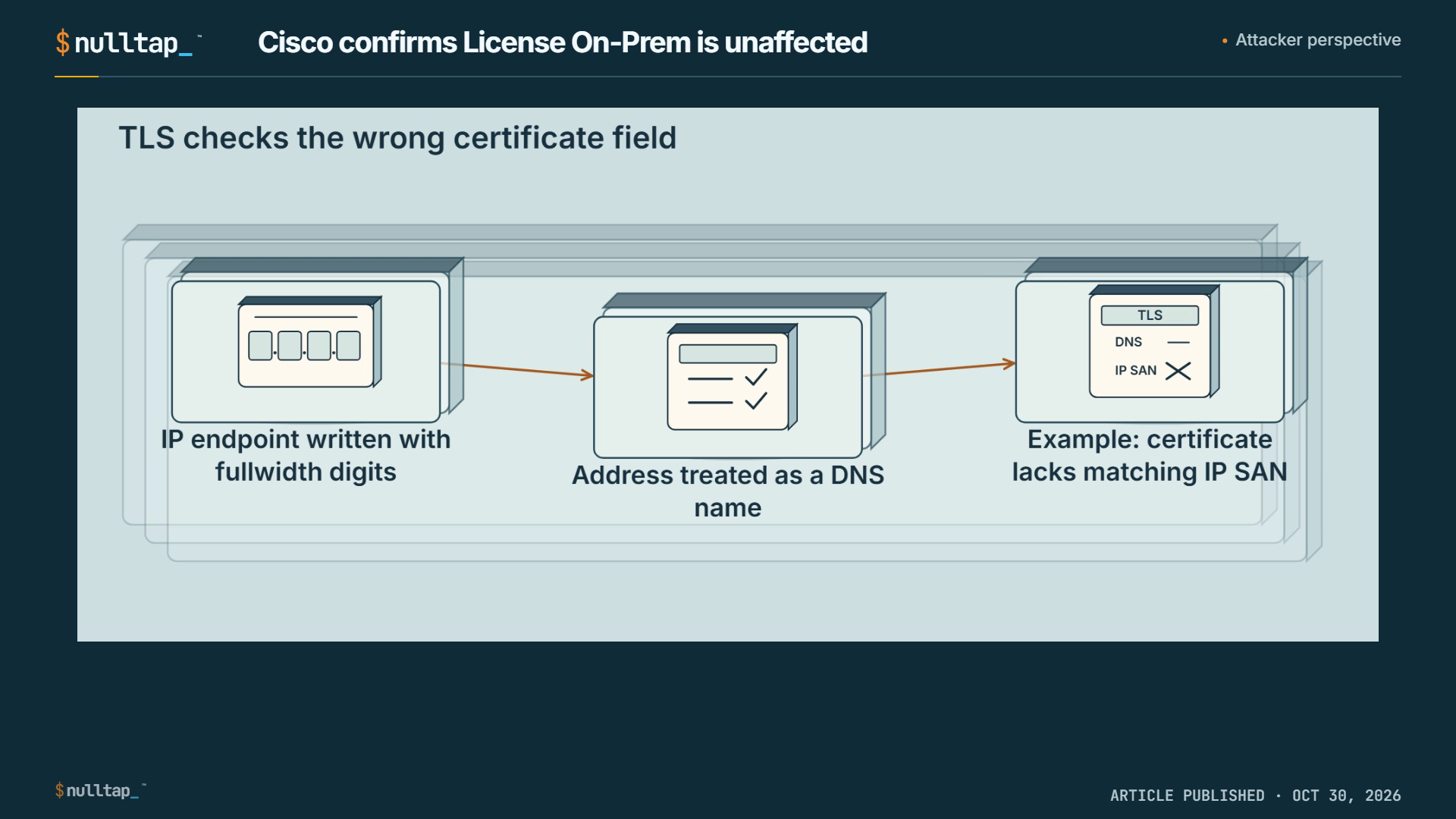
Use Cisco’s corrected product applicability before selecting a fix, while explaining the separate upstream DNS, TLS and Brotli conditions for independently managed Node.js services.
 Watch Replay2:23
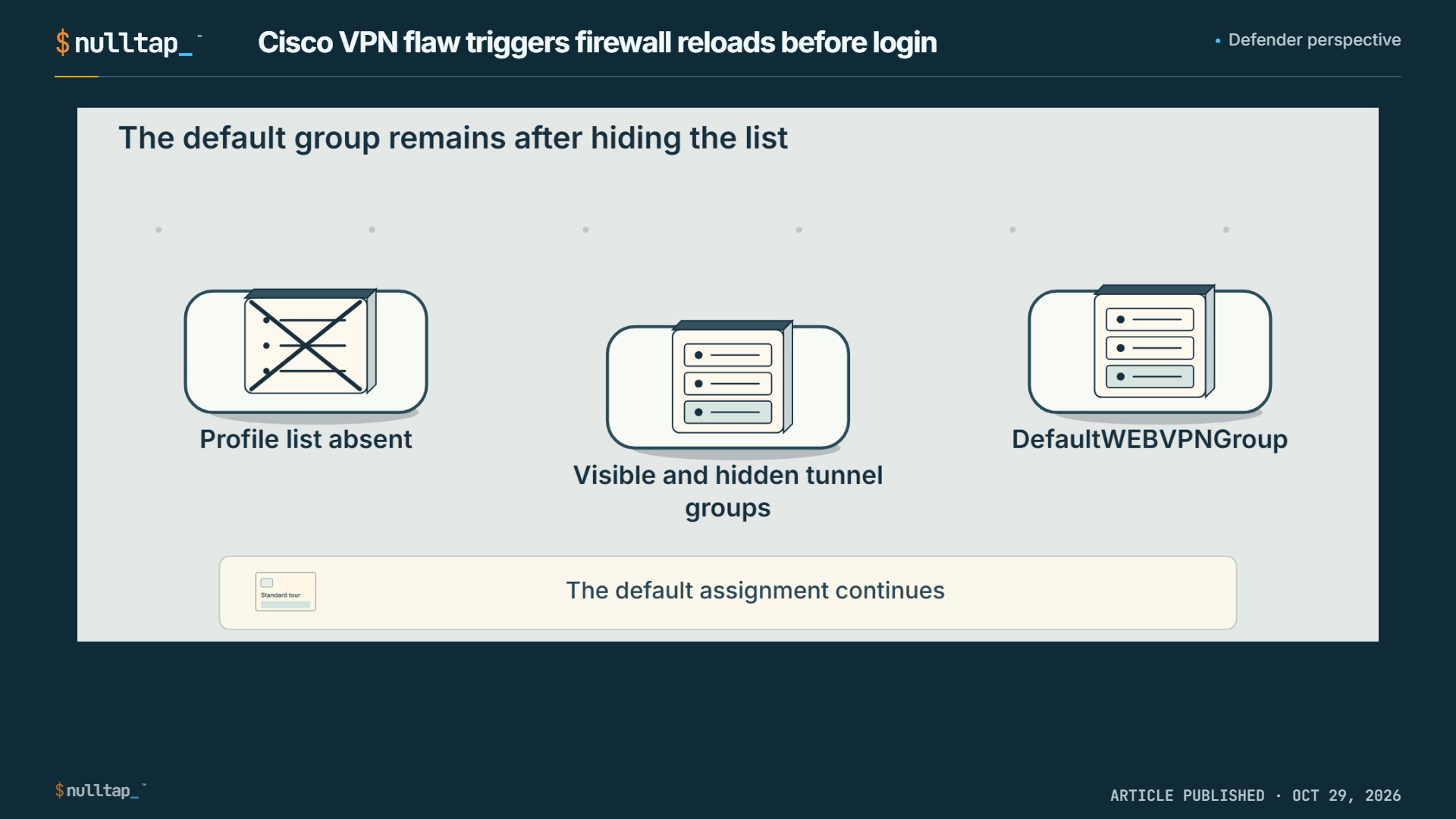
Trace reachable SSL VPN processing through visible, hidden and default connection profiles, then verify the applicable configuration and fixed running release.
 Watch Replay2:53
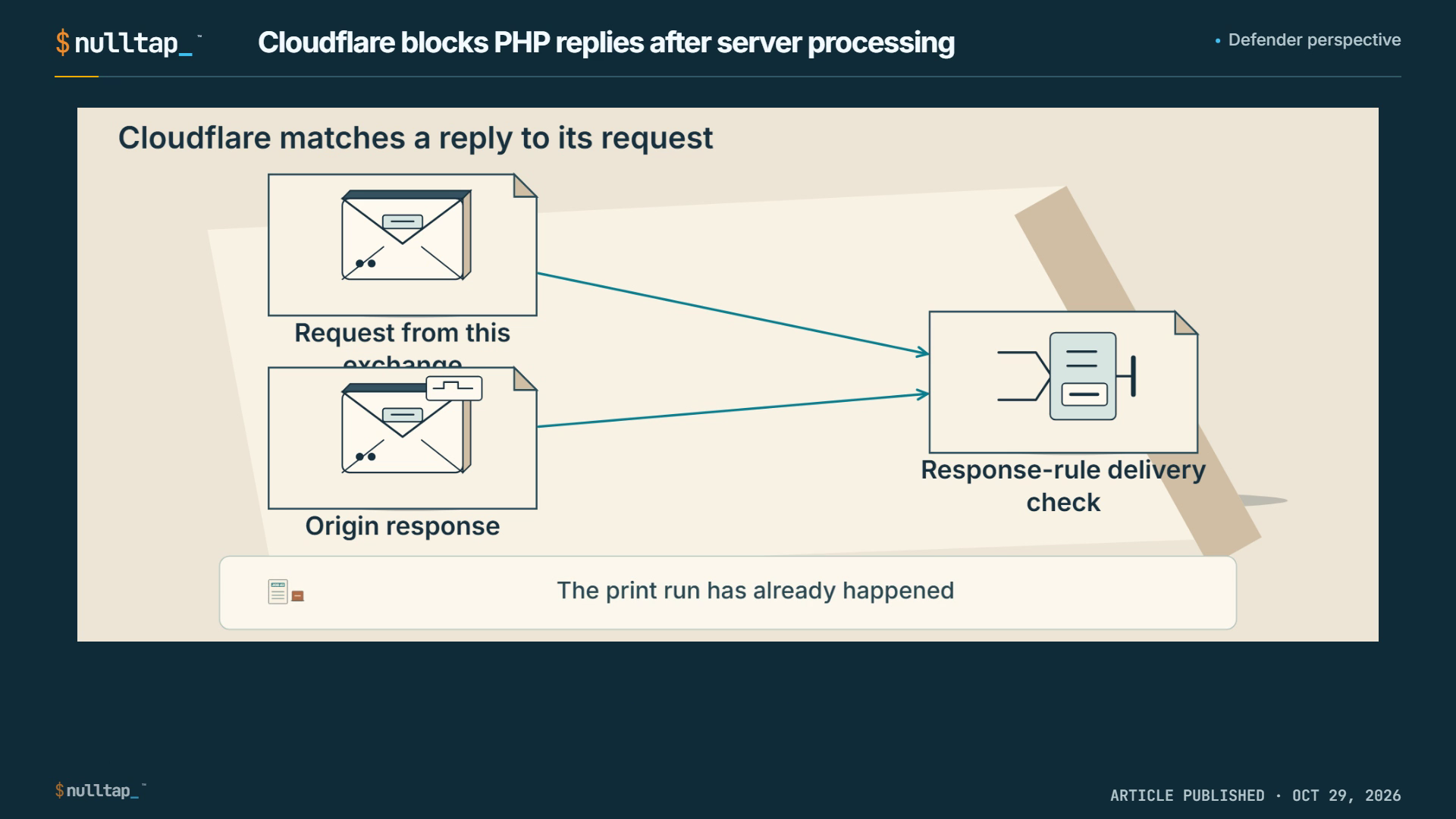
Trace the request and response from one HTTP exchange, verify the rule-specific field condition and check the serving PHP worker independently.
 Watch Replay2:58
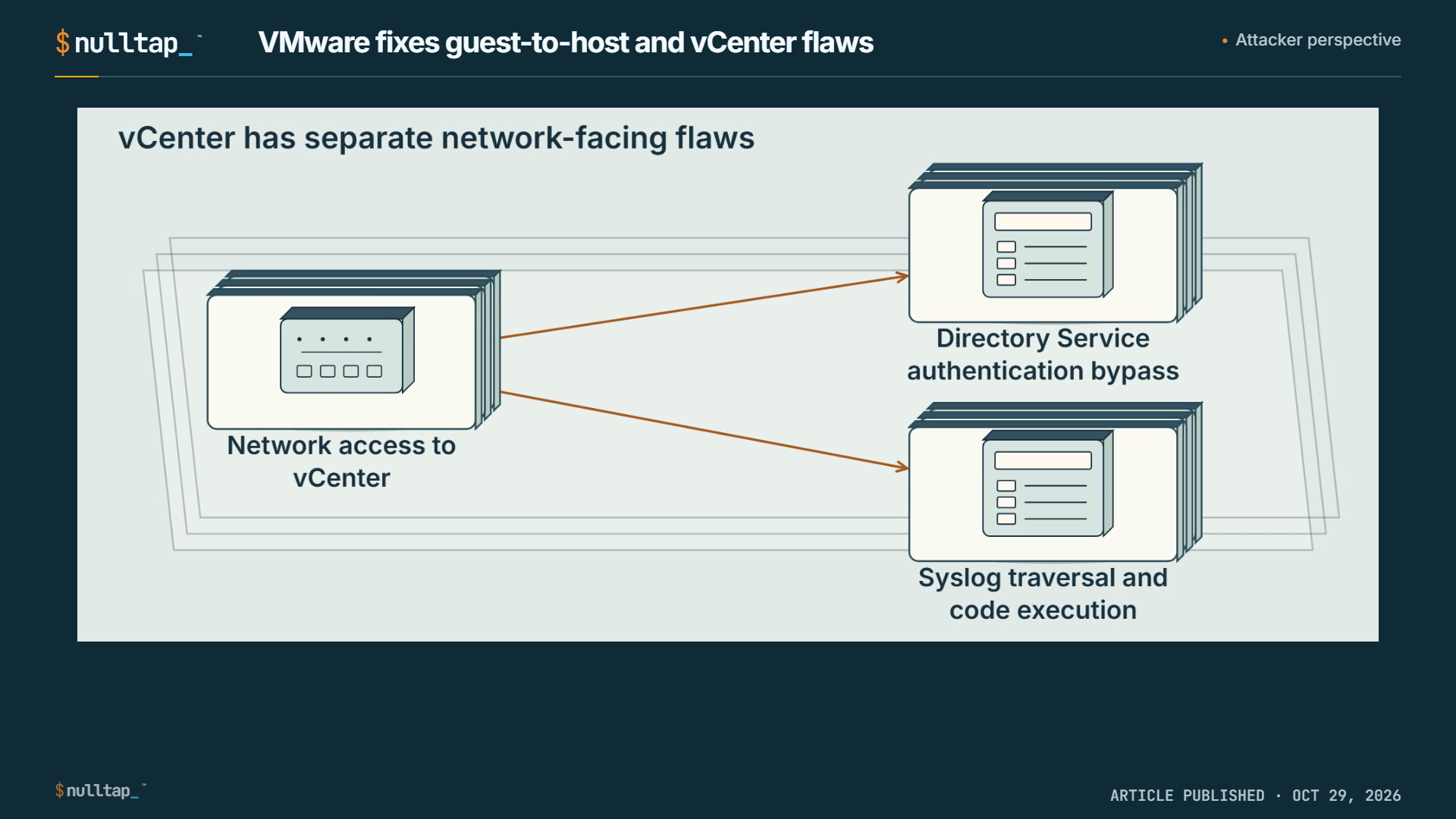
Scope the VMXNET3 guest-to-host prerequisite and verify the host and management component fixes independently.
 Watch Replay3:38
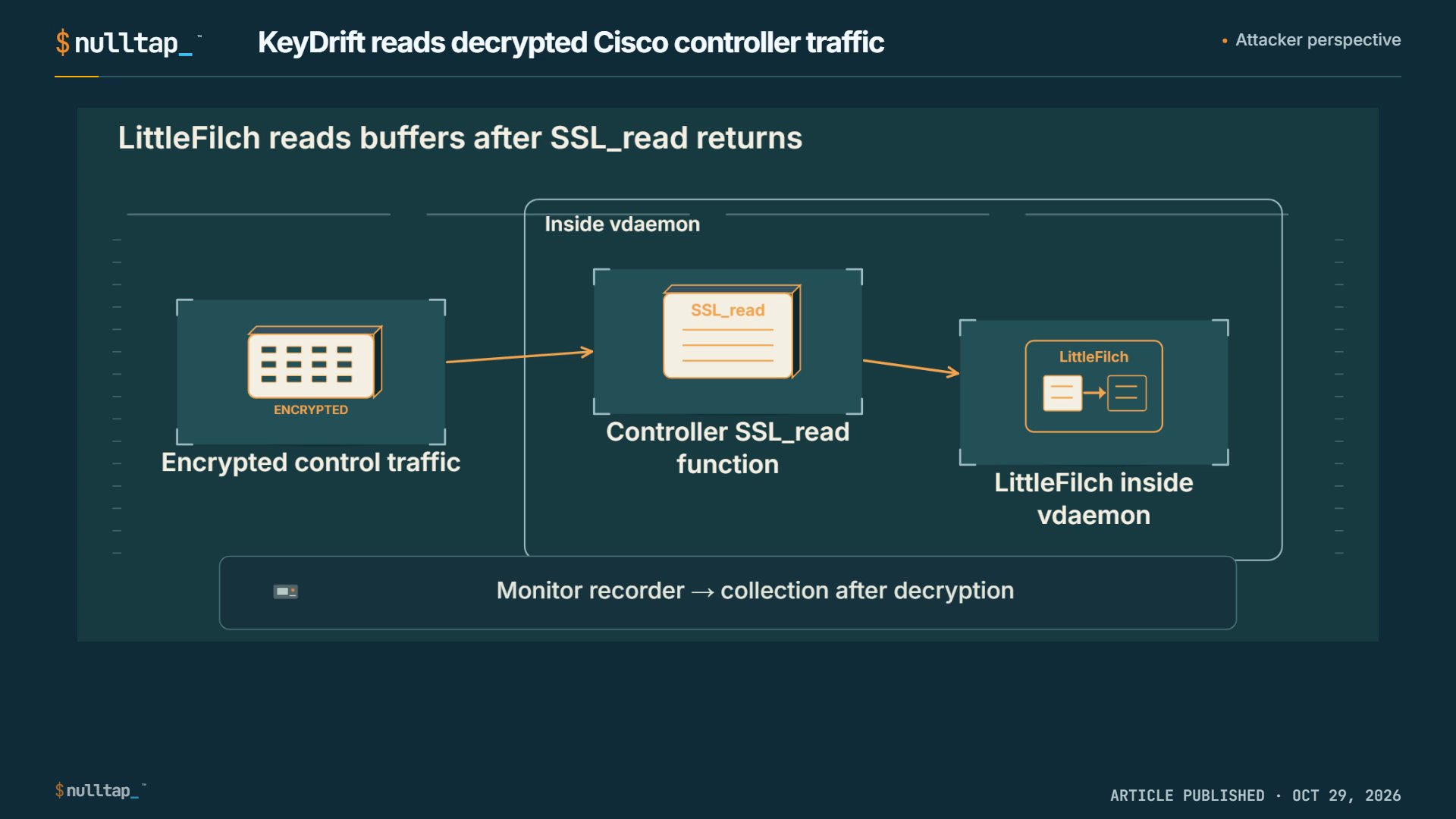
Explain collection after decryption inside an implanted controller and validate peers, services and the running fixed release.
 Watch Replay3:27
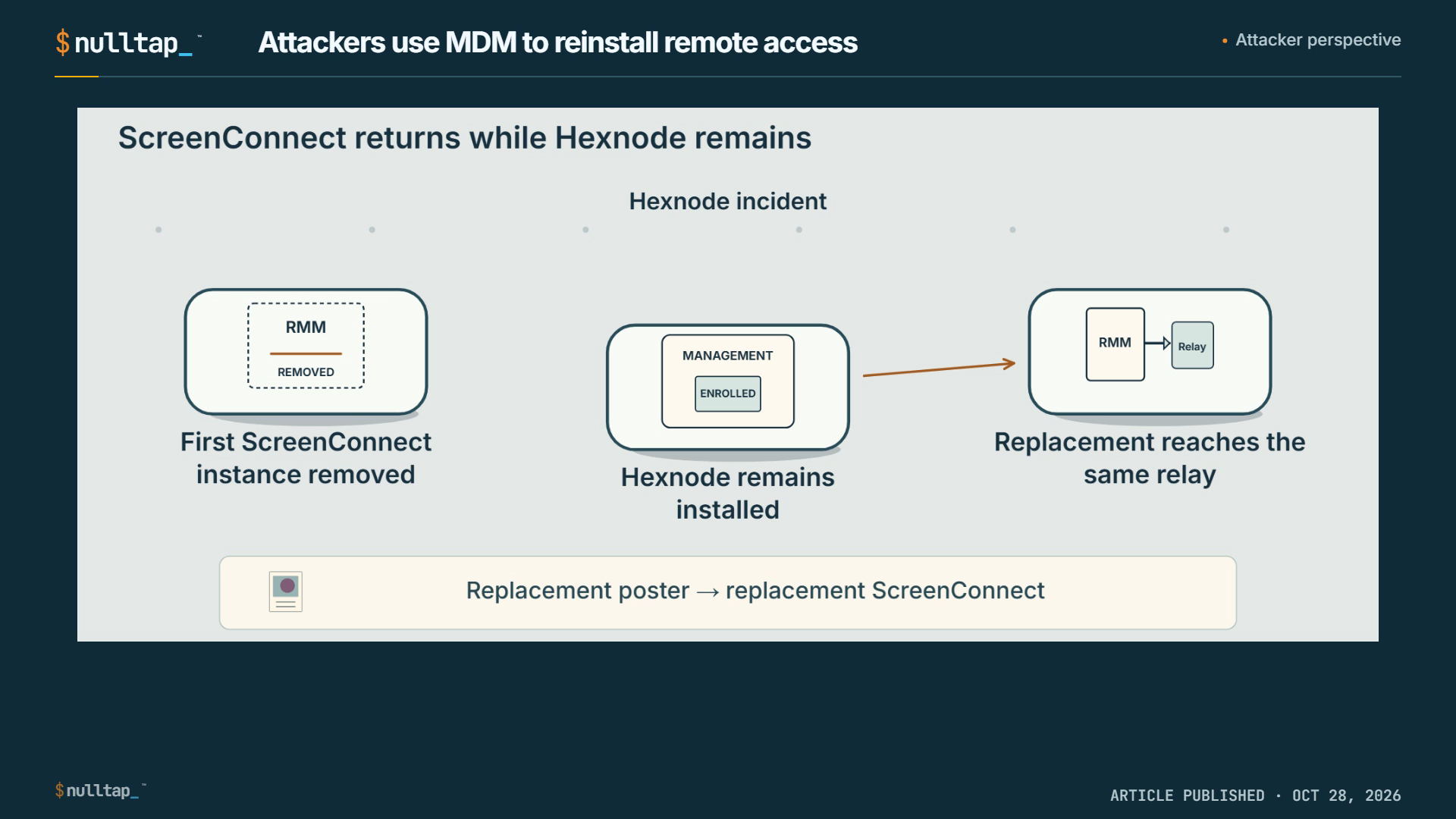
Trace unauthorized management enrollment upstream of remote access and distinguish two separately observed deployment chains.
 Watch Replay2:47
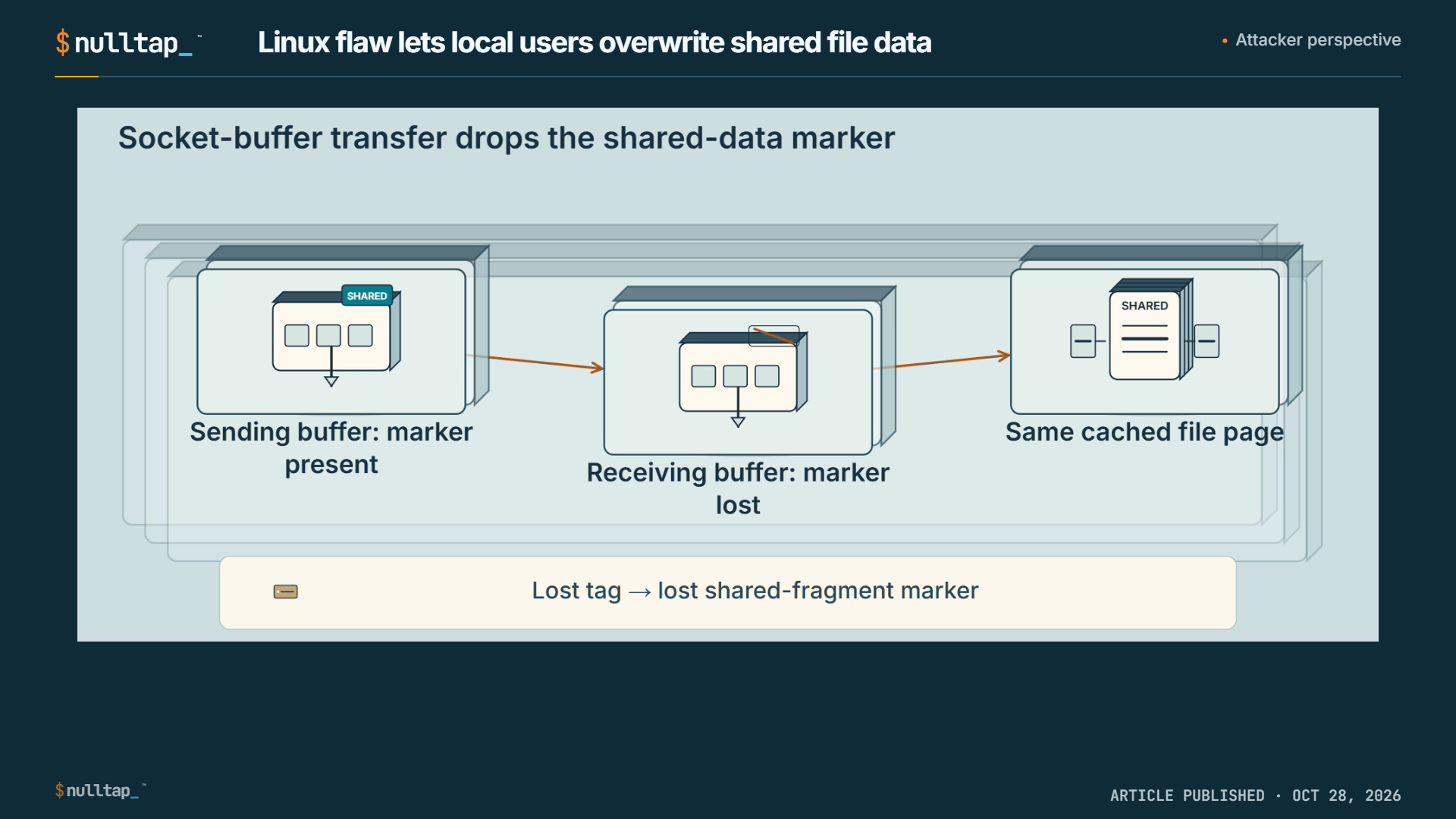
Explain the lost shared-fragment marker and verify that the active kernel includes its repair.
 Watch Replay3:05
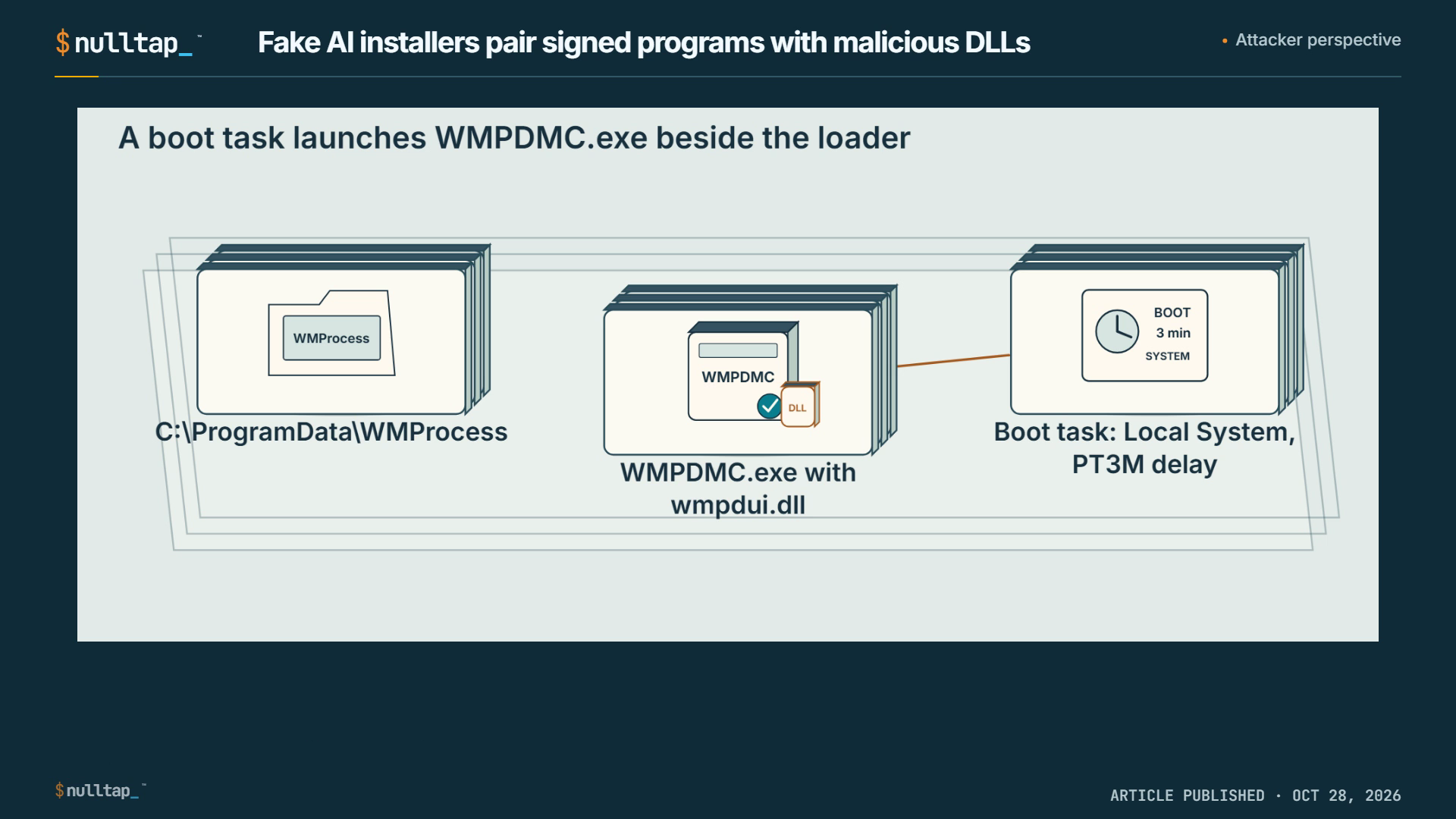
Inspect the download’s origin, loaded DLLs and actual scheduled-task action.
 Watch Replay3:20
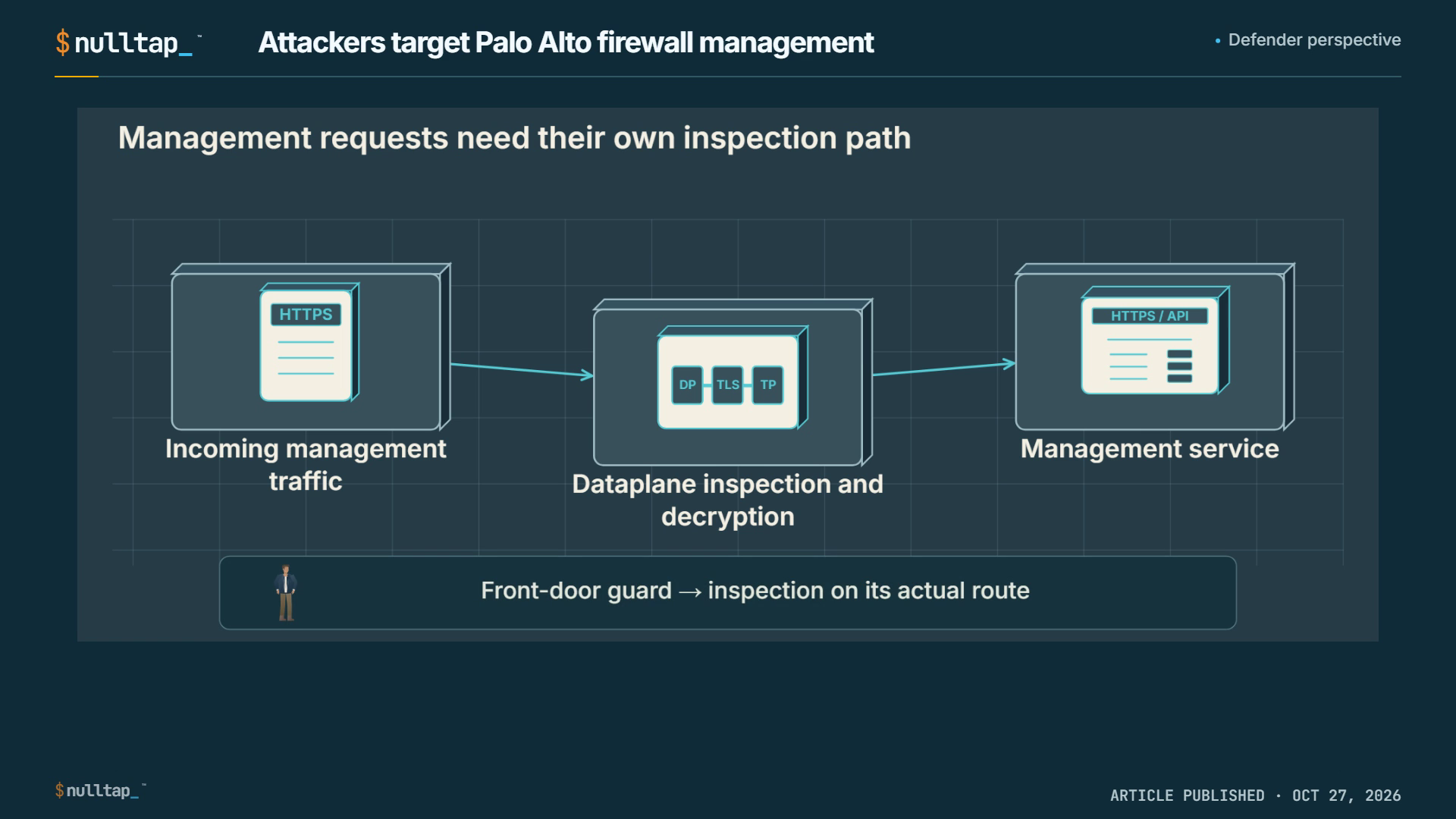
Find every reachable firewall management service, check its actual inspection path and verify a fixed maintenance build.
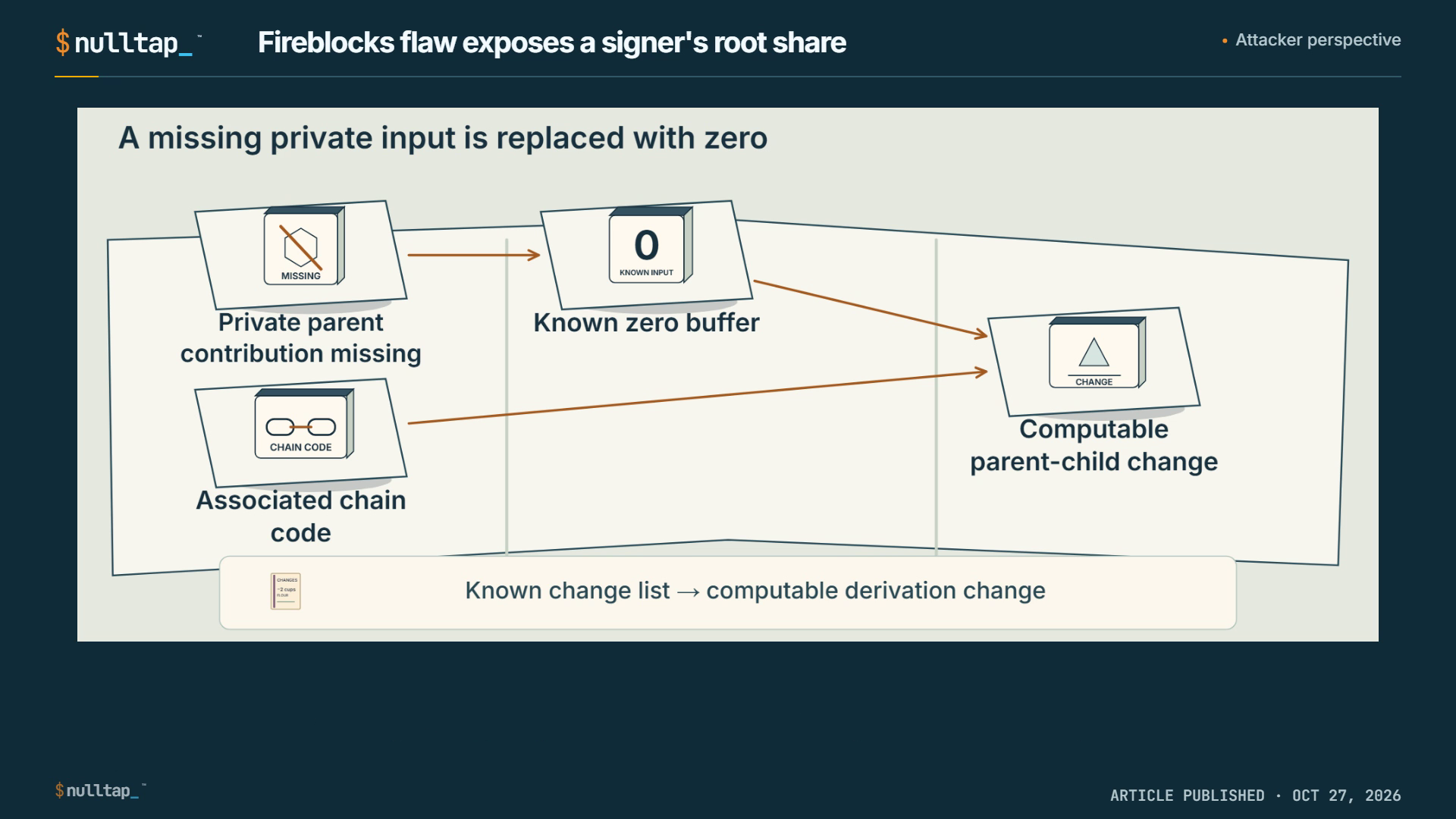 Watch Replay2:40
Explain backward recovery within one signer share hierarchy while preserving the other-party requirement for a spendable key.
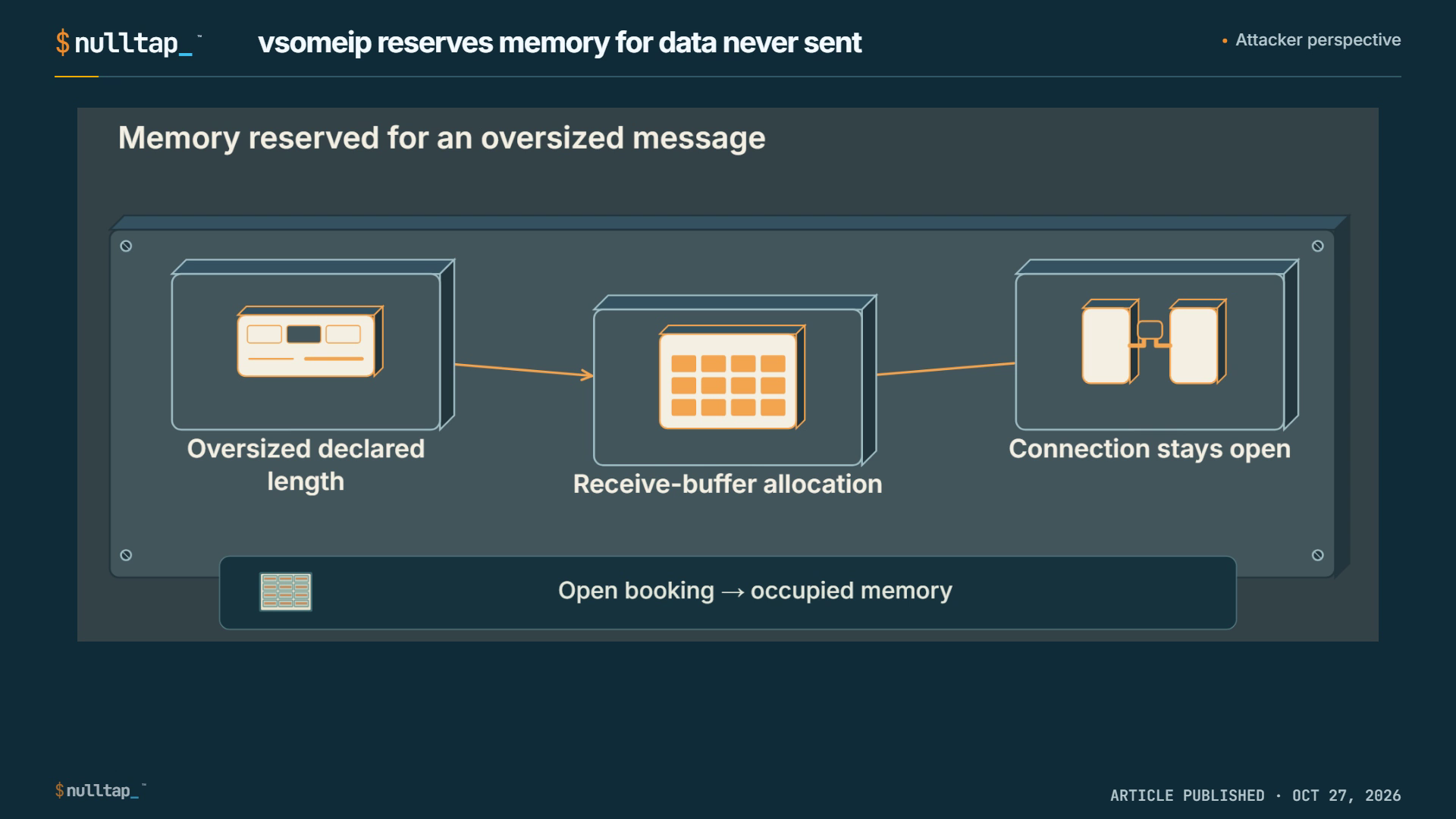 Watch Replay3:16
Follow a declared message length into a memory reservation, then verify a fixed release or loaded size limit.
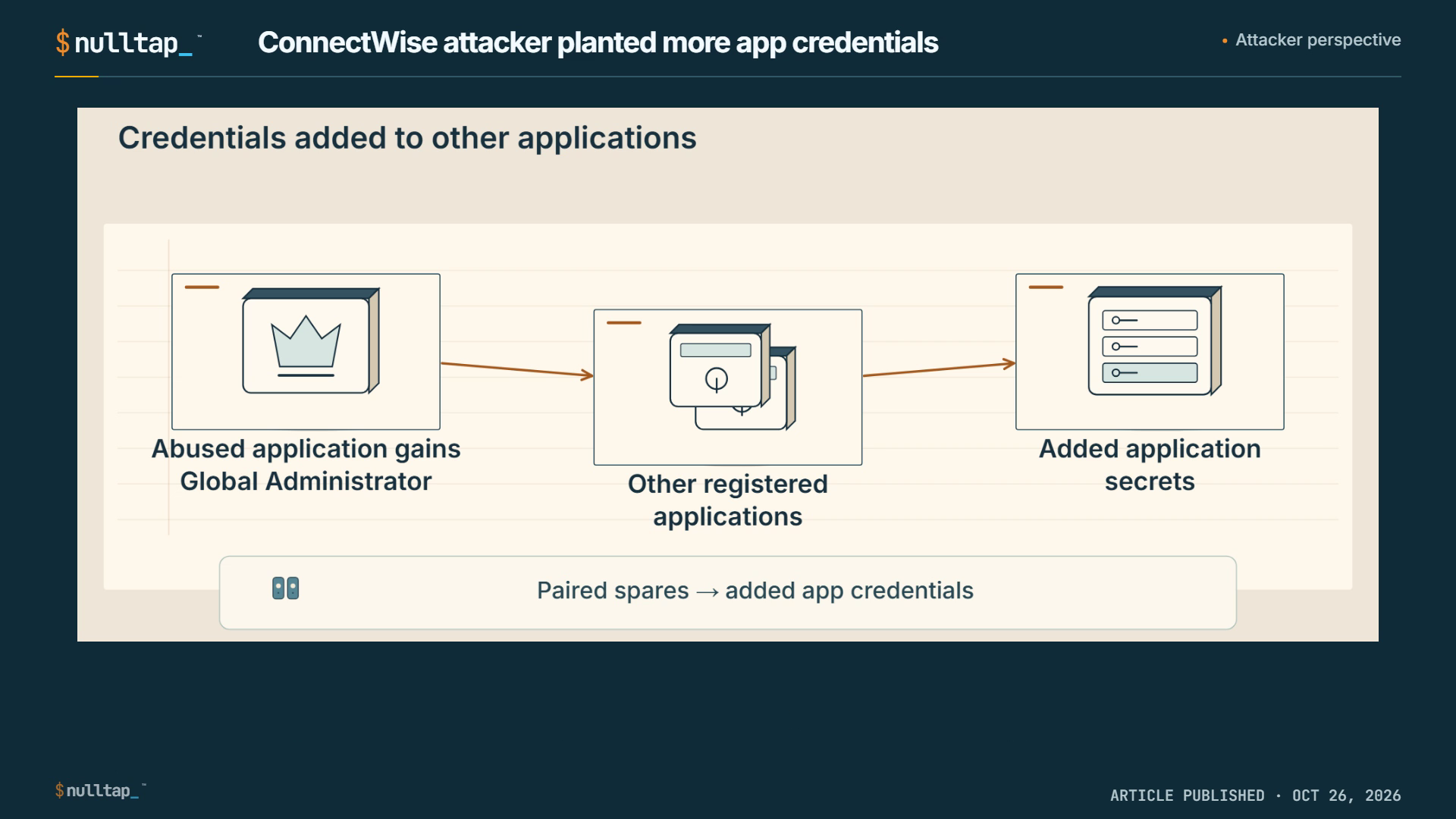 Watch Replay3:38
Trace added application credentials and changed privileges, then check what access remains after containment.
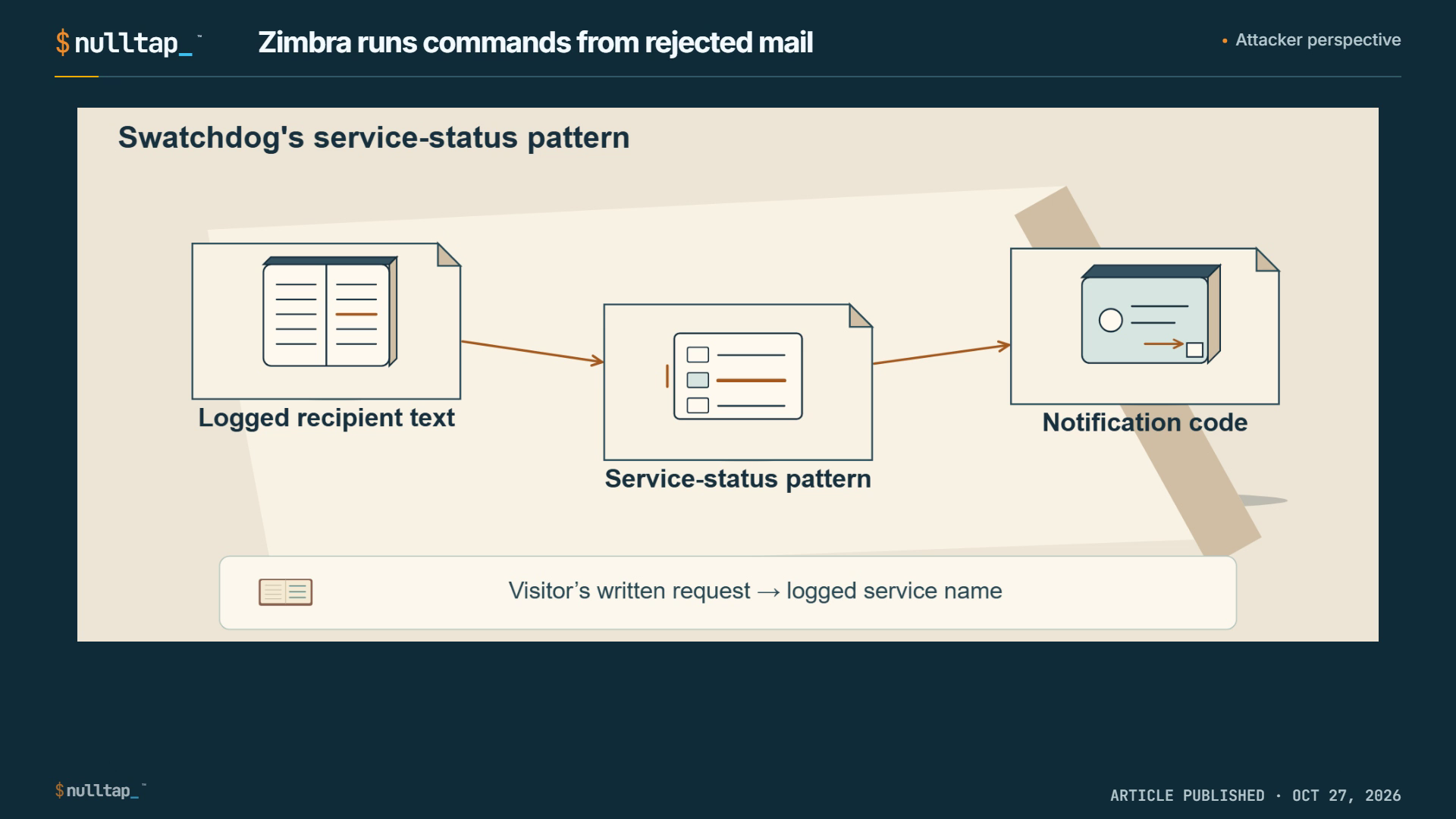 Watch Replay3:09
Follow a rejected email address through Zimbra's log and notification code, then check the server's version and settings.
 Watch Replay2:50
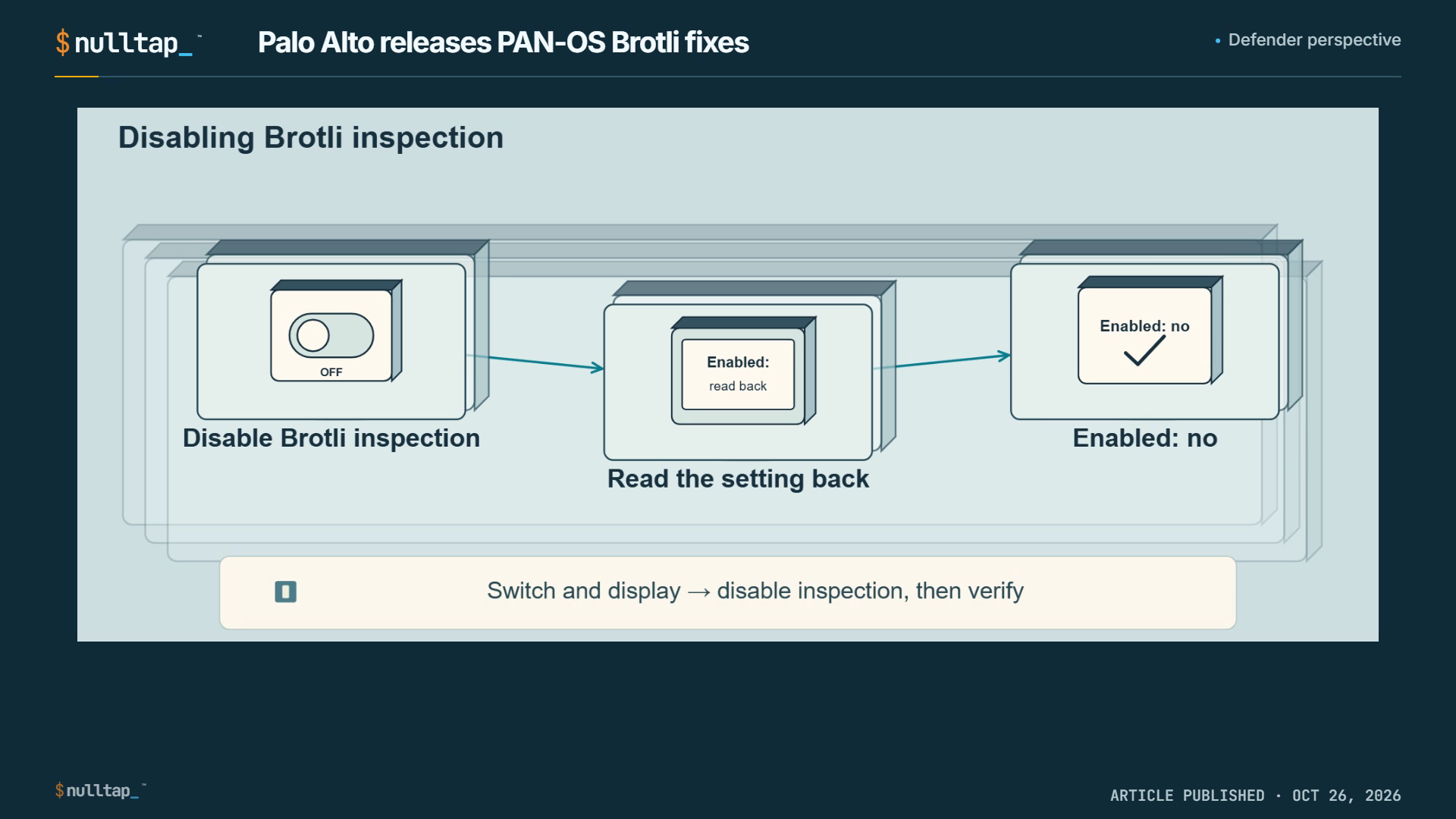
Check the PAN-OS build, traffic decryption and Brotli inspection settings, then verify a mitigation or installed fix.
 Watch Replay3:17
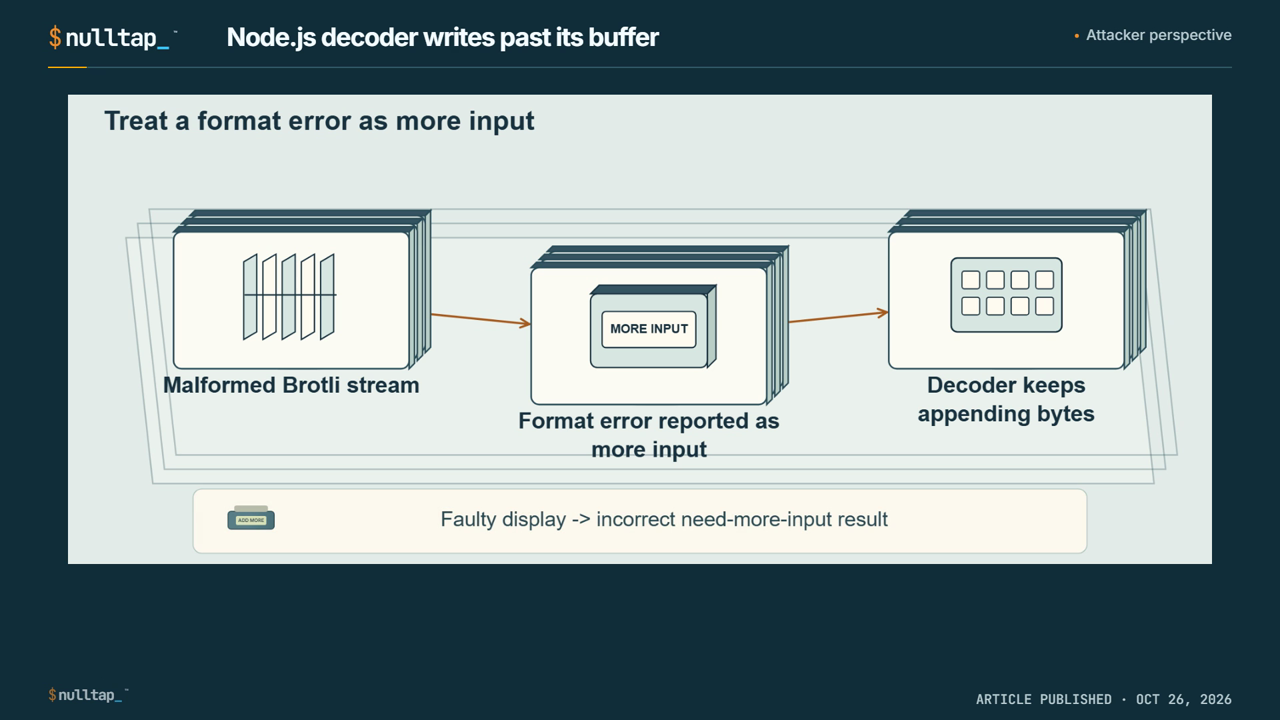
Malformed Brotli input makes a decoder keep writing past a small buffer. Trace untrusted decompression and verify that a fixed Node.js runtime is actually in service.
 Watch Replay3:10
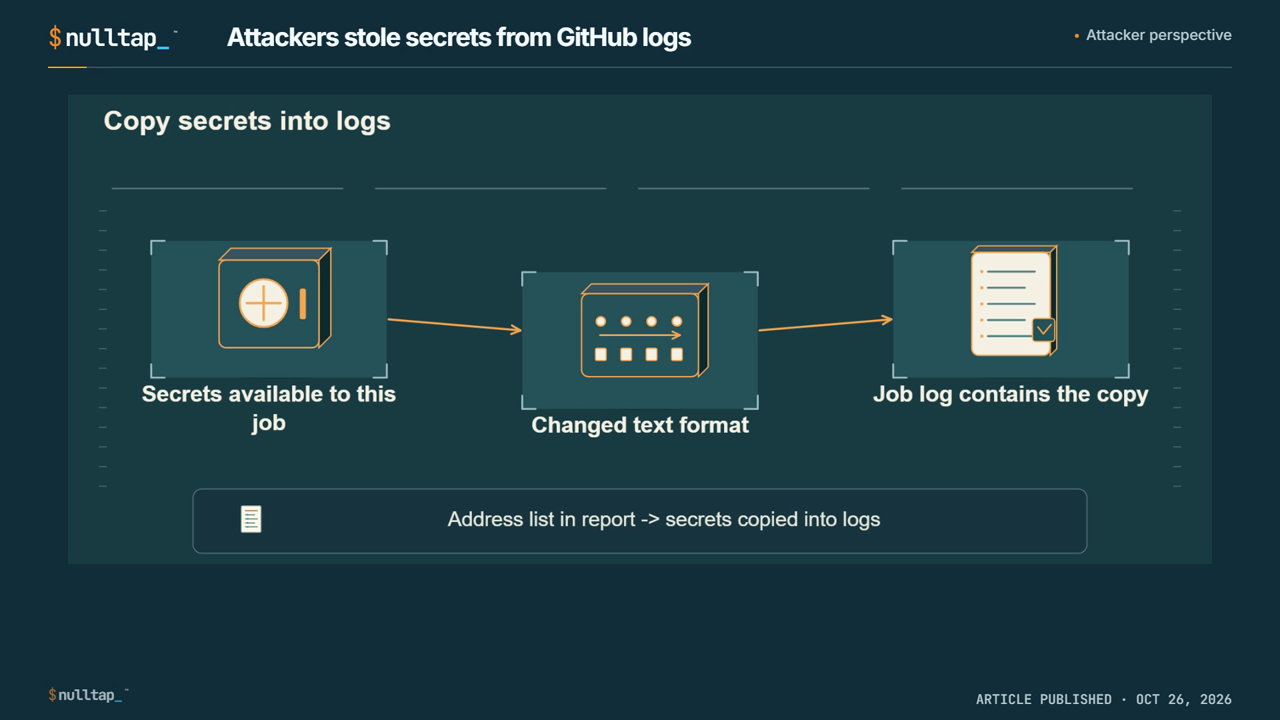
A stolen token plants a workflow that copies available secrets into its own logs. Check actual execution, preserve retained records and control access to secrets.
 Watch Replay2:52
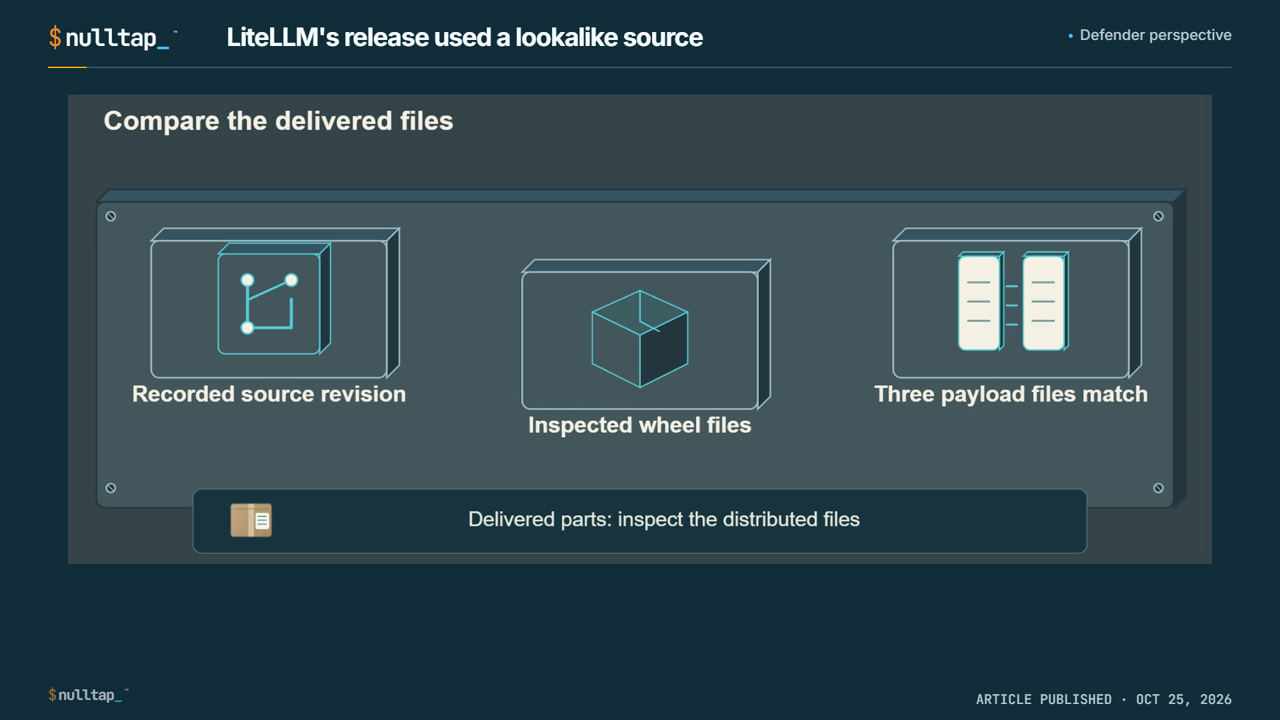
A release record can accurately name an unapproved source. Compare the repository identity with the approved input, then inspect the shipped files.
 Watch Replay3:19
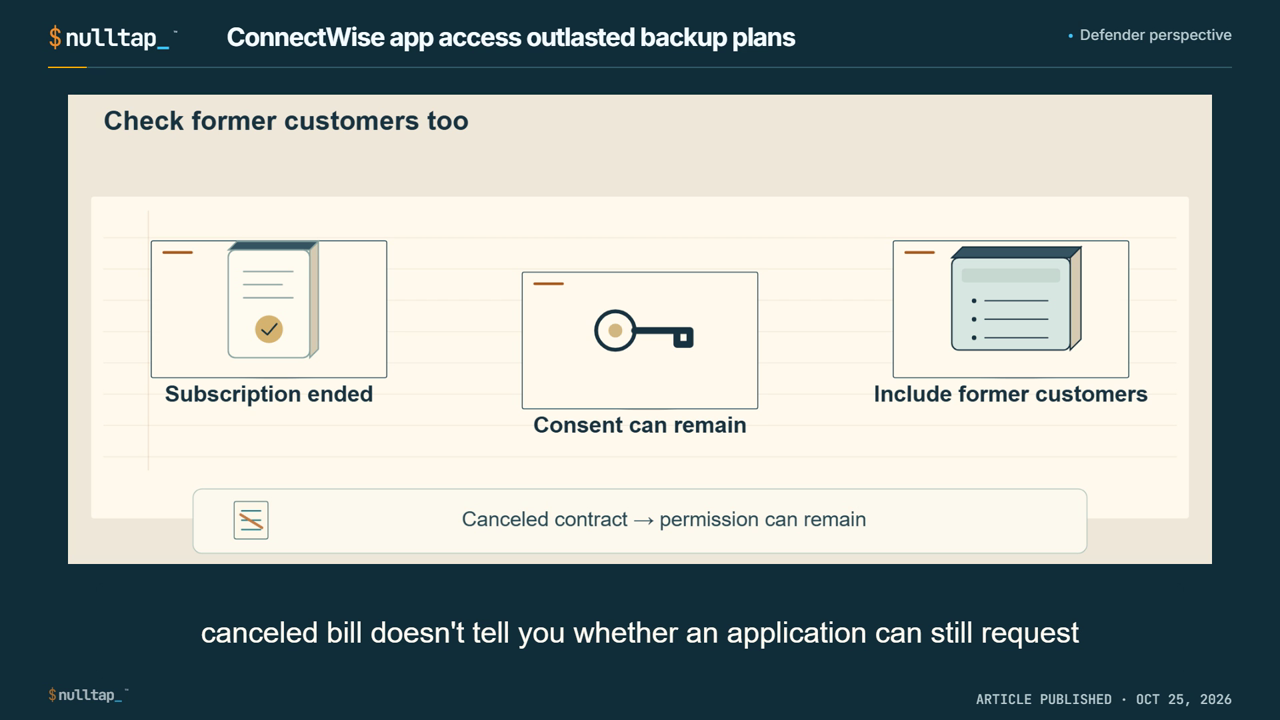
A former backup subscription can leave application permission behind. Check the grant and distinguish issued access from its use.
 Watch Replay1:48
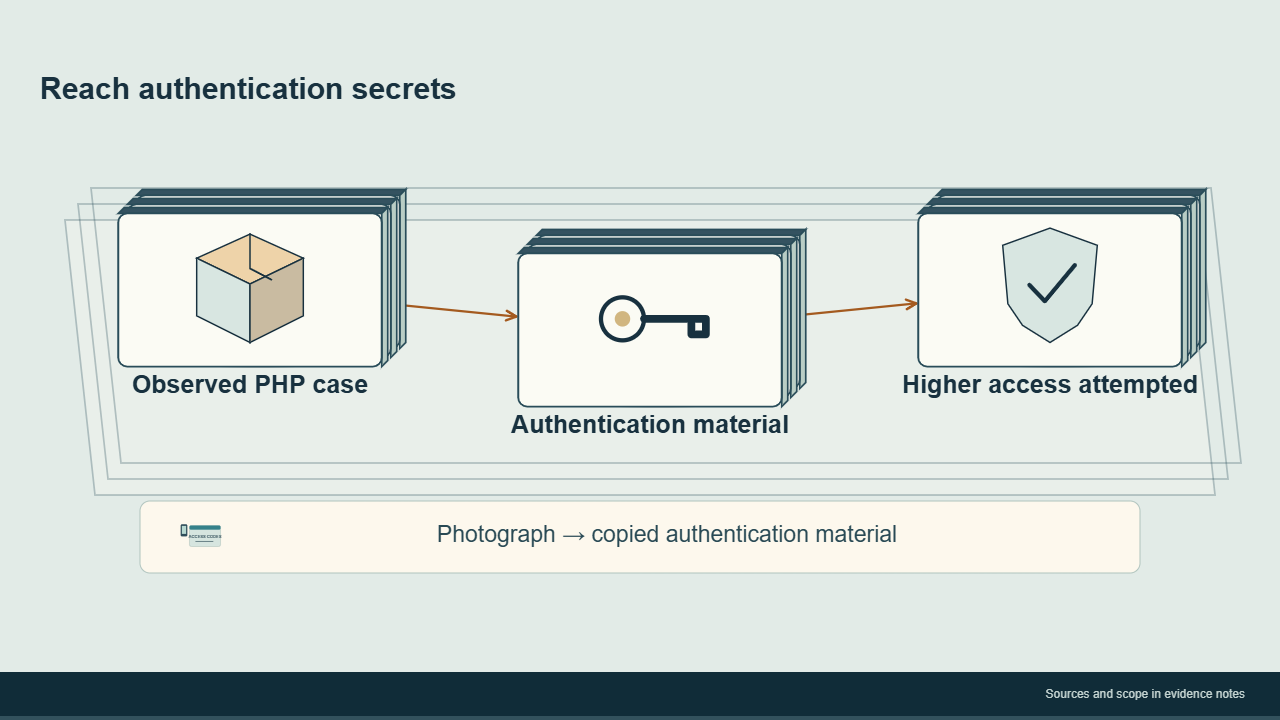
In the reported intrusion, PHP exploitation led to password hashes and MFA secrets. Patching and credential response address different risks.
 Watch Replay1:50
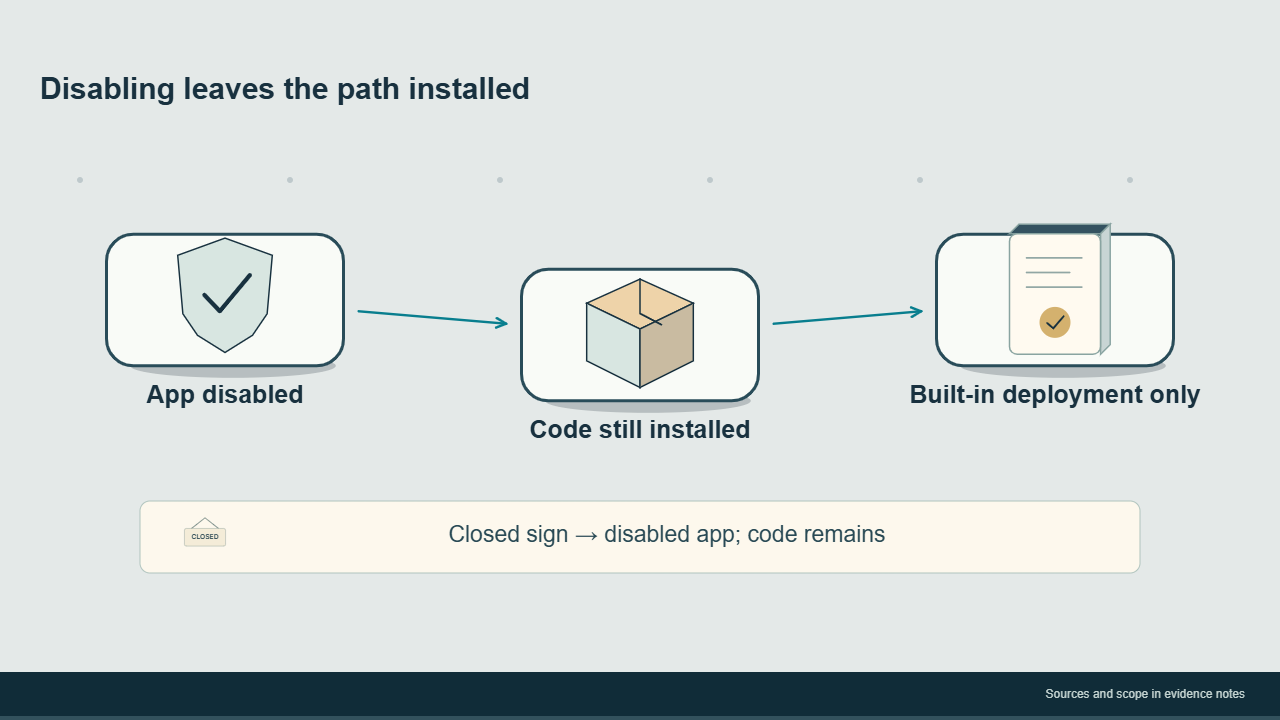
A stopped CODE server exposes a command-execution path. Disabling the app leaves the vulnerable code in place.
 Watch Replay1:54
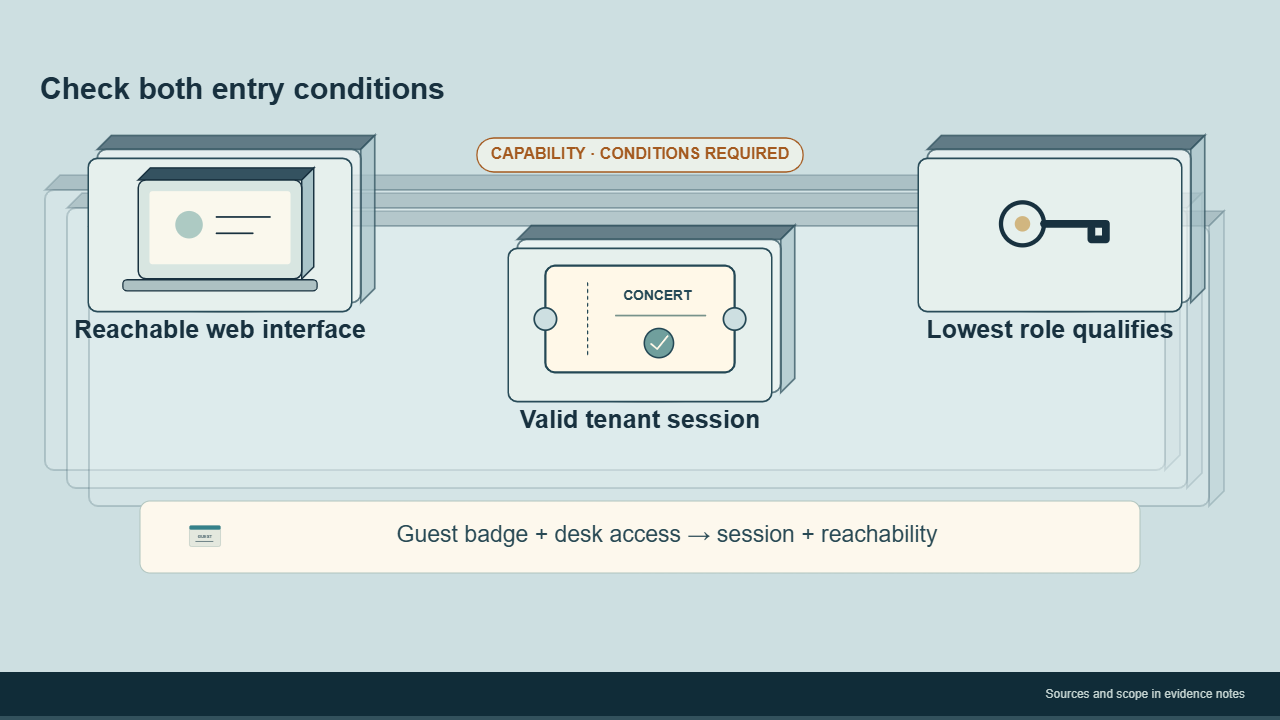
On an affected orchestrator, a read-only account with network access can reach operator privileges.
 Watch Replay1:57
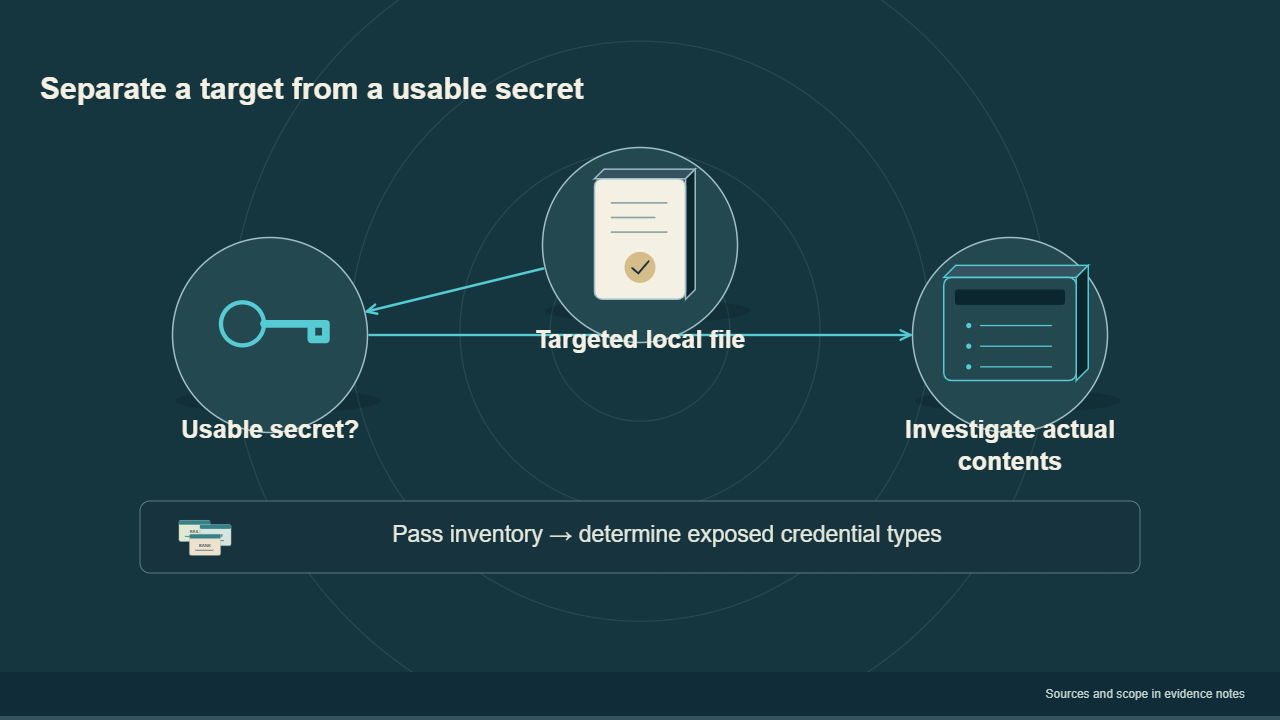
A Windows stealer can collect AI sessions and developer credentials. Each exposed account needs its own response.
 Watch Replay2:09
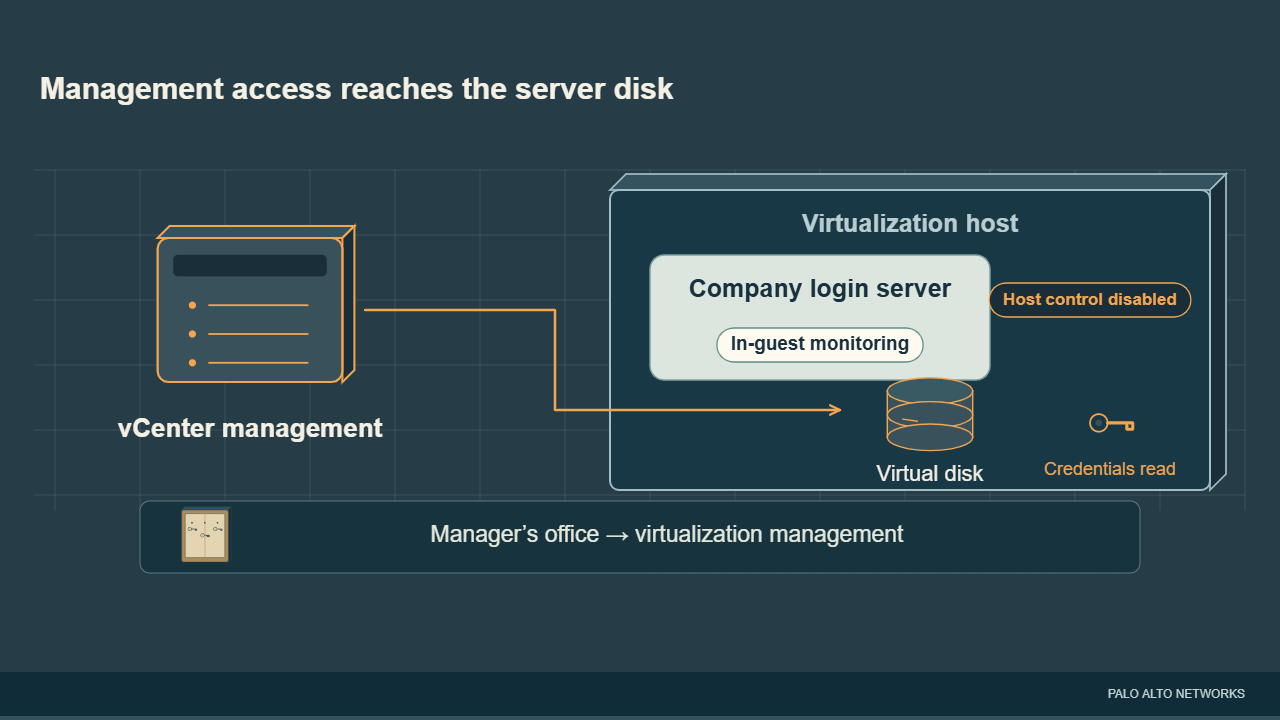
Remote access reaches the management layer, where a disk read can fall outside the running server’s view.
 Watch Replay2:10
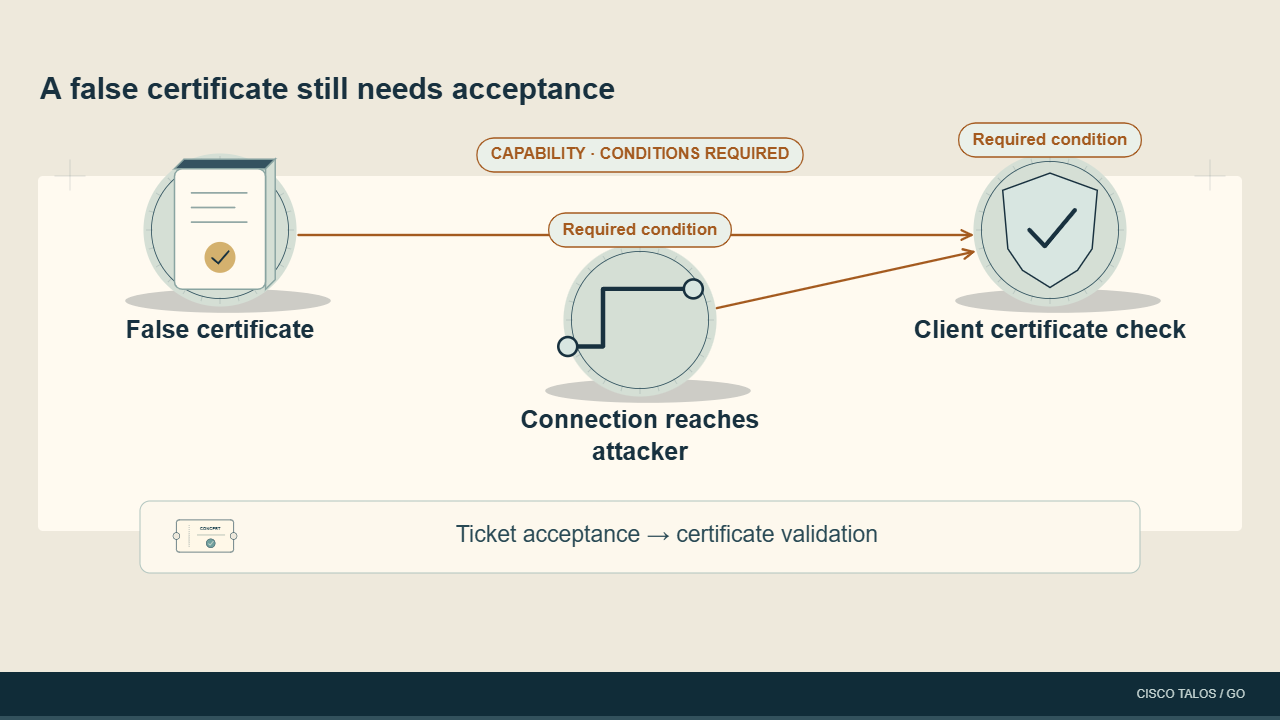
A weak signing authority creates an impersonation risk that different applications must address separately.
 Watch Replay2:01
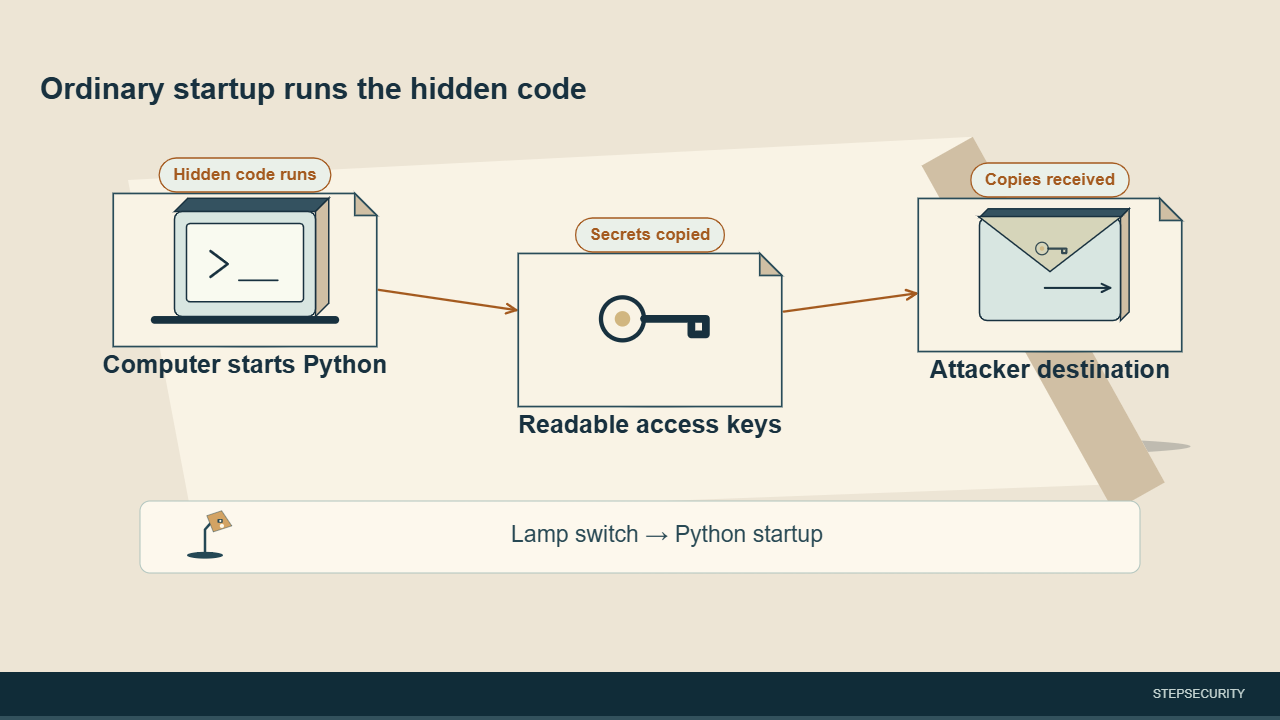
The files delivered to a computer contain hidden startup code, even though the source tag looks clean.
 Watch Replay2:06
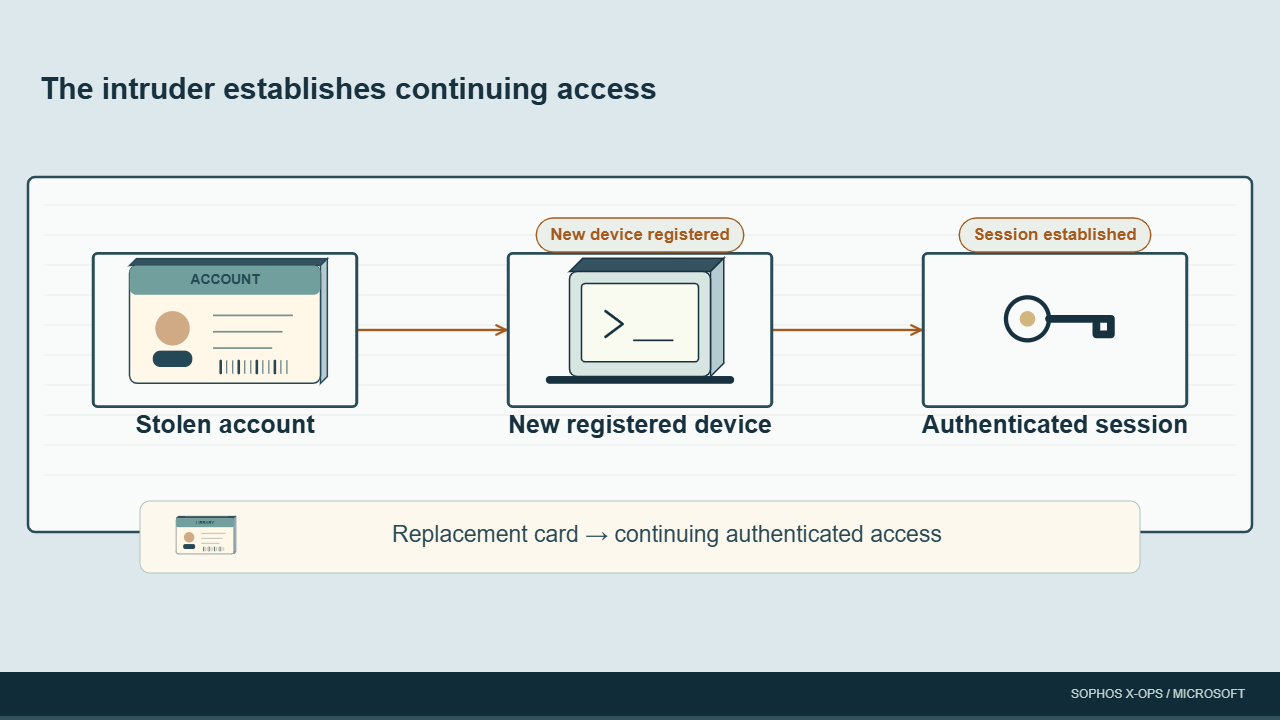
A shared recovery code lets an impostor claim an identity, reach connected applications and take data.